



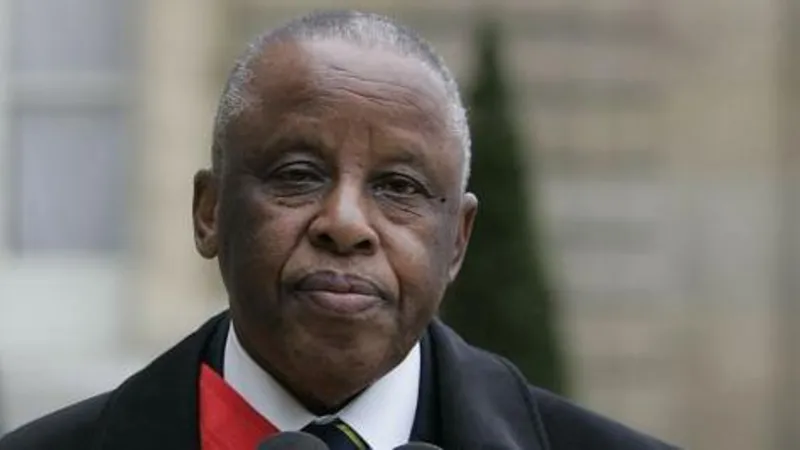
Festus Mogae, the former president of Botswana who guided the nation through a period of rapid economic growth and a severe HIV/AIDS crisis, has died at age 86, President Duma Boko announced Friday.
Mogae, who served as the country’s third president from 1998 to 2008, died early Friday following a prolonged illness. He had been receiving medical care at a hospital in the capital, Gaborone.
“Today Botswana mourns a distinguished statesman and patriot whose life was devoted to the service of his country,” Boko said in a national address.
The president hailed Mogae as a leader who “stood firmly for discipline, good governance, economic prudence and the advancement of our nation,” adding that “under his leadership, Botswana earned its international respect for principled governance.”
Boko declared three days of national mourning, with flags to fly at half-mast.
Economic Stewardship
Mogae is widely credited with strengthening Botswana’s economic management and governance systems during a period of rapid growth driven by diamond revenues. Before assuming the presidency, he held senior government positions, including finance minister and later vice-president.
HIV/AIDS Response
He is also recognized for steering Botswana’s response to the HIV/AIDS epidemic, when the country had one of the world’s highest infection rates. An ambitious antiretroviral treatment program he championed significantly reduced infection and mortality rates.
After leaving office, Mogae continued advocating for HIV/AIDS treatment across the region, pushing for free antiretroviral therapy and measures to prevent mother-to-child transmission.
International Recognition
In 2008, Mogae received the Ibrahim Prize for Achievement in African Leadership — one of the continent’s most prestigious honors for governance — in recognition of his democratic leadership and peaceful transfer of power. The award came with $5 million, plus $200,000 annually for life.
Mogae also took on various international advisory and peace mediation roles across Africa following his presidency.
He was succeeded as president by Ian Khama.
Botswana remains one of Africa’s most politically stable nations, having never experienced a coup and maintaining regular multi-party elections since independence in 1966.


