


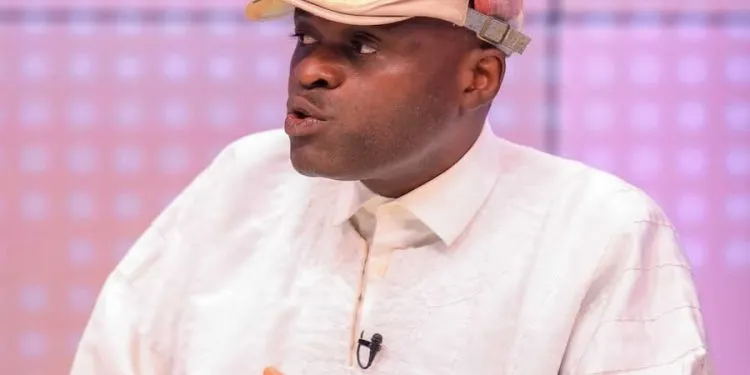
Private legal practitioner Martin Kpebu has acknowledged that Ghana’s economy has generally stabilised under Finance Minister Dr. Cassiel Ato Forson, but insists that the cost of living remains painfully high for ordinary citizens, with transport fares placing a particularly heavy burden on households.
Speaking on TV3’s Key Points on Saturday, October 24, 2026, Kpebu offered a measured assessment of the government’s economic stewardship, crediting the Finance Minister with restoring a degree of macroeconomic stability while cautioning that stability on paper has not translated into relief at the market and in the trotro.
“Generally, our economy has stabilised under Ato Forson, but the cost of living is still high, and transport fares are also very high,” Kpebu said.
Inflation Down, But Prices Still Bite
Kpebu’s comments reflect a broader paradox in Ghana’s economic recovery. Headline inflation stood at 5.2% in September 2026, down sharply from 9.4% a year earlier, according to the Ghana Statistical Service . The IMF has credited the government’s reform programme with delivering “substantial stabilization gains,” including rebuilt international reserves, improved confidence in the cedi, and a primary fiscal surplus that overperformed targets .
Yet the lived experience of many Ghanaians tells a different story. Housing, water, electricity, gas and other fuels recorded the highest inflation rate among major spending categories at 10.3% in September, while restaurants and hotels stood at 9.2% . Food inflation, though lower than the previous year, ticked upward to 4% from 3% in August, with food prices rising 1.5% in the month .
Transport costs have compounded the pressure. On September 26, 2026, public transport fares rose by 8% following negotiations between the Ministry of Transport and transport unions, affecting trotros, shared taxis, and long-distance services . A shared taxi journey of up to four kilometres now costs GH¢2.90, up from GH¢2.60, while intra-city trotro fares range from GH¢5.50 to GH¢36.80 . The fare increase came after operators initially proposed a 30% hike, citing rising fuel, maintenance, and spare parts costs .
With over 80% of urban residents relying on public transport for daily commutes, the fare adjustment ripples through the economy, adding to the cost of goods and services .
Free Speech Arrests a Political Liability
Kpebu also pointed to the government’s handling of free speech as a factor eroding public goodwill toward President John Dramani Mahama and the ruling National Democratic Congress. He argued that the arrest of persons over comments made against the government has generated disaffection among Ghanaians who cherish free expression.
“Clamping down on free speech is what has done the President in. Ghanaians like free speech; the moment you touch free speech, they won’t forgive you. As for the arrest, you have to tackle it, allow people,” he said.
His remarks echo concerns raised by the Media Foundation for West Africa, which documented 14 arrests linked to false news and offensive speech in the first 16 months of the current administration—nearly double the number recorded during the previous government’s entire eight-year tenure .
NDC Will Win 2028, But By a Reduced Margin
Despite his criticisms, Kpebu predicted that the NDC would retain power in the 2028 general elections, though with a significantly reduced margin compared to its decisive victory in 2024.
“They will win, but the votes will drop drastically,” he said.
His forecast came as the NDC navigates a pivotal internal transition. The party’s national executive elections, scheduled for December 19, 2026, have drawn 137 aspirants competing for 14 positions . National Chairman Johnson Asiedu Nketiah is not seeking re-election, opening a five-way contest for the chairmanship that includes former National Chairman Samuel Ofosu Ampofo and former Odododiodo MP Edwin Nii Lante Vanderpuye .
NDC Communications Team: Record Will Speak for Itself
Hamza Suhuyini, a member of the NDC’s communications team, pushed back against the narrative that the government’s record was vulnerable, arguing that the party would win on its achievements.
“The NPP’s 8-year record can never be compared to what the NDC has achieved over the past two years,” he said.
Suhuyini was responding to comments by former Information Minister Fatimatu Abubakar, who had predicted on the same programme that NPP flagbearer Dr. Mahamudu Bawumia would win the 2028 election regardless of who the NDC presents as its candidate.
Nketiah’s Departure a Blow to Institutional Memory
Suhuyini also acknowledged that the party would feel the loss of Asiedu Nketiah’s experience and institutional knowledge as he steps away from the chairmanship after one term.
“It is not just his experience, but institutional memory. We will not pretend that indeed we are not going to miss an important figure; we will,” he said. He added that the party was working to fill the vacuum.
The NDC’s national congress will follow a vetting process scheduled for November 12–13, with appeals from November 15–16 and the youth and women’s conference on December 12 .