



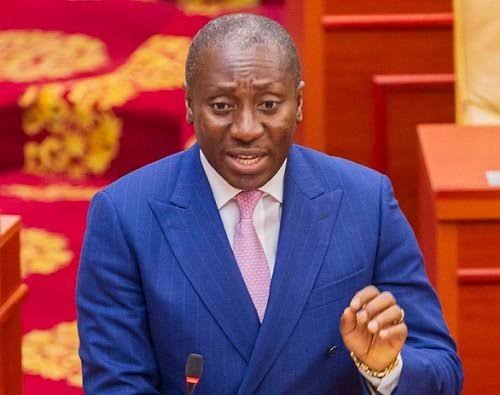
The Minority Leader of Ghana’s Parliament, Alexander Kwamina Afenyo-Markin, has issued a powerful and stark condemnation of the country’s controversial anti-LGBTQ legislation, arguing that imprisoning individuals for their sexual orientation would mark a dark step backward for the West African nation and the civilized world.
In a statement that has gained renewed traction amid ongoing legislative battles over the proposed bill, officially known as the “Promotion of Proper Human Sexual Rights and Ghanaian Family Values Bill,” Afenyo-Markin delivered an impassioned defense of human dignity.
A Line Not to be Crossed
Standing resolutely at a public forum, Afenyo-Markin emphasized that the legislation, which seeks to impose severe prison sentences for same-sex relationships and the advocacy of LGBTQ+ rights, fundamentally fails in its stated objective to protect societal morals. Instead, he argued, it serves only to weaponize the state against a specific community.
“A law that imprisons people for their sexual orientation or for who they choose to love does not protect society,” Afenyo-Markin declared.
“It simply singles out a group of human beings and makes their existence a crime. That is a line no parliament in the civilised world should cross,” he added, with his voice echoing a deep concern for the preservation of fundamental human rights.
Context of the Controversial Bill
The remarks by the Minority Leader come as Ghana’s parliament remains deeply divided over the anti-LGBTQ bill, which has been described by human rights organizations as one of the harshest in the world. The bill, currently under intense scrutiny, threatens to criminalize not only same-sex intimacy but also the promotion of LGBTQ+ rights—an outcome that has drawn widespread international condemnation.
While Afenyo-Markin belongs to the majority New Patriotic Party (NPP), which has seen internal fractures over the bill, his stance places him firmly on the side of international human rights advocates and diplomatic partners, including the European Union and the United States.
Implications for Ghanaian Democracy
Political analysts suggest that Afenyo-Markin’s vehement opposition to the “criminalization of existence” carries significant weight given his position in parliament. His comments underscore a growing debate within the legislative body about the trade-offs between Ghanaian cultural values and the country’s obligations under international human rights treaties.
Afenyo-Markin concluded his statement with a warning to his fellow lawmakers, urging them to reject the “dangerous precedent” of the bill. He called on the Speaker of Parliament and majority members to reconsider the legislation, stressing that criminalizing people for who they are does not protect society but instead strips it of its humanity.


