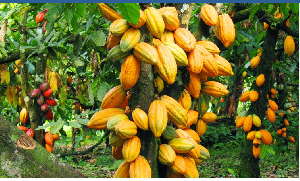
– Cocoa prices plunged more than 5% on Wednesday, reversing a multi-session upswing as traders locked in profits and West African weather forecasts turned more favorable, easing immediate fears of a supply crunch.
After surging to a six-week high of $8,950 per metric ton on Monday, the benchmark London cocoa contract closed at $8,420, down $530. New York futures followed suit, dropping nearly 6% to $7,890. The sharp correction comes just weeks after prices had rallied on reports of persistent dry harmattan winds in Ivory Coast and Ghana, which together produce over 60% of the world’s cocoa.
What triggered the slide?
Three key factors converged to send prices lower:
- Weather relief: Updated meteorological models now project moderate rainfall across Ivory Coast’s key growing regions over the next 10 days, potentially boosting the mid-crop harvest. The rain follows two months of below-average soil moisture that had fueled bullish sentiment.
- Speculative unwind: Hedge funds and commodity trading advisors (CTAs) had built record net-long positions during the rally. When technical support at $8,600 broke early Wednesday, automated sell orders accelerated the decline, triggering a cascade of stop-loss liquidations.
- Demand destruction signals: Major chocolate manufacturers, including Barry Callebaut and Hershey, have reportedly scaled back forward purchases in recent sessions, citing softening retail demand in Europe and North America. Cocoa butter and powder spreads have narrowed, suggesting downstream buyers are balking at current price levels.
The broader context
Despite Wednesday’s sell-off, cocoa remains historically expensive. Prices are still up 35% year-to-date and nearly double their 10-year average, as global output faces its third consecutive deficit season. The International Cocoa Organization (ICCO) projects a 425,000-ton supply gap for 2025/26, largely due to aging trees, disease outbreaks, and limited fertilizer use in West Africa.
“This isn’t a trend reversal – it’s a healthy correction within a structural bull market,” said Jonathan Parkman, head of agricultural commodities at Marex. “The fundamentals haven’t changed overnight. We’re still looking at a third year of shortages, but the market had gotten overextended.”
Market watch
Traders now eye the upcoming mid-crop harvest in Ghana, due to start in late June. Early pod counts are expected to be released next week, and any sign of below-average yields could quickly reignite the rally. Meanwhile, the US Dollar Index’s modest strength has also pressured dollar-denominated commodities, making cocoa more expensive for importers in Europe and Asia.
Outlook: Analysts expect heightened volatility in the weeks ahead. Key support levels stand at $8,200 and $7,900, while resistance is seen near $8,950. With open interest remaining elevated and weather uncertainty persisting, the next directional move will likely hinge on rainfall data over the next fortnight. For now, the bulls are catching their breath – but the supply story is far from over.