



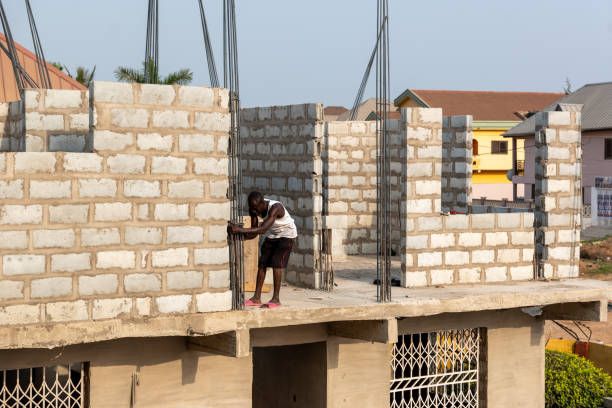
The pace at which building costs are rising in Ghana has fallen dramatically, from 14.2% in July 2025 to just 4.0% in July 2026, according to data released by the Ghana Statistical Service (GSS).
The Government Statistician, Dr Alhassan Iddrisu, announced the figures at a press conference in Accra on Wednesday, August 26, 2026, presenting the latest Prime Building Cost Index (PBCI) . He described the slowdown as a significant shift that changes the calculations for households, contractors, and planners across the country.
Key Findings
Headline Figures
The year-on-year building cost inflation rose to 4.0% in July 2026, up slightly from 3.1% in June, indicating a gradual upward movement over recent months . However, this remains far below the 14.2% recorded a year earlier, pointing to a broad moderation in construction cost pressures since the sharp inflationary cycle of 2024 and early 2025 .
On a month-on-month basis, building input prices rose by just 0.3% between June and July 2026, showing that costs are relatively steady with only a gentle rise .
The combined PBCI stood at 138.3 in July 2026, compared with 133.0 in July 2025, while the annual average inflation rate for the 12 months to July 2026 was 4.9% .
Mixed Cost Movements
Dr Iddrisu highlighted that materials remain the dominant driver of building costs, accounting for 76.5% of the PBCI basket and contributing 97.3% of the upward pressure on the headline rate . Material costs rose 5.1% over the year.
However, the sharpest rise came from plant (machinery and equipment), which recorded an 18.0% year-on-year increase. “This is the main risk we are watching,” Dr Iddrisu said .
At the sub-group level:
· Plumbing recorded the fastest price rise at 25.3%
· Small tools followed at 22.6%
· Roofing sheets increased by 21.4%
· Glazing rose by 20.4%
· Reinforcement increased by 20.2%
In contrast, several key structural materials became cheaper:
· Cement fell by 9.8%
· Steel dropped by 8.9%
· Unskilled labour declined by 5.2%
· Fine aggregate fell by 5.0%
· Skilled labour decreased by 2.0%
Labour costs overall fell by 3.2% year-on-year, continuing a downward trend observed in recent months .
Background and Context
The latest figures represent a continued cooling of construction cost pressures after the sharp spikes experienced in 2025, when building cost inflation exceeded 20% in some months . The slowdown has been driven primarily by declining prices for cement and steel, which had previously been major contributors to cost escalation .
In June 2026, cement prices had fallen by 13.0% year-on-year, while steel dropped by 8.6%, helping to ease overall cost pressures . The trend has continued into July, with both materials recording further declines .
The relatively low building inflation environment reflects a broader trend of disinflation across the Ghanaian economy, with headline inflation dropping to around 3.2% in March 2026 and producer prices remaining subdued .
Recommendations
The GSS has issued guidance to various stakeholders based on the current data:
· Households: The Service recommends updating construction budgets using current prices, building in phases where possible, and comparing supplier quotations rather than assuming that all construction inputs are becoming more expensive .
· Contractors and Businesses: The emerging pressure from plant, tools, and installation materials makes it important to factor current market conditions into contracts and procurement decisions .
· Government: The GSS urged government to use the relatively lower inflation environment to improve project delivery, while paying particular attention to plant and installation costs .
Dr Iddrisu emphasised that the figures show building cost movements are becoming increasingly uneven, with some inputs providing relief while others continue to push project costs upwards . He said the main risk requiring close monitoring is the accelerating cost of plant and equipment, which is rising significantly faster than other components of the index.


