



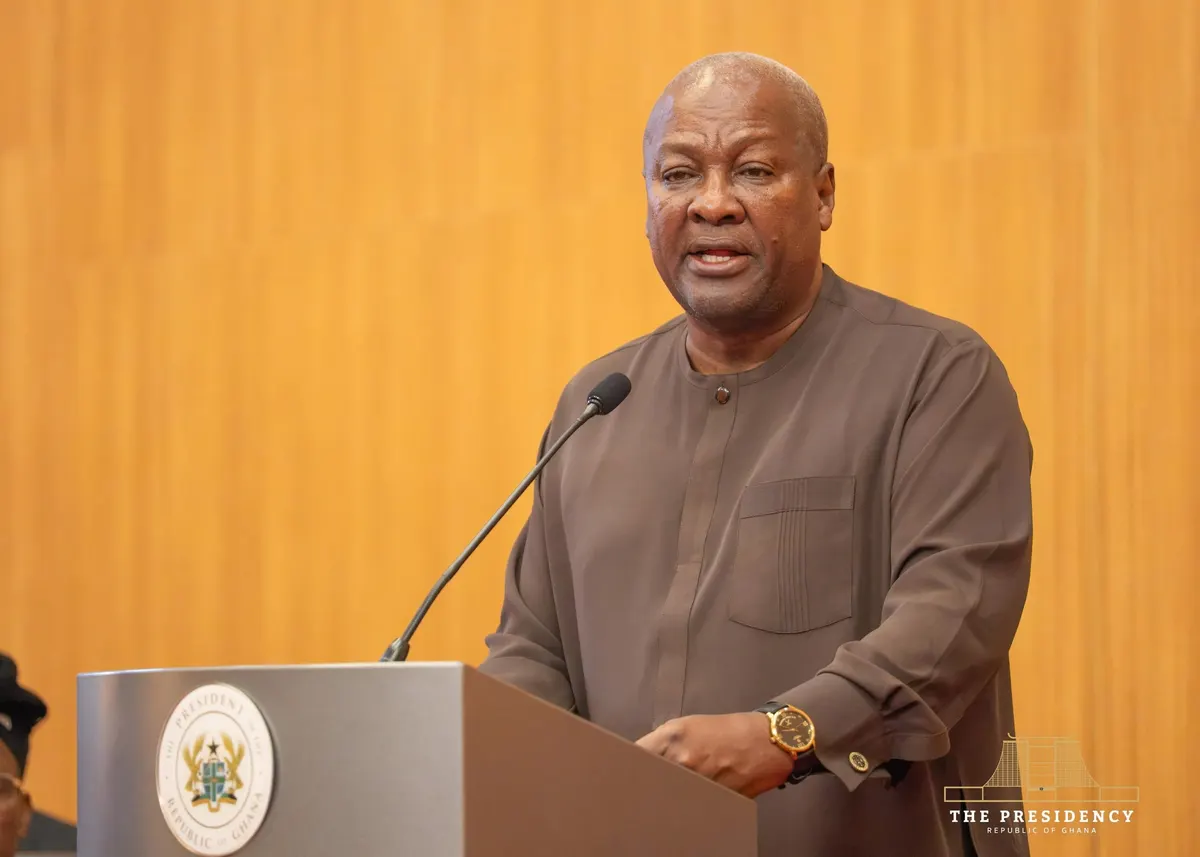
— The Association of Aggrieved Teachers of Legacy Arrears (2012–2015) has appealed to President John Dramani Mahama to prioritise the payment of outstanding arrears owed to teachers covering the period from 2012 to 2015, arguing that affected members have endured years of financial hardship while awaiting their entitlements.
In a statement dated 13 September 2026, the Association said the outstanding arrears had first been acknowledged during the 2016 election campaign, when a commitment was made to settle them. However, the arrears remained unpaid throughout the subsequent eight-year tenure of the New Patriotic Party (NPP) government that came to power that year.
“Many of the affected teachers have waited for several years, and the continued delay has placed a significant financial burden on them,” the Association said.
Association Cites “Three-Month Pay Policy” in Appeal to President
The Association said President Mahama’s previous introduction of the Three-Month Pay Policy demonstrated his understanding of issues surrounding delayed payments and the difficulties such delays could create for workers, and appealed to him to draw on that understanding to address the matter.
“We therefore make this humble but urgent appeal to your government to prioritize the payment of the teachers’ legacy arrears. Many of the affected teachers have waited for several years, and the continued delay has placed a significant financial burden on them,” the statement said.
The teachers urged the government to treat the matter as a priority and consider the circumstances of those who have been waiting for their outstanding entitlements. They appealed to the President to intervene personally and take the necessary steps to facilitate the payment of the arrears without further delay.
The group urged the President to take the necessary steps to settle what it described as legitimate arrears without further delay, and expressed hope for a prompt response from the government.
The statement was signed by Association Secretary Abraham Acheampong, Chairman Nana Opoku Foster, and Public Relations Officer Awal Mohammed Iddrisu.
Background: Roots of the Legacy Arrears
The so-called “legacy arrears” trace their origins to the period between 2012 and 2016, when the government implemented the Three-Month Pay Policy. Under the policy, newly recruited and promoted teachers were paid only three months’ salary regardless of how long they had actually worked, with the remainder withheld pending a verification exercise. The policy was intended to clean up the payroll by removing ghost names, but its implementation left thousands of teachers owed substantial sums.
In December 2019, Ghana’s three major teacher unions—the Ghana National Association of Teachers (GNAT), the National Association of Graduate Teachers (NAGRAT), and the Coalition of Concerned Teachers (CCT)—jointly declared a nationwide strike demanding payment of the 2012–2015 legacy arrears. The strike disrupted teaching in public schools across the country and prompted intervention by the National Labour Commission.
In 2020, then-Director-General of the Ghana Education Service (GES), Professor Kwasi Opoku-Amankwa, announced that of 97,791 applications received, 83,763 claimants had been verified and fully paid, representing “100% of all valid claims.” However, a 2024 investigation by fact-checking organisation Fact-Check Ghana found that while the Three-Month Pay Policy had been abolished, the NPP government’s claim that all accumulated arrears had been cleared was inaccurate—some teachers who passed the verification process never received payment.
Current Government Faces Mounting Teacher Salary Pressures
The appeal comes as the Mahama administration grapples with multiple legacy salary issues involving teachers. On 8 September 2026, the Ministry of Finance issued a statement confirming it had fully paid salary arrears owed to 6,300 Education Service staff who were recruited in 2024 without financial clearance. The staff were inherited by the current government in 2025, and the Ministry said payment had been completed in four batches.
However, Kofi Asare, Executive Director of education advocacy group Africa Education Watch, argued that even with the 6,300 financial clearance slots exhausted, the reality on the ground showed that legitimate, licensed teachers remained unpaid. In a social media post on 9 September, he criticised the handling of the matter, describing it as “one of the worst performances of this government.” Asare went further, characterising the delay in paying teachers as “a human rights issue.”
At the time of publication, the Office of the President had not issued a public response to the Association’s appeal regarding the 2012–2015 legacy arrears.


