



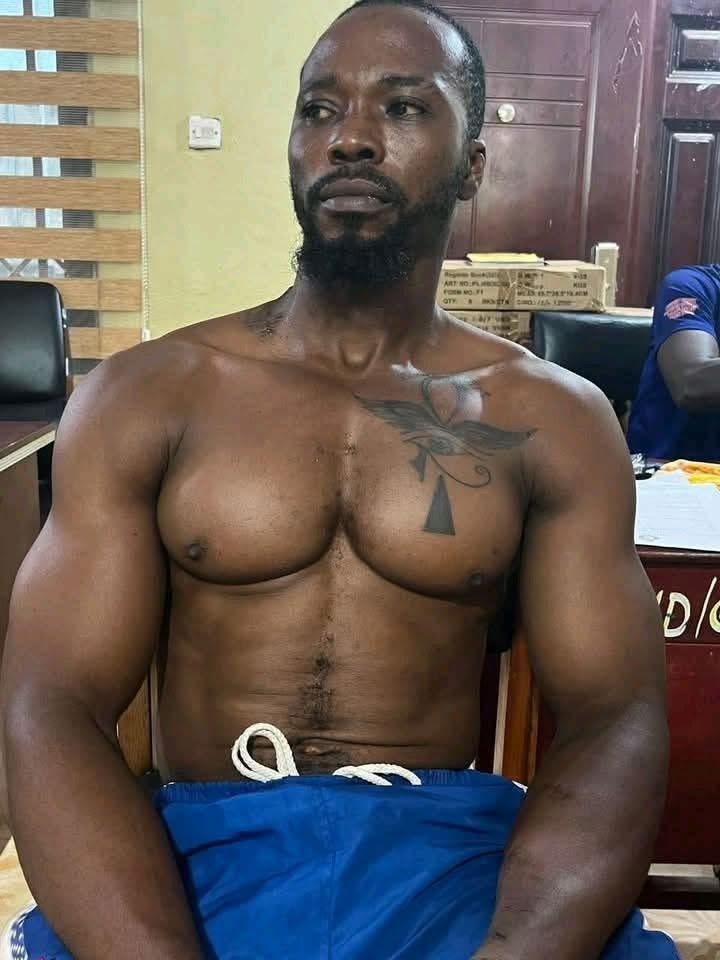
A grieving family is demanding a full investigation after Emmanuel Asamoah, a resident of Sankore in the Asunafo South district of the Ahafo Region, died less than a week into a four-year prison sentence at Sunyani Central Prison. The family’s appeal comes amid troubling allegations of police neglect, a rushed trial, and an absence of legal representation.
According to family sources, Asamoah went into hiding after allegedly harming another individual. He had recently returned to Sankore and was immediately arrested by officers from the Goaso Police Command in what family members described as a “Rambo‑style” operation. While in police custody, Asamoah reportedly complained of ill health, but his pleas for medical attention were allegedly ignored. The family pushed for bail based on his medical condition, yet the police proceeded to arrange a speedy court appearance.
Family sources further alleged that Asamoah was not represented by a lawyer during his two‑day trial. Ghana’s 1992 Constitution guarantees every accused person the right “to defend himself before the court in person or by a lawyer of his choice” (Article 19(2)(f)). Despite this constitutional safeguard, the proceedings moved forward without legal counsel for the defendant. Asamoah was swiftly convicted and sentenced to four years’ imprisonment, to be served at the Sunyani Central Prison.
When family members visited the prison to check on him, they were allegedly told that Asamoah had died the previous day. A preliminary report, according to a family source, indicated internal bleeding and trauma, though an official post‑mortem has not yet been released.
The Ghana Prisons Service has not issued any public statement regarding the circumstances of Asamoah’s death. The family has called on the Police Professional Standards Bureau and the Commission on Human Rights and Administrative Justice (CHRAJ) to conduct a thorough and transparent investigation. They also want to know whether prison officials followed proper protocols, including the required medical examination of an inmate upon admission.
A prison officer who spoke on condition of anonymity said that all newly admitted inmates are expected to undergo a medical screening. However, it remains unclear whether such a screening was performed in Asamoah’s case.
Demand for an Independent Inquiry
The family is not only mourning the loss of a 38‑year‑old father of two but also questioning the judicial process that led to his incarceration. They have called on the Ministry of the Interior, the Judicial Council, the Police Administration, and the Ghana Prisons Service to launch an independent inquiry into:
· The medical care provided to Asamoah while in police custody;
· The denial of legal representation during the trial;
· The cause of his death and whether any prison protocols were violated;
· The overall handling of the case by the Goaso Police Command.
The family has also appealed to the Legal Aid Commission to review the trial record and advise on the possibility of a posthumous legal challenge.
“We are not saying our relative was an angel, but everybody deserves fair treatment under the law,” a family spokesperson said. “He was sick, he had no lawyer, he was rushed through the court – and now he is dead. We need to know why.”
Context of Custodial Deaths in Ghana
Asamoah’s death adds to a growing list of alleged custodial deaths that have raised concerns among human rights groups. A recent investigation by MyJoyOnline documented at least 19 deaths in police custody between October 2020 and June 2025, including four reported hangings inside police cells and cases involving minors. Amnesty International has previously called for public investigations into custodial deaths, arguing that “the family of the deceased claim he was beaten and locked up after his arrest.”
The Commission on Human Rights and Administrative Justice (CHRAJ) has the mandate to investigate alleged human rights violations by law enforcement agencies, including the police and prison services. The family has indicated they will file a formal complaint with CHRAJ if state institutions do not act.
Next Steps
The family is awaiting the official post‑mortem report from the Sunyani Municipal Hospital to confirm the cause of death. They have also engaged a private legal practitioner to explore possible legal action against the state for alleged human rights breaches.
The Ghana Police Service has not responded to requests for comment on the allegations of neglect and denial of medical care. Similarly, the Ghana Prisons Service has not issued a statement regarding the circumstances surrounding Asamoah’s death.
Meanwhile, residents of Sankore have expressed shock and outrage, with some calling for a demonstration to demand justice for Asamoah.
“This should not happen to anyone’s relative in a country that claims to uphold the rule of law,” said a community elder who asked not to be named. “We want the truth. If the police or prison officials did wrong, they must be held accountable.”
As the family prepares for burial rites, they are also preparing to fight a legal battle that could set a precedent for how custodial deaths and procedural violations are handled in Ghana.
For further inquiries or to provide information on this case, please contact the news desk at [Email Address].
With additional reporting from [News Desk Name]


