



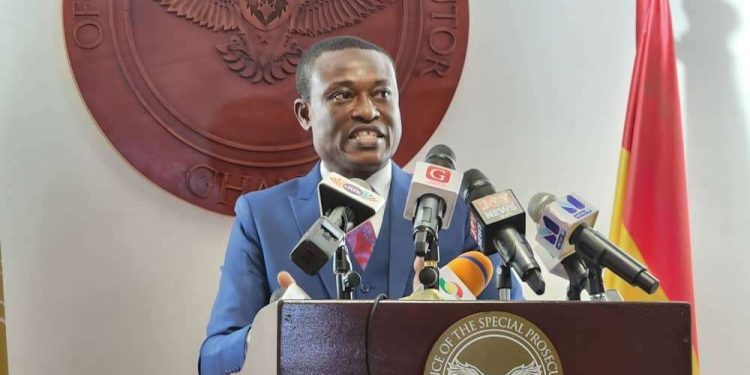
The High Court in Accra, presided over by Justice John Nyante Nyadu, ruled on Wednesday, April 15, that the OSP cannot prosecute cases in court without authorisation from the Attorney General, as required under article 88(4) of the 1992 Constitution. The court also awarded costs of GH₵15,000 against the OSP.
But the anti-corruption body has swiftly rejected the decision, insisting the High Court overstepped its jurisdiction.
In a statement issued shortly after the ruling, the OSP argued that only the Supreme Court has the authority to strike down parts of an Act of Parliament as unconstitutional.
“The High Court does not have jurisdiction to, in effect, strike down parts of an Act of Parliament as unconstitutional,” the OSP said. “It is only the Supreme Court which can strike down parts of an Act of Parliament as unconstitutional.”
The office said it is “taking steps to quickly overturn the decision” and assured the public that all its ongoing and intended prosecutions remain valid.
“The OSP firmly assures the public that all the criminal prosecutions it has commenced before the courts and all the criminal prosecutions it is about to commence before the courts remain valid and would proceed based on its mandate under the Office of the Special Prosecutor Act, 2017 (Act 959), which remains valid and in force as the matter has not been decided by the Supreme Court.”
The ruling has sparked fresh legal debate over the extent of the OSP’s authority, with the matter now likely heading to the Supreme Court for final determination.


