



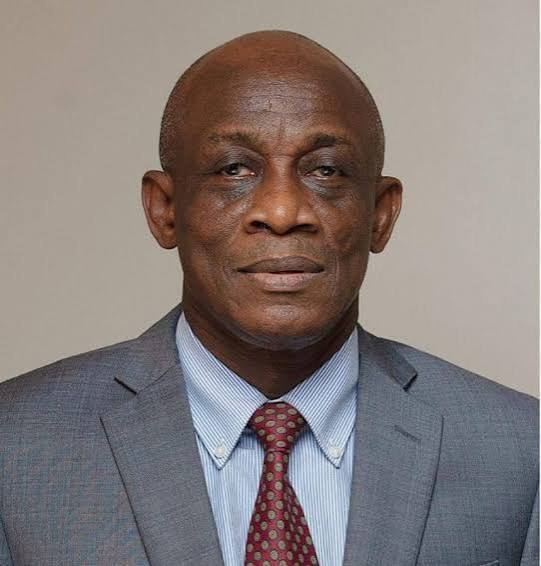
Former Finance Minister Seth E. Terkper has offered a detailed retrospective on the fiscal management of Ghana’s oil and gas revenues, asserting that the administration of the late President John Evans Atta Mills and President John Dramani Mahama deliberately established robust financial safeguards that were later eroded.
In a recent interview, Mr. Terkper explained that the passage of the Petroleum Revenue Management Act (PRMA) was a cornerstone of the then-NDC government’s strategy. He stated that the Act was designed to create critical financial buffers to protect the economy and ensure long-term benefits for the nation.
According to the former minister, these key buffers included:
· A Stabilisation Fund: Intended to cushion the economy against unforeseen domestic and global economic shocks.
· A Sinking Fund: A dedicated mechanism for the structured repayment of Ghana’s public debt.
· A Heritage Fund: Designed to serve as an endowment to secure savings and provide resources for future generations.
Beyond the PRMA, Mr. Terkper highlighted the establishment and initial funding of other major state institutions under the Mills/Mahama administration, namely the Ghana Infrastructure Investment Fund (GIIF) and the Ghana Export-Import Bank (EXIM Bank) .
He provided a specific example of the Sinking Fund’s utility, noting that approximately $350 million** was used to refinance a portion of Ghana’s 2007 sovereign bond, which had been issued under the previous NPP administration. He further acknowledged that in October 2017, the succeeding government of Nana Akufo-Addo utilized **$200 million from this same fund to pay off the final balance of that bond—a move that later earned the NPP government an international EMEA finance award.
A Legacy of Prudence Undone
However, Mr. Terkper’s central argument is that the fiscal prudence of the Mills/Mahama era was subsequently undermined. He contends that the depletion of the Stabilisation and Sinking Funds by the Akufo-Addo administration significantly weakened Ghana’s fiscal buffers.
He argued that this depletion, coupled with increased borrowing, contributed directly to the country’s economic challenges, leading to a suspension of debt service payments and multiple credit rating downgrades to junk status. In contrast, he maintains that deliberate efforts initiated since 2025 to restore these fiscal strategies are beginning to yield positive results.
COVID-19: An Exacerbating Factor, Not the Root Cause
Addressing the impact of the global pandemic, Mr. Terkper argued that COVID-19 served to worsen an already fragile economic situation. He pointed to what he described as the pre-existing depletion of fiscal buffers, certain financial engineering practices, and the inefficient utilisation of approximately $6 billion in loans and inflows procured for the COVID-19 response.
To support his view, Mr. Terkper cited the International Monetary Fund (IMF), noting that the Fund had described the economic difficulties Ghana faced entering the pandemic as “pre-existing conditions.”
The former minister’s comments are likely to reignite debate on the management of the country’s oil wealth and fiscal responsibility over the past decade. Attempts to reach representatives of the former Akufo-Addo administration for a response were not immediately successful.


