



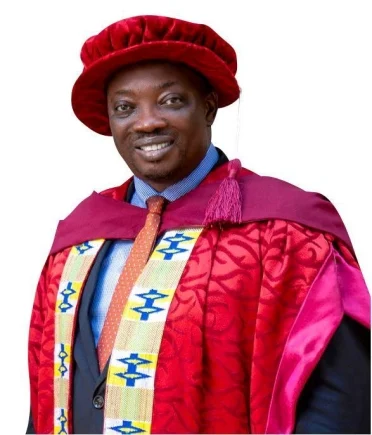
Professor Emmanuel Ohene Afoakwa, the recently ousted Vice-Chancellor of the Ghana Communication Technology University (GCTU), has initiated legal action against the institution, its leadership, and the Ghana Tertiary Education Commission (GTEC), seeking to overturn what he describes as an illegal termination of his employment.
In a writ filed at the Accra High Court on March 1, 2026, Professor Afoakwa is challenging the decision by the university’s council to relieve him of his duties, arguing that the process violated his right to a fair hearing as enshrined in the university’s founding act and the 1992 Constitution.
The lawsuit names GCTU, Council Chairman Ing. Divine Kpetigo, Acting Pro Vice-Chancellor Professor Ebenezer Malcalm, and GTEC as defendants.
According to the statement of claim, Professor Afoakwa was initially appointed Vice-Chancellor in March 2021. He states that his contract was renewed by the university in August 2024 for a second four-year term, scheduled to run from March 1, 2025, to February 28, 2029.
However, the former Vice-Chancellor claims that on February 3, 2026, he received a letter instructing him to cease holding the position, with his contract allegedly terminated effective February 28, 2026. A subsequent letter dated February 26, 2026, formally barred him from acting in the capacity of Vice-Chancellor.
Through his lawyers, Barfo Bonney & Associates, Professor Afoakwa contends that he was never notified of any breach of his contract nor invited to any hearing to respond to allegations prior to his removal.
“Plaintiff says he has never been invited by the 1st and or the 2nd Defendants to a hearing and has never been heard in his defence regarding any allegation or breach of contract,” the court documents state.
The plaintiff argues that the termination contravenes Section 9(24) of the Ghana Communication Technology University Act 2020 (Act 1022), which mandates a process of fair hearing. His legal team also cited Article 19(13) of the 1992 Constitution, asserting that these provisions must be adhered to for any termination to be valid.
“The arbitrary exercise of discretionary power by the 1st and 2nd Defendants seeking to purportedly terminate the Plaintiff’s contract of employment without hearing the Plaintiff in relation to any allegation and or proving the Plaintiff’s breach of a term of the contract between the Plaintiff, is simply unlawful,” the claim argues.
The writ further alleges that GTEC, in a letter dated March 2, 2026, effectively endorsed the university’s actions, which the plaintiff claims is detrimental to his fundamental human rights.
Professor Afoakwa is seeking seven reliefs from the court. These include an injunction to restrain the defendants from interfering with his employment pending the final determination of the case, and a declaration that the purported termination is a nullity for want of due process. He is also seeking a declaration that he remains the substantive Vice-Chancellor, as his contract does not expire until 2029.
Consequently, he is asking the court to declare that the third defendant, Professor Malcalm, who is currently acting as Vice-Chancellor, does not legitimately occupy the position.
The plaintiff is also seeking damages for distress, ridicule, humiliation, and shame, with the quantum to be assessed by the court.
Professor Afoakwa argues that without judicial intervention, the defendants will continue to subject him to public shame and throw the university into confusion, ultimately affecting the welfare of students and institutional cohesion.
The writ has been filed at the Accra High Court registry but is yet to be served on the defendants. Upon service, they will have eight days to enter an appearance.


