



The government has issued a firm ultimatum to medical professionals refusing postings to rural areas: accept the transfer or face removal from the state payroll. The move underscores a renewed effort to rectify a longstanding disparity in healthcare access between urban centers and underserved communities.
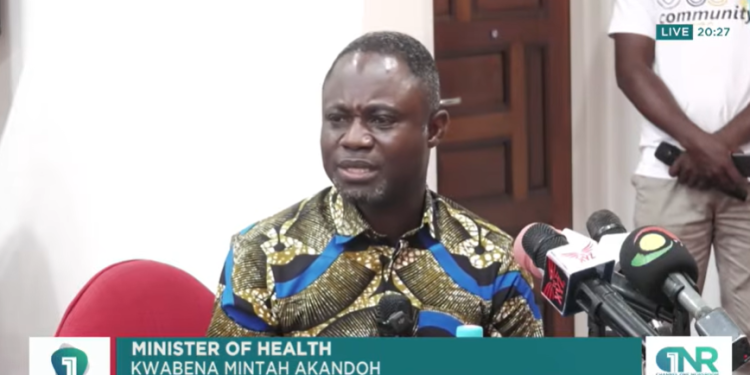
Health Minister Kwabena Minta Akando issued the warning on Saturday during an address at the University of Ghana College of Health Sciences, located at the Korle-Bu Teaching Hospital. He stated that a validation exercise will be conducted by the end of February 2026, and doctors who have not complied with their postings will be delisted.
“By the end of February, we are going to do a validation. If you have not reposted, your name will be removed from the government payroll because we want to ensure equitable healthcare delivery across the country,” Hon. Minta Akando cautioned.
For years, rural communities have struggled with a severe shortage of medical doctors, a situation the Minister described as a “menace” that must end. He emphasized that addressing the gaps in these underserved areas is not just a matter of policy, but of fairness and equity.
In his address, the Minister appealed directly to academic staff and medical trainers, urging them to instill a sense of national duty in new graduates. He argued that the reluctance of some doctors to serve in rural areas is a disservice to the very populations that fund the public education system.
Hon. Minta Akando highlighted the economic paradox of the situation, pointing out that the government’s ability to subsidize medical education is largely financed by revenues from the agricultural sector, including cocoa farmers in rural areas.
“I agree that working in the rural areas is difficult due to a lack of some basic amenities, but your education is subsidized. The government gets funds from the cocoa-producing farmers from these areas to finance your education,” the Minister stated. “If you say those places are villages, so you don’t want to go there, then I beg to differ.”
The government’s directive signals a zero-tolerance approach to addressing the inequities in the healthcare system, ensuring that medical professionals serve all Ghanaians, regardless of their geographic location.


