



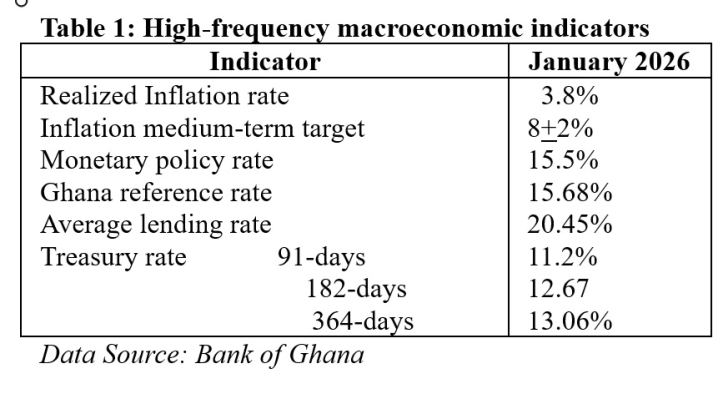
While Ghana’s headline inflation rate falling to 3.8% in January 2026 offers surface-level relief, economist Dr. Samuel Addo argues the figure may be a warning sign of an economic slowdown rather than a victory.
In an analysis published today, Dr. Addo notes that the current inflation rate has fallen significantly below the Bank of Ghana’s medium-term target band of 6% to 10%. He suggests this indicates weak consumer demand, where people are buying less and economic activity is cooling, rather than stemming from increased productivity.
“When inflation falls below this range, it often means the economy is slowing down too much,” Dr. Addo writes. “People are buying less. Businesses are selling less. Money is not moving as it should.”
The analysis highlights a critical tension in the current economic landscape: despite low inflation, the cost of borrowing remains exceptionally high. The Monetary Policy Rate stands at 15.5%, with average lending rates around 20.45%. This, Dr. Addo contends, creates a restrictive environment where businesses cannot afford to expand and create jobs, ultimately stifling growth and income generation.
“For the ordinary Ghanaian, this situation affects daily life in quiet but serious ways,” the analysis states. “Even though prices are stable, incomes do not grow fast enough. Life may feel calm at the market, but opportunities are shrinking behind the scenes.”
Dr. Addo calls for a recalibration of monetary policy, arguing that the current interest rate is too restrictive given the low inflation environment. He proposes a gradual reduction in both the policy rate and lending rates to make credit more affordable, stimulate business investment, and help move inflation back toward the target band.
The economist also addresses fiscal policy, noting that while lower inflation reduces government borrowing costs, weak economic growth simultaneously constrains tax revenue. He advocates for careful, growth-oriented government spending on infrastructure, agriculture, and industry to strengthen the economy.
“The main lesson from Ghana’s January 2026 figures is clear,” Dr. Addo concludes. “Low inflation alone is not enough. The economy also needs affordable credit, growing businesses and rising incomes. Stability should help people prosper, not hold them back.”


