


Finance ministers from the 21 member economies of the Asia-Pacific Economic Cooperation (APEC) forum concluded two days of meetings in Hong Kong on Wednesday with a commitment to deepen macroeconomic policy coordination, bolster fiscal and financial system resilience, and advance a new policy framework for financing digital infrastructure across the region.
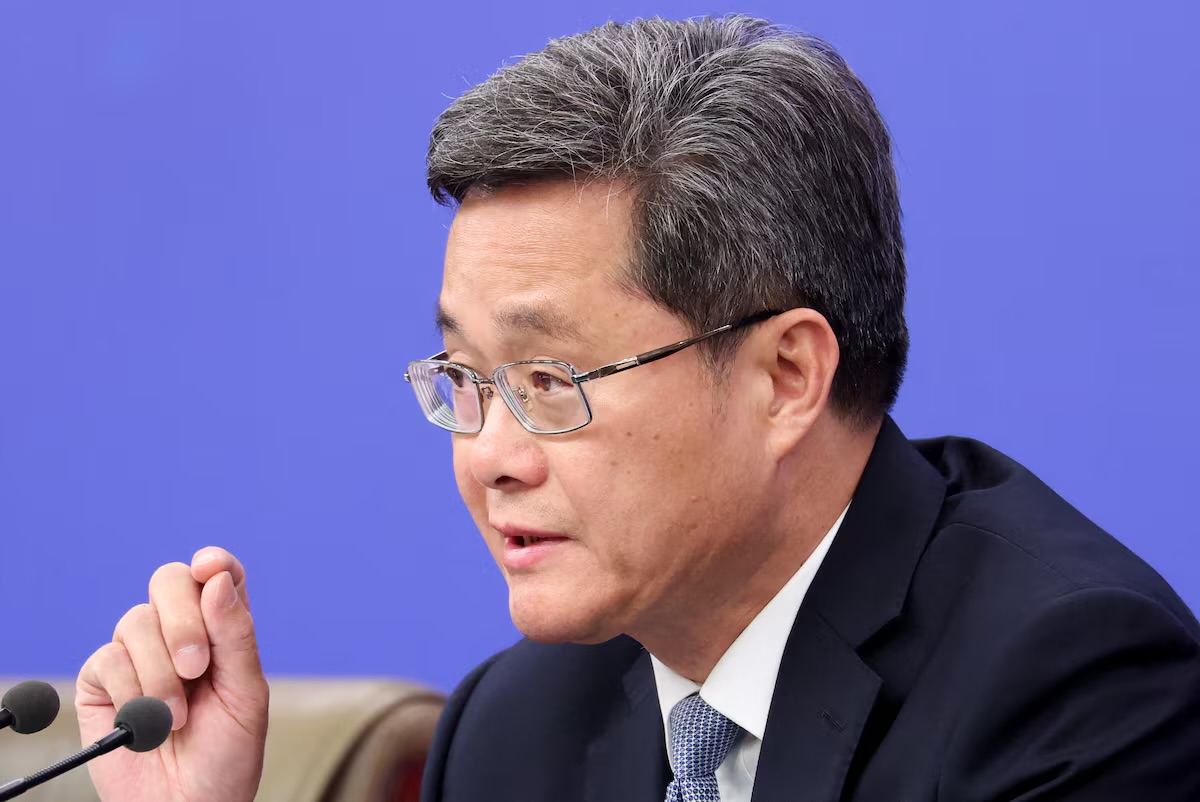
Chinese Finance Minister Lan Foan, who chaired the 33rd APEC Finance Ministers’ Meeting, told a post-meeting press conference that members had reached consensus on enhancing the “soundness” of macroeconomic policies amid mounting external risks. “All members agreed that we should enhance the soundness of our macroeconomic policies,” Lan said, adding that the ministers would strengthen fiscal and financial systems to better handle uncertainty and safeguard regional economic and financial stability .
The meeting, held at the Hong Kong Convention and Exhibition Centre, was the final major finance-track gathering before the 33rd APEC Economic Leaders’ Meeting scheduled for November in Shenzhen . It produced the 2026 APEC Finance Ministers’ Joint Statement and a separate Asia-Pacific Digital Infrastructure Financing Policy Statement, alongside two supporting reports on fiscal policy supporting households and a compendium of inclusive finance practices .
Digital Infrastructure Financing Framework
The policy statement on digital infrastructure financing—developed with input from the Asian Infrastructure Investment Bank—urges member economies to develop “reliable, accessible, scalable, trusted, secure and resilient” digital infrastructure, enhance digital literacy, promote interoperability, and expand cross-border digital connectivity . It calls for deeper collaboration between the public sector, private capital, and multilateral development banks, with governments tasked with creating supportive regulatory conditions, private firms expected to supply capital and innovative financing methods, and MDBs playing a catalytic role in project preparation and investment mobilization .
Fiscal Support for Households and Fiscal Discipline
On fiscal policy supporting households, Lan said ministers recognized that investment in people and targeted support could lift household spending, domestic demand, and productivity. At the same time, he stressed that governments must maintain fiscal discipline and ensure sustainable public finances—a balancing act that has become more pressing as regional economies confront shifting growth drivers, aging populations, and the rapid advance of digital transformation .
AI and Emerging Technologies
Lan noted that artificial intelligence and other emerging technologies could raise productivity and support new sources of growth, a theme echoed by Singapore’s Second Minister for Finance Jeffrey Siow. Siow warned that global growth faced risks from prolonged conflicts, worsening geopolitical fragmentation, and the possibility that AI productivity gains fall short of expectations. He said APEC could help small- and medium-sized enterprises adopt AI by convening industry partners, technology providers, and training institutions .
Youth Finance Talent Initiative
The meeting also endorsed outcomes on the APEC Young Financial Talents Dialogue, a China-initiated program aimed at building cross-border capacity and exchange among young finance professionals. Ministers agreed to continue the initiative, with a summary report to be submitted for further guidance .
Background and Context
The Hong Kong meeting was the culmination of a year-long finance ministers’ process under China’s 2026 APEC host year, themed “Building an Asia-Pacific Community to Prosper Together.” Four priorities guided the work: fiscal policy supporting households, digital infrastructure financing, financial access and opportunity for all, and the young financial talents dialogue . The digital infrastructure financing statement represents one of the more concrete deliverables, addressing a persistent financing gap across the region for broadband networks, cloud computing, and data centers.
Lan, in his opening remarks on Tuesday, had called on APEC economies to shoulder greater responsibility as the global economy grapples with geopolitical spillovers and trade tensions. “APEC, as an engine of global economic growth, shoulders greater responsibility,” he said .
The joint statement and policy documents will now feed into the leaders’ agenda in Shenzhen, where finance-track outcomes are expected to be endorsed at the highest level.
Reporting by Yantoultra Ngui in Hong Kong and Shi Bu in Beijing; additional context from APEC Secretariat documents and official statements.