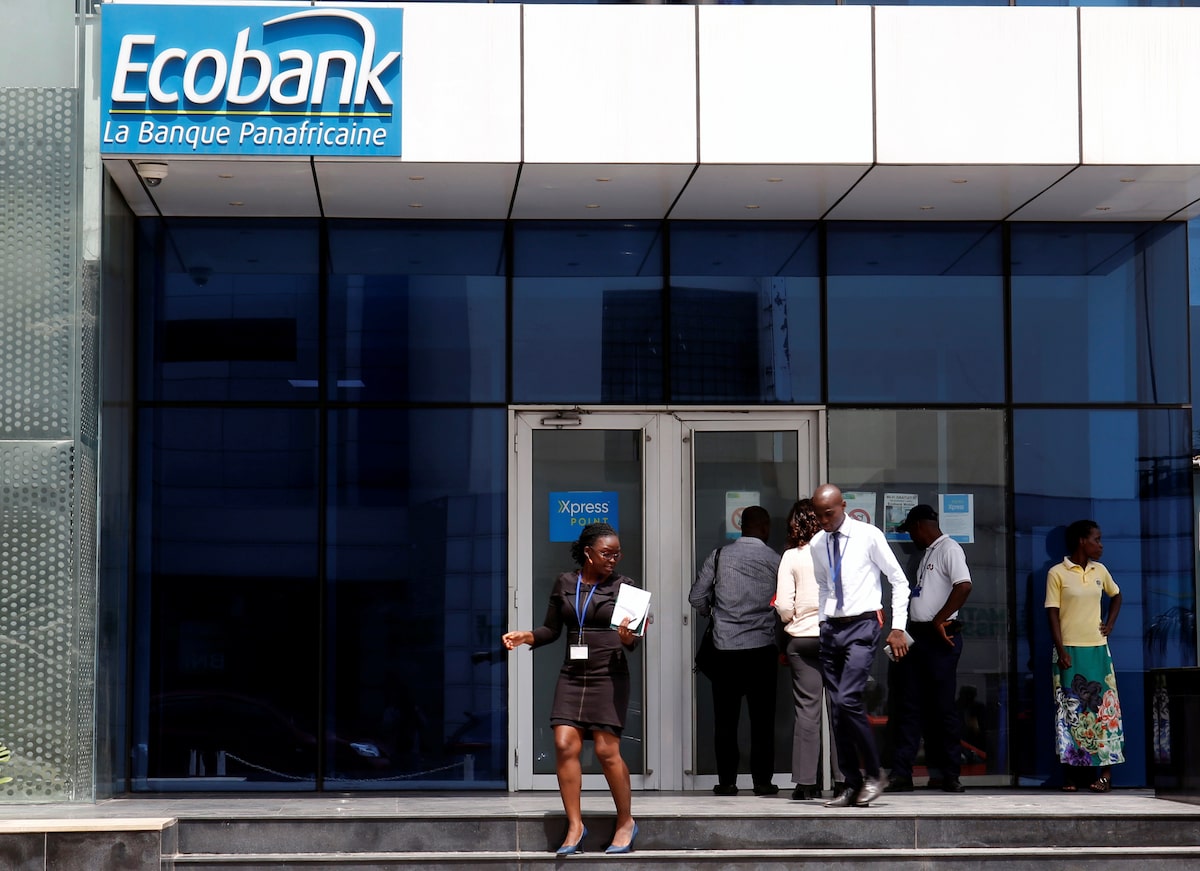
African lender Ecobank will sign an agreement to join the China Interbank Payments System for yuan transactions, its chief executive said, as banks race to capitalise on growing trade and investment ties between China and Africa.
Demand for direct settlement of local currencies into yuan has been rising across the continent as commerce with China expands and Beijing pushes to internationalise its currency, prompting banks to invest in the necessary payments infrastructure.
“CIPS is an important part of the infrastructure supporting international RMB payments,” Jeremy Awori told Reuters ahead of signing the deal in China on Saturday.
CIPS connects more than 5,000 banks in over 100 countries and territories, Awori said, providing businesses trading with China with more direct settlement options.
“This cooperation really strengthens the link between the Chinese RMB payment infrastructure and our African banking platform and payment infrastructure, which is obviously critical,” he said.
Ecobank, which operates in 34 African countries, is also in talks with Bank of China to jointly offer yuan settlement services and expects to make an announcement soon, Awori said. The initiative would complement Ecobank‘s CIPS participation and other payments partnerships aimed at facilitating trade between Africa and China.
The Togo-headquartered lender, which celebrated its 40th anniversary this year, is opening a new office in Beijing and has also signed a memorandum of understanding with the Cross-Border Interbank Payment System, Beijing’s global system for yuan-denominated transactions, it said in a statement.
CIPS Expansion Accelerates Across Africa
Ecobank‘s move adds to a growing list of African financial institutions connecting to CIPS. By the end of August 2026, CIPS had 211 direct participants and 1,642 indirect participants, with the system’s services reaching banking institutions across 192 countries and regions.
South Africa’s Standard Bank became the first African lender to connect to CIPS in November 2025 and secured authorisation last month with Industrial and Commercial Bank of China to clear yuan transactions across the continent. The two banks now operate jointly as the “Renminbi Clearing Bank of Africa,” with operational capacity to clear RMB in 19 African countries — the first RMB clearing bank named after a continent and the first to be jointly operated by two commercial banks. Standard Bank had processed over $1.2 billion in transactions by July 2026.
Rwanda‘s Bank of Kigali became the latest African bank to join CIPS in September 2026, making it the first Rwandan lender and the first bank headquartered in East and Central Africa to join as a direct participant. Angola’s Banco de Fomento Angola (BFA) is also planning to join the platform, with plans to complete the process by 2027.
The African Export-Import Bank (Afreximbank) has also joined CIPS as a direct participant, and says China now accounts for 20% of the continent‘s external trade — up from just 5% two decades ago.
China-Africa Trade Surge Drives Yuan Adoption
China-Africa trade rose nearly 18% last year, according to Chinese customs data, and Beijing removed tariffs on imports from 53 African nations on May 1, 2026. The tariff elimination is expected to further increase trade flows and yuan-denominated settlements.
From Nigerian cattle bone pellets to Kenyan avocado oil and South African apples, Chinese ports are receiving more African cargo after the tariff elimination, boosting demand for settlement from yuan into local African currencies. International Monetary Fund research has found that yuan usage rises with trade exposure to China, which announced new measures in June 2026 to promote the global use of its currency.
Standard Bank‘s latest Africa Trade Barometer shows cross-border trade preferences shifting notably toward Asia, with Asian countries now the preferred partners for an average of 35% of surveyed businesses, up from 24% in 2024. China continues to dominate as the leading source of inputs, cited by 67% of surveyed businesses, with competitive pricing, product variety and supply-chain reliability highlighted as key drivers.
Dollar Dominance Persists Despite Yuan Momentum
While the dollar remains dominant in global trade and foreign exchange reserves, growing commercial ties with China have encouraged some African governments, companies and banks to increase their use of the yuan. The dollar accounts for approximately 58% of international transactions across several measures, while the yuan’s share is much smaller at roughly 2% of cross-border payments.
Bankers say the shift to the yuan reflects trade growth rather than a direct challenge to the dollar. “We see it as complementary,” said Birju Sanghrajka, CEO of Standard Chartered Kenya, adding that the bank has begun issuing yuan-denominated letters of credit, enabling Kenyan customers to secure discounts by avoiding dollar conversion costs.
Kenya agreed to redenominate approximately $3.5 billion of Chinese loans into yuan in late 2025, with officials arguing the move would reduce debt-servicing costs. Zambia has also started collecting taxes and royalties from Chinese mining firms in yuan, channelling the currency back to Beijing to fund imports and service loans. In July 2026, Angola‘s central bank added the yuan to the currencies that commercial banks can use to meet hard currency reserve requirements, giving it the same status as the US dollar, the euro and the South African rand.
Cost Savings for African Businesses
The impact on local businesses trading with China is significant. Historically, African importers and exporters faced severe foreign exchange bottlenecks, having to convert local currencies into US dollars before settling transactions in renminbi. By leveraging direct CIPS rails, local businesses have reduced the time lag from currency conversion to just 24 hours, cut transaction overhead by up to 4%, and secured predictable inventory delivery cycles, according to industry data.
BFA, Angola’s second-largest commercial lender, explained its decision to join CIPS in stark terms: “We have realised, through our clients, that financial flows with China will have to switch to the CIPS system. If we remain on the sidelines, we may even lose this relationship with our Chinese clients,” a source at the bank told Reuters.
Lower transaction fees and reduced foreign exchange volatility could also help smaller African exporters access Asian consumer markets. Historically, high transaction costs and currency volatility have priced smaller exporters out of Asian markets, particularly in the agricultural processing and light manufacturing sectors. Direct CIPS clearing lowers these market-entry barriers, allowing African small and medium-sized enterprises to price goods directly in renminbi and retain capital for local value addition.
Ecobank’s China Strategy Deepens
Ecobank‘s engagement with China predates the CIPS agreement. In December 2025, the bank signed a memorandum of understanding with Bank of China (Mauritius) Limited to deepen cooperation in trade, payments and financial services, building on a partnership that dates back over 15 years. In February 2025, Ecobank also partnered with Chinese fintech XTransfer to facilitate trade between China and Africa.
The lender already operates a representative office in Beijing, located in the Xicheng District’s Financial Street area, and maintains a dedicated China desk. “This partnership builds on our established strategy, which includes a representative office in China and a dedicated China desk,” Awori said of the XTransfer collaboration.
What’s Next
While CIPS is sometimes discussed as an alternative to SWIFT, the two systems serve different functions. CIPS provides infrastructure for clearing and settling cross-border payments denominated in yuan, while SWIFT is a messaging network for financial institutions. Their roles can overlap in cross-border payment arrangements, but they are not direct equivalents.
Harvard economist Kenneth Rogoff has suggested the yuan could become a global reserve currency within five years. In March 2026, the daily volume of global settlements processed through the CIPS platform at times exceeded 1.22 trillion yuan, a record high.
For Ecobank, the CIPS agreement represents a strategic bet on the continued expansion of China-Africa trade. With its presence in 34 African countries and a growing suite of yuan-denominated services, the pan-African lender is positioning itself at the centre of a financial corridor that is reshaping how the continent trades with its largest commercial partner.