


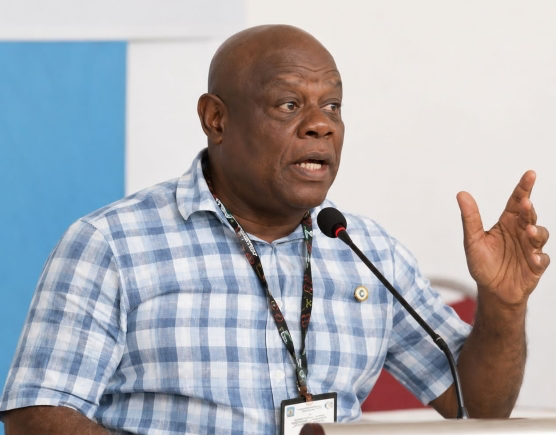
The National Fisheries Association of Ghana (NAFAG) has formally petitioned President John Dramani Mahama to suspend an offshore reconnaissance licence granted to Gold Coast GRC Ghana Ltd. for gold exploration along Ghana’s shallow continental shelf, pending further consultations with the fishing industry.
In a petition dated October 6, 2026, signed by the association’s President, Nana Joojo Solomon, NAFAG demanded clarification of the potential implications of the exploration programme for fisheries resources, marine habitats, and coastal livelihoods.
The association, which represents five major fisheries groups, said its concerns centred on the size of the licensed area, stakeholder consultation, and the application of fisheries and environmental safeguards.
The Licence and the Licensed Area
GoldCoast Resource Corp. was granted a series of 10 contiguous offshore reconnaissance licences by the Minerals Commission of Ghana in January 2026, covering approximately 10,000 square kilometres along Ghana’s western offshore continental shelf — an area representing roughly 53% of Ghana’s total offshore coastline. The licences have an initial term of 12 months, with an option to renew for an additional 12-month period.
The licence area extends along approximately 300 kilometres of coastline, from Half Assini in western Ghana eastward to Winneba, and covers shallow-water offshore zones influenced by multiple gold-bearing river systems draining established onshore gold belts. The licences permit GoldCoast to conduct offshore reconnaissance activities, including airborne and marine geophysical surveys, bathymetric mapping and seismic surveys, magnetometry, coring, and sediment sampling, for the purpose of identifying areas of mineral potential.
NAFAG said the company’s published map appeared to indicate that parts of the licensed area could fall within the Inshore Exclusion Zone (IEZ), which extends up to 12 nautical miles, or about 22 kilometres, from the coastline. The association said the precise extent of any overlap should be established through the publication of the official cadastral coordinates and licence instruments.
Concerns Over Marine Protected Area
NAFAG also raised concerns about the proximity of the licensed area to Greater Cape Three Points, where Ghana launched its first Marine Protected Area (MPA) at Busua on April 14, 2026, as part of efforts to strengthen marine conservation. The 703.86 square kilometre MPA encompasses waters associated with 21 coastal communities, including Cape Three Points and Busua, and was declared by Vice President Naana Jane Opoku-Agyemang at a ceremony in the Western Region.
The MPA is widely recognised for its rich marine biodiversity and its importance to local livelihoods, particularly fishing communities. The declaration was described by the Minister for Fisheries and Aquaculture, Emelia Arthur, as a defining moment in Ghana’s environmental and fisheries management history — “the beginning of a new social contract between people and the sea”. NAFAG’s concerns about the exploration licence’s proximity to this conservation area highlight the potential conflict between offshore mineral extraction and marine protection efforts.
Fisheries Impact Assessment Under Act 1146
NAFAG’s concerns also relate to Section 50 of the Fisheries and Aquaculture Act, 2025 (Act 1146). The provision requires a person planning an activity, other than fishing, that is likely to have a substantial impact on fishery or other aquatic resources to inform the Fisheries Commission before the activity begins. The Commission may subsequently require a Fisheries Impact Assessment or make recommendations to prevent or minimise potential adverse impacts.
NAFAG said it had not established whether the applicable fisheries assessment process had been completed in relation to the project and called for clarification from the relevant authorities.
Fisheries Commission’s Earlier Concerns
NAFAG’s petition follows earlier expressions of concern from the Fisheries Commission itself. In a letter to the Chief Executive Officer of the Minerals Commission dated September 29, 2026, the Executive Director of the Fisheries Commission, Professor Benjamin Betey Campion, said the documents supporting the licence did not adequately consider the marine environment, fishing activities, and the livelihoods of communities that depend on Ghana’s coastal waters.
Professor Campion said the documents appeared to have been prepared largely from the perspective of land-based mining and that the Fisheries Commission was not meaningfully involved in the assessment and planning of the project, despite the proposed activity taking place entirely offshore. He pointed to several sections of the licence documents which, in his view, did not reflect conditions at sea — including references to hunting game, gathering firewood, and collecting snails — and said the assessment should instead recognise the activities of artisanal, semi-industrial, and industrial fishers, as well as fish processors and traders.
He also questioned the environmental information used in preparing the programme, saying the assessment focused heavily on land features such as vegetation, climate, and relief while giving inadequate attention to seabed conditions, oceanography, water quality, and marine habitats. He further raised concerns about marine safety and the risks associated with operating vessels in areas where fishing activities are already taking place, calling for consideration of “possible interactions between exploration vessels and fishing boats, marine pollution, underwater noise, weather conditions, emergency evacuation and search and rescue”.
Professor Campion called for the matter to be reviewed jointly by relevant institutions, including the Minerals Commission, Environmental Protection Authority, Ghana Maritime Authority, Water Resources Commission, and Petroleum Commission. “An offshore reconnaissance programme of this magnitude represents a significant intervention in Ghana’s marine space. It is therefore essential that the regulatory and scientific processes supporting the activity are fit for purpose, marine-specific, evidence-based, precautionary and consistent with Ghana’s obligations concerning sustainable use and protection of its aquatic resources,” he wrote.
The Consultation Process
NAFAG questioned the consultation process surrounding the project, saying that although a stakeholder meeting was held at the Accra City Hotel on July 9, 2026, it had not received the report of the meeting.
NAFAG therefore called on the government to establish the precise location and conditions of the licences, clarify the applicable fisheries and environmental safeguards, and ensure meaningful consultation with affected stakeholders before the programme advances. It urged President Mahama and the relevant agencies to suspend further exploration pending those steps, arguing that Ghana’s marine resources must be managed in a manner that protects fisheries, food security, and coastal livelihoods while allowing responsible investment in the country’s natural resources.
Civil Society and Fisherfolk Coalition
NAFAG’s petition is the latest in a series of objections to the offshore gold exploration project. On September 28, 2026, a coalition of civil society organisations (CSOs) working in the fisheries and coastal sectors wrote an open letter to President Mahama calling for an urgent review of the licences. The CSOs said they did not oppose responsible investment or the lawful exploitation of Ghana’s natural resources but insisted that decisions affecting the ocean space must protect fisheries, biodiversity, food security, human rights, and coastal livelihoods.
The groups said company disclosures indicated that about 50,000 line-kilometres of airborne magnetic data had already been collected across the licensed area, with more detailed work focused on a 500 square kilometre priority area around the mouth of the Ankobra River. The company’s stated forward programme included marine bathymetric and seismic surveys, followed by vibro-core drilling and bulk seabed sampling.
They raised particular questions about the legal basis for vibro-coring, bulk seabed sampling, dredging, and any eventual extraction, citing Section 32(3) of the Minerals and Mining Act, 2006 (Act 703), as amended, which they said prohibited holders of reconnaissance licences from drilling or excavating. They also referred to Section 99(6) of the Act, which they said made it an offence to use a floating platform or other equipment for mining or dredging to obtain minerals in Ghana’s natural water bodies, including the territorial sea, exclusive economic zone, and continental shelf.
A further coalition of fishers and coastal communities, in an open letter dated October 3, 2026, demanded an immediate suspension of further progression of the project and an independent environmental, fisheries, and livelihood impact assessment covering the entire licensed area. They also called for a multi-sector review involving relevant government agencies, research institutions, fishing associations, coastal communities, traditional authorities, and civil society organisations.
The CSOs cited the Marine Fisheries Management Plan 2022–2026, which estimated that the fisheries subsector supported about 10 per cent of Ghana’s population, including fishers, processors, boat owners, and boat builders. “Ghana has taken important steps to expand the IEZ, rebuild its fisheries and establish its first Marine Protected Area. The same shallow coastal waters should not be subjected to a potentially competing extractive use without first establishing, transparently and scientifically, the consequences for fisheries, biodiversity and the coastal communities that already depend on them,” they said.
Legal and Governance Perspectives
Maritime expert Dr. Samuel Dotse added a legal and ocean-governance perspective, arguing that the controversy raised a broader question about whether a regulatory framework designed largely around terrestrial mining was adequate for major extractive activities in the marine environment. He acknowledged Ghana’s sovereign right to explore and exploit offshore mineral resources but stressed that the right existed alongside obligations to protect fisheries, marine biodiversity, and the marine environment.
Dr. Dotse proposed an Inter-Agency Marine Environmental Assessment and Ocean Governance Mechanism involving the relevant regulatory institutions, which would coordinate marine baseline studies, cumulative-impact assessments, stakeholder consultation, monitoring, and mitigation. He summed up his position with the principle: “assessment before authorization, coordination before conflict, and prevention before remediation”.
Government Suspends Exploration Activities
In a significant development, the Minerals Commission on October 6, 2026 directed Goldcoast GRC Ghana Limited to immediately suspend all activities being undertaken under its reconnaissance licences within Ghana’s territorial waters. The suspension was directed by the Minister for Lands and Natural Resources.
The Commission said the decision followed representations from key stakeholders over the potential environmental and ecological impacts of the proposed operations, as well as concerns about the adequacy of consultations with people and groups that could be affected. It said the licences were granted on the understanding that Goldcoast GRC Ghana Limited would obtain all required authorisations and permits from relevant state institutions before commencing exploration activities, but concerns subsequently raised by stakeholders meant the proposed operations could face regulatory challenges and might not secure the necessary social licence to operate.
“It is, therefore, necessary to pause all activities to allow the relevant regulatory, environmental, ecological and social issues to be fully considered and addressed through appropriate stakeholder engagement,” the Commission said. The directive does not revoke the reconnaissance licences but places activities under them on hold pending further regulatory and stakeholder engagement. Activities can only resume after the Commission has completed the necessary consultations and issued written ministerial authorisation.
About NAFAG
The National Fisheries Association of Ghana (NAFAG) is the umbrella body for five major fisheries associations in Ghana: the Ghana Tuna Association (GTA), the Ghana Industrial Trawlers Association (GITA), the Ghana Inshore Fisheries Association (GIFA), the Ghana National Canoe Fishermen Council (GNCFC), and the National Inland Canoe Fishermen Council (NICFC). The association is headquartered at the Tema Fishing Harbour Area and serves as the principal voice of Ghana’s fishing industry, coordinating activities across the commercial, industrial, and artisanal fishing sectors.
The Broader Implications
The petition from NAFAG and the subsequent suspension of activities by the Minerals Commission underscore the growing tension between Ghana’s ambitions to develop its offshore mineral resources and its commitments to marine conservation, fisheries protection, and coastal livelihoods. Ghana’s marine and coastal protected or conserved coverage stands at approximately 0.01 per cent, among the lowest levels identified globally, according to the 30×30 Global Assessment Report, highlighting the competing pressures on the country’s marine space.
As Ghana seeks to balance responsible investment in its natural resources with the protection of its marine environment, the outcome of the review into the Goldcoast GRC Ghana Limited licences will be closely watched as a test case for how the country manages the complex intersections of mining, fisheries, and marine conservation in its territorial waters.