



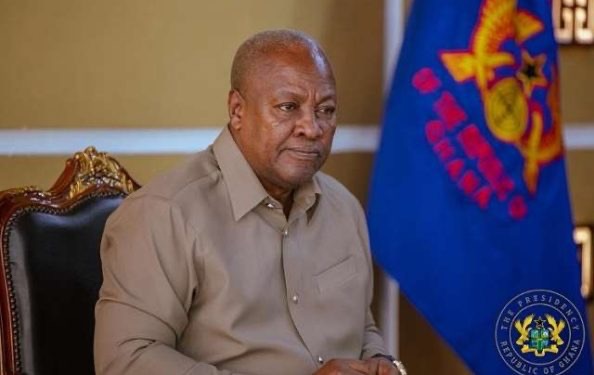
President John Dramani Mahama has granted presidential pardon to 863 convicted persons in commemoration of Ghana’s 70th Independence Anniversary, invoking his constitutional prerogative of mercy in what the Presidency described as “an act of mercy and national reflection” marking a significant milestone in the nation’s history.
The decision was taken in accordance with Article 72(1) of the 1992 Constitution and followed consultation with the Council of State, the advisory body constitutionally mandated to guide the President on the exercise of clemency. The relevant state institutions have been directed to take the necessary steps to give effect to the President’s decision.
The Breakdown
The 863 beneficiaries fall across eight distinct categories, with first offenders forming the overwhelming majority:
Category Number
First Offenders (Outright Releases) 819
Very Old (70 years and above) (Outright Release) 13
Death Sentence to be commuted to Life Sentence 11
Seriously ill (Outright Release) 6
Life sentence commuted to 20 years definite 6
Special Recommendation (Outright Release) 2
Petitions 3
Others 3
Total 863
The largest cohort — 819 first offenders — will be released outright, a category designed to offer rehabilitation and a second chance to individuals convicted for the first time, often for minor or non-violent offences. Thirteen persons aged 70 years and above have also been granted outright release, as have six seriously ill convicts.
Under the decision, 11 death sentences have been commuted to life imprisonment, while six life sentences have been commuted to 20-year definite terms. Two persons granted pardon fall under the category of special recommendations, while three cases were considered under petitions. Another three persons were listed under “others”.
The Presidency did not release the names of individuals included in any of the categories, and no details regarding specific cases were made public alongside the announcement.
A Constitutional Power Rooted in Mercy
Article 72(1) of Ghana’s 1992 Constitution empowers the President, acting in consultation with the Council of State, to “grant to a person convicted of an offence a pardon either free or subject to lawful conditions” or to “grant to a person a respite from the execution of punishment”. The provision allows the President to exercise mercy in cases where justice may be served through clemency rather than continued imprisonment.
The pardon process typically follows recommendations from the Prisons Service Council, which reviews cases based on factors including the nature of offences, length of sentences served, health conditions, and the age of inmates. The Council of State then provides consultation on those recommendations before the President makes a final decision.
Ghana at 70: A Milestone Marked by Mercy
Ghana is preparing to mark its 70th Independence Anniversary in 2027, a historic milestone that President Mahama has framed as a moment for national reflection and renewal. At the 69th Independence Day celebration in March 2026, held under the theme “Building Prosperity, Inspiring Hope,” the President outlined a vision for a “New Ghana” and called on citizens to commit to a year of transformative action as the nation counts down to its 70th anniversary.
The pardon is part of a series of commemorative activities planned for the anniversary. Other initiatives include a three-film project produced by Sparrow Studios and OldFilm Productions, unveiled in September 2026, and a 7-day nationwide Bible reading event announced for the anniversary.
Presidential pardons tied to national commemorations are an established practice in Ghana, allowing the sitting president to exercise the prerogative of mercy for humanitarian and symbolic reasons at key moments in the country’s calendar.
A Familiar Act of Clemency
This is not the first time President Mahama has exercised the prerogative of mercy on a significant scale. In August 2025, he granted amnesty to 998 prisoners out of 1,014 recommended by the Prisons Service Council, following consultation with the Council of State under Article 72(1) of the Constitution. That amnesty affected prisoners across seven categories, with first-time offenders forming the largest group at 787 individuals. Eighty-seven prisoners on death row had their sentences commuted to life imprisonment, while 51 inmates serving life sentences saw their terms reduced to 20 years definite imprisonment.
The August 2025 amnesty also covered 33 seriously ill prisoners, 36 inmates over 70 years of age regardless of their offences, two nursing mothers, and two prisoners whose cases were reviewed through petitions. At the time, the decision was described as one of the most extensive uses of presidential clemency powers in recent years, affecting nearly 1,000 individuals across different circumstances and offence categories.
The October 2026 pardon, while smaller in total number, follows a similar pattern — with first offenders again constituting the largest category, and elderly and seriously ill convicts receiving outright releases.
The Context of Prison Overcrowding
The pardon also comes against the backdrop of persistent overcrowding in Ghana’s prisons. As of September 2026, Ghana’s prisons were 23 per cent over-congested, with an inmate population of about 13,000, according to the Director-General of the Ghana Prisons Service, Patience Baffoe-Bonnie. At its worst, overcrowding stood at more than 45 per cent, with the inmate population exceeding 15,000 against an authorised capacity of 10,265.
Data from the Ghana Prisons Service indicate a total inmate population of 13,620 as of March 2026, comprising 1,745 remands (12.81 per cent) and 11,875 convicts (87.19 per cent). The financial burden of maintaining prisoners has also become enormous, with housing low-level offenders costing taxpayers approximately GH¢10 million every quarter.
The government has taken legislative steps to address the crisis, with Parliament passing a Community Service Bill in July 2026 designed to decongest prisons and cut costs. The pardon represents an additional measure to reduce the inmate population while offering rehabilitation opportunities.
Reactions and Expectations
The pardon has generated mixed reactions across the political spectrum. Supporters argue the President acted within his constitutional powers and that the gesture reflects the spirit of mercy and national reflection appropriate to a milestone anniversary. Critics, however, have expressed concern about the message such pardons may send regarding accountability and the fight against corruption, particularly in light of earlier public debates over whether President Mahama would grant pardons to convicted public officials.
In June 2026, the Member of Parliament for Akwatia, Ernest Kumi, stated categorically that President Mahama “has never contemplated granting a presidential pardon to any public official convicted of corruption-related offences”. Communications team member Hamza Suhuyini also ruled out the possibility of a pardon for former MASLOC CEO Sedina Tamakloe Attionu, saying “many sound-minded Ghanaians would not want it to happen”.
The October 2026 pardon does not appear to include any high-profile corruption convicts, focusing instead on first offenders, the elderly, the seriously ill, and those whose sentences have been commuted.
What Happens Next
The Presidency said relevant state institutions — including the Ghana Prisons Service, the Ministry of the Interior, and the Council of State — have been directed to take the necessary steps to give effect to the President’s decision.
For the 863 beneficiaries, the pardon represents not only freedom but an opportunity for reintegration. In a previous amnesty, emotional scenes were witnessed across the country as prisoners reunited with their families, some appearing ill and fragile, others sharing warm embraces after years of separation.
The grant of pardon is made in commemoration of Ghana’s 70th Independence Anniversary, marking this significant milestone in the nation’s history with an act of mercy and national reflection. As the President has said, the hope is that beneficiaries will conduct themselves properly, make use of skills acquired during incarceration, and contribute their quota to society.
Source: Office of the President, Republic of Ghana. Statement issued by Felix Kwakye Ofosu, MP, Spokesperson to the President and Minister for Government Communications, October 5, 2026. Additional reporting from GBC Ghana Online, Starr FM, GhanaWeb, YEN.com.gh, and the Information Services Department.


