



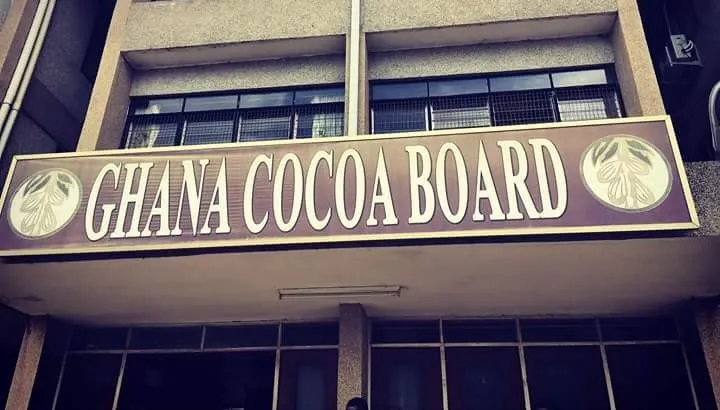
The Ghana Cocoa Board (COCOBOD), through its wholly owned special-purpose vehicle Cocoa Capital PLC, has raised GH¢3.39 billion from the first tranche of its Commercial Paper programme, falling short of its GH¢4 billion target as Ghana’s cocoa regulator pivots to domestic capital markets to fund the 2026/27 crop season.
The funds were raised last week, according to persons familiar with the outcome of the offer. Investors who participated in the offer will receive an interest rate of 11%, with the Commercial Paper carrying a tenor of 266 days.
It is unclear at this stage whether COCOBOD or Cocoa Capital PLC has any arrangements in place to secure additional funding to bridge the GH¢610 million shortfall.
The issuance marks the first tranche of a GH¢14 billion Commercial Paper component under the GH¢16.3 billion Domestic Cocoa Notes Programme, which COCOBOD is deploying to replace its decade-old syndicated loan arrangement that collapsed during the 2023/24 season. The programme also includes GH¢2.3 billion in medium- to long-term bond issuances to refinance existing COCOBOD legacy debt.
The Commercial Paper will be issued in three tranches: the first tranche was targeted at GH¢4 billion, followed by a second tranche of GH¢4 billion and a final tranche of GH¢6 billion. The timing and actual amounts to be raised will depend on COCOBOD’s funding requirements, market conditions and the applicable programme terms. Expected pricing for the commercial paper had been forecast at 11% to 12.5%, placing the first tranche at the lower end of the range.
A landmark shift in cocoa financing
The financing programme represents a significant departure from Ghana’s longstanding reliance on international syndicated loans backed by forward cocoa sales. For over three decades, COCOBOD financed annual crop purchases through offshore borrowing, a model that unravelled when the decade-old syndicated loan arrangement with international banks collapsed during the 2023/24 season. A separate arrangement under which international trading houses pre-financed purchases also fell through last season, contributing to delays in payments to farmers.
Farmers and buyers have blamed funding challenges for uncertainty over the timing of the new season. Ghana is yet to announce a start date for the 2026/27 season, while Ivory Coast — with which Ghana agreed in June to harmonise farmgate prices and season start dates — opened its season on September 1. The Chamber of Cocoa Marketers, which represents the country’s licensed cocoa buyers, has warned that financing may not yet be in place to fund purchases once the season opens, with buyers owed about GH¢4 billion by COCOBOD for last season’s crop.
“This shift reflects government’s commitment to promoting efficiency in the Ghanaian cocoa sector,” COCOBOD Chief Executive Dr. Randy Abbey said in July, noting that indications were clear that Ghana could no longer rely entirely on external financing.
How the funds will be secured
Repayment obligations under the programme will be supported by receivables from selected executed cocoa forward sales contracts assigned to Cocoa Capital PLC. Proceeds from these contracts will flow through designated ring-fenced accounts held with appointed account banks and will be applied in accordance with the programme’s payment waterfall. The arrangement is intended to provide additional assurance to investors that funds raised will be managed and deployed prudently. About 14% of the funds raised will also be used to finance COCOBOD’s legacy debts.
Eligible participants in the programme include commercial banks, pension funds, insurance companies, stockbrokers, high-net-worth individuals, other institutional investors and international cocoa buyers.
Behind the fundraising vehicle
Cocoa Capital PLC was incorporated on August 7, 2026, under the Companies Act, 2019, to lead the fundraising programme. The company is wholly owned by COCOBOD and has an initial paid-up capital of GH¢5 million. Its principal purpose is to raise funds and apply the proceeds to approved cocoa-sector financing and refinancing activities, giving COCOBOD a dedicated vehicle for accessing the domestic capital market. Cocoa Capital PLC has secured approval from the Securities and Exchange Commission (SEC) to raise funds through the domestic debt capital market.
The bookrunners for the programme are Absa Bank Ghana Ltd, CalBank PLC, Fincap Securities Ltd, GCB Bank PLC, One Africa Securities Ltd and Stanbic Bank Ghana Ltd.
A sector under pressure
The fundraising comes as Ghana’s cocoa sector faces mounting challenges. Cocoa output is forecast to drop by 18% to 38% in the 2026/27 season, to between 470,000 and 620,000 metric tonnes, down from 760,000 tonnes a year earlier, according to the state-run Cocoa Marketing Company Ghana Ltd. The decline has been attributed to structural problems including old trees, disease, and pollination failures, compounded by El Niño weather conditions and excessive rain in May and June 2026. London and New York cocoa prices have surged about 75% to 80% since June, driven by expectations of a shrinking global surplus and concerns that El Niño could disrupt output in West Africa.
COCOBOD is also grappling with a legacy debt stock that has ballooned to GH¢32.9 billion. The government has initiated sweeping reforms, including a forensic audit and criminal probe into COCOBOD’s activities over the past eight years. The board’s road exposure has been rationalised from GH¢21.7 billion to GH¢4.35 billion, with the government securing a $500 million World Bank facility to take over agricultural road construction. Government is also converting COCOBOD’s legacy debt owed to the Ministry of Finance and Bank of Ghana into equity.
COCOBOD CEO Randy Abbey has described the institution’s current position as the most “precarious” in its nearly 80-year history, revealing he inherited a “negative equity” position of GH¢3.8 billion — the first in the board’s history. He attributed the liquidity crisis to a “double whammy”: the collapse of the 2024 syndicated loan and the obligation to honor legacy contracts priced at $2,600 per tonne while farmers were being paid at a rate of $3,100 per tonne.
The reforms are supported by the Ghana Cocoa Board Act, 2026, which provides for an automatic producer price adjustment mechanism linked to international market prices, exchange rates and other relevant variables, while guaranteeing farmers at least 70 per cent of the gross FOB price. As part of the restructuring, the government reduced the farmgate price of cocoa from GH¢3,587 per bag for the 2025/26 season.
Looking ahead
The programme forms part of the government’s broader restructuring of the cocoa sector, intended to introduce a more sustainable financing model to support timely cocoa purchases, address legacy obligations and strengthen the sector. COCOBOD officials have described the programme as a new chapter for the cocoa sector as ongoing reforms seek to strengthen financial discipline and build a more sustainable value chain.
“This turnaround signals a cocoa sector that is more resilient, disciplined, and built to deliver value at every level,” COCOBOD told investors, maintaining that the reforms are aimed at reshaping the sector and positioning cocoa as a long-term engine of shared prosperity for stakeholders.
The second and third tranches of the Commercial Paper programme are expected to follow in the coming weeks, with their timing and size dependent on market conditions and COCOBOD’s funding requirements for the 2026/27 crop season.


