



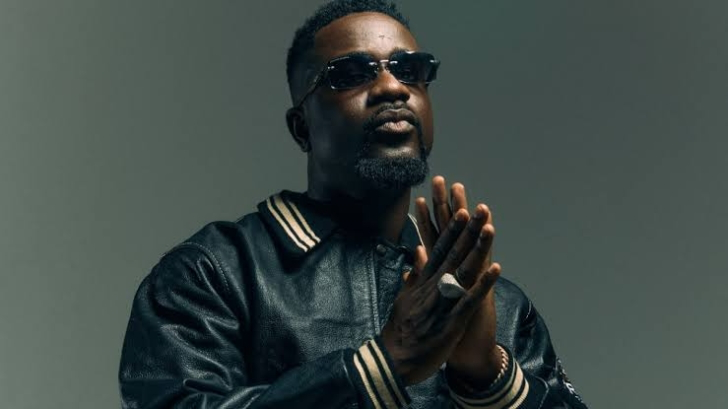
Ghanaian rapper Sarkodie has thrown his weight behind President John Dramani Mahama after the government rejected a proposed $100 million health compact from the United States, describing the conditions attached to the deal as “humiliating” and incompatible with Ghana’s sovereignty.
In a post on X on Tuesday, September 29, 2026, Sarkodie thanked the President for his stance and called for greater international respect for Ghana. “Thank you, Mr President … Hopefully, one day, we gain back the full respect deserved,” he wrote.
The rapper’s intervention followed President Mahama’s disclosure at the Council on Foreign Relations in New York on Friday, September 25, 2026, where he detailed the provisions that led Cabinet to reject the compact in record time.
What the Compact Demanded
President Mahama said the proposed agreement, offered to replace funding Ghana lost when USAID support ended, contained four provisions that Cabinet flagged immediately.
“The compact was brought to Cabinet, and we flagged several things in the compact. One, it says that we shall give the United States our pathogen profile. They also say we should give our medical records. I mean, who takes another country’s medical records?” Mahama said.
He explained that a pathogen profile refers to information on the diseases and disease-causing organisms endemic to the country. “It means that diseases that are endemic in Ghana. What are diseases endemic in Ghana? What is the pathogen profile of a country? I’m sure there are medical experts who understand that better than me,” he said.
The compact further required Ghana to commit counterpart funding towards the programme and barred the Food and Drugs Authority (FDA) from inspecting any medicines or medical products brought into the country under the agreement.
“And then it also says that any medications or any medical products that shall be brought into our country, our Food and Drug Authority has absolutely no right to inspect. I mean, it was humiliating,” Mahama said.
He said Cabinet dealt with the document swiftly. “It was the compact that was thrown out in record time in our cabinet. I’ve never seen anything thrown out as fast as that. And so, of course, we rejected it.” The Health Minister was subsequently directed to inform the US Ambassador that Ghana would not sign the compact.
The Data Sovereignty Debate
The rejected compact was ostensibly intended to support HIV/AIDS, malaria and tuberculosis programmes. It would have run for five years and provided approximately $100 million in US health assistance. However, reporting on the negotiations has cited an initial figure of about $109 million.
The deal would have required Ghana to share 25 years of its citizens’ health records — five times the duration of the aid programme itself — raising alarms among data protection officials and cybersecurity experts.
Arnold Kavaarpuo, Executive Director of Ghana’s Data Protection Commission, said the proposed data-sharing agreement “looked at access not only to health data sets, but also to metadata, dashboards, reporting tools, data models and data dictionaries,” allowing 10 US entities access to such data with no prior approval needed from Ghana.
Agence France-Presse, citing sources, reported a further demand that the GhanaCard biometric database held by the National Identification Authority be integrated with American systems in real time, bypassing the country’s 2012 Data Protection Act.
“All of these amounted to outsourcing the health data architecture of the country to a foreign body,” Kavaarpuo said.
David Gyedu, a cybersecurity expert, warned that such a transfer of biological information carries permanent and irrecoverable risk. “A stolen bank password can be reset, but no one can reset an HIV status or reissue his or her own DNA, fingerprint, iris pattern or genetic marker,” he said.
A Broader Pattern Across Africa
Ghana is not alone in rejecting the terms. Under the “America First Global Health Strategy” announced in September 2025, Washington has signed health cooperation memoranda with more than 30 countries, with a total value of $20 billion. As of September 11, 2026, the State Department had signed 35 bilateral global health MOUs, covering HIV/AIDS, tuberculosis, malaria, maternal and child health, polio, and global health security.
But the money comes with conditions that have sparked resistance across the continent. Zimbabwe walked away from its deal in February 2026, calling the terms “asymmetrical.” Zambia shelved its agreement in May after Washington demanded it be signed alongside a critical minerals pact. In Kenya, lawsuits followed within weeks of a framework signed in December 2025 that required Kenya to contribute roughly $850 million while Washington pledged $1.6 billion over five years. The High Court suspended implementation, and a final ruling is due at the end of October.
The journal PLOS Global Public Health has described such arrangements as “digital colonialism” — “African lives are counted and monitored to manage risk elsewhere, under the banner of partnership.”
US Embassy Pushes Back
The US Embassy in Ghana has defended its request for access to Ghana’s health data, rejecting claims that the pact sought patients’ records. Major General Brown, speaking for the Embassy, said the deal sought only aggregate data, not individual patient records, and affirmed Washington’s openness to further discussions with the Ghanaian government.
The Embassy also confirmed that the United States is phasing out some health programmes in Ghana following Accra’s refusal to sign the bilateral health deal.
Public Reaction and Political Significance
Sarkodie’s endorsement of the President’s decision sparked intense online debate, with supporters of the rapper and political commentators weighing in on questions of national sovereignty and Ghana’s relationship with Western powers. For a musician of Sarkodie’s stature — one of Africa’s most commercially successful rappers and a cultural ambassador for Ghana — the intervention carries particular weight, signalling that the rejection of the health compact has resonated beyond political circles and into the broader public imagination.
Ghana first walked away from negotiations in April 2026, when Reuters and the Associated Press reported that talks had broken down over concerns about the sharing of sensitive health data. At the time, US negotiators were described as becoming “hostile” and piling on pressure after Ghana pushed back on the data demands.
The government has since indicated it is seeking a new agreement more aligned with Ghana’s data protection laws and regulatory framework.
For now, the rejection stands as one of the most significant assertions of data sovereignty by an African government in recent years — and a rare moment of cross-sectoral consensus, with a President, a data protection commission and one of the continent’s biggest music stars aligned on the same position: some deals are not worth the price.


