



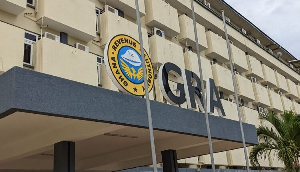
The Ghana Revenue Authority (GRA) has called for a fundamental review of the country’s tax approach to keep pace with the rapid growth of the telecommunications and digital economy, warning that traditional methods of tax administration are no longer sufficient.
Dr. Martin Kolbil Yamborigya, Commissioner of the GRA’s Domestic Tax Revenue Division, said tax policies must protect government revenue without discouraging investment in digital infrastructure. He made the call at the 28th Forum of the Ghana Chamber of Telecommunications on September 23, 2026.
He said the growth of mobile money, digital payments, e-commerce, fintech, and digital advertising was creating new business models that required tax rules to evolve.
“Tax policy should not necessarily discourage investment in capital investment in infrastructure,” Dr. Yamborigya said, stressing the need for continued investment in fibre networks, data centres, and broadband infrastructure.
From Random Audits to Data-Driven Compliance
The GRA is moving towards a more data-driven and risk-based approach to tax compliance, Dr. Yamborigya said, acknowledging that the Authority can no longer rely heavily on traditional methods such as random audits and past compliance records to identify businesses for tax checks.
According to him, the GRA needs stronger engagement with telecommunications companies to better understand emerging revenue streams, cross-border services, transfer pricing, withholding taxes, and investment incentives.
Technical Advisor to the Commissioner-General, Elsie Appau-Klu Esq., reinforced this position at the 2026 GRA Statistics and Data Analysts’ Seminar in Ho, disclosing that only about half of expected Value Added Tax (VAT) revenue is currently being collected, while corporate income tax performance also remains below expectations.
“The traditional tools of tax administration remain important, but they are no longer sufficient on their own,” she said. “As the economy becomes increasingly digital, tax administration must become increasingly intelligent, responsive and data-driven.”
The GRA has identified four key functions for its data professionals: detectives who identify economic activities outside the tax net, risk managers who flag high-risk sectors, policy advisers who measure the impact of reforms, and guardians of data integrity.
Tax Incentives Under Review
Dr. Yamborigya also called for a review of tax incentives to ensure they are achieving their intended purpose — attracting investment, expanding network coverage, supporting rural areas, promoting innovation, and creating jobs.
His comments come against the backdrop of a telecommunications sector that is already heavily taxed. The Telecoms Chamber has noted that almost 40 per cent of annual revenues of telecommunications companies go into taxes and levies, with another 40 per cent reinvested in Ghana.
MTN Ghana, the country’s largest telecommunications operator, paid GH¢10.5 billion in direct and indirect taxes in 2025, up from GH¢8.6 billion in 2024, representing roughly 6 per cent of Ghana’s total tax revenue. When regulatory fees and levies are included, the company’s total fiscal contribution reached approximately GH¢11.8 billion, or over 48 per cent of its service revenue.
A Wave of Digital Tax Reforms
The GRA’s call for a strategic overhaul is already being translated into concrete policy reforms. The Value Added Tax Act 2025 (Act 1151), passed in late 2025, now explicitly taxes digital and telecommunication services from non-residents — including distance maintenance of programmes or equipment, supply of software and software updates, and virtual and digital asset management services — while excluding online gaming.
Penalties for non-registration have been significantly increased to three times or more of the unpaid VAT, up from the previous maximum of twice the amount. The scope of taxable activities has been broadened to include natural resource exploration and traditional product exports, while locally assembled vehicles are no longer zero-rated.
The effective VAT rate was reduced from 21.9 per cent to 20 per cent following the decoupling of GETFund and NHIL levies from the VAT base and the abolition of the COVID-19 Health Recovery Levy. The VAT registration threshold was also raised from GH¢200,000 to GH¢750,000 to reduce the compliance burden on small and medium-sized enterprises.
Automated VAT Collection at Point of Purchase
In a major operational shift, the GRA has deployed an automated system that deducts VAT from online payments for goods and digital services at the point of purchase. A three-month pilot was successfully completed, with the system deployed from August 2026.
Commissioner-General Anthony Sarpong said analysis of 2025 data showed that had the system been in place, it could have generated more than GH¢2.5 billion in revenue for the state. “When you are buying an item and paying for it online, the system will intervene at the point of payment, deduct the appropriate VAT and hand it over to government,” he explained.
The GRA also plans to expand the digital ecosystem to cover gains from cryptocurrency assets and transactions, with Sarpong noting that many young people are storing wealth in digital assets. “It is important that they also contribute their fair share,” he said.
The cross-border digital VAT collection system, developed with Principal Consult Limited following parliamentary approval in July 2026, is projected to generate approximately GH¢2.3 billion in its first full year of operation, with revenue expected to increase by about 20 per cent annually thereafter.
Publican AI System Operationalised
As part of the broader digital reform agenda, the Customs Division of the GRA commenced full operationalisation of the Publican Digital Inspection Solution (Publican System) effective March 12, 2026. The system transitions Ghana’s customs operations from manual checks to advanced digital vetting, intended to close revenue loopholes while ensuring faster clearance processes and fair, consistent valuation.
The Publican system uses artificial intelligence to detect high-risk consignments, forming part of a suite of digital tools that includes the Integrated Tax Administration System (ITAS), the E-VAT electronic invoicing platform, and the digital economy tool for online business taxation.
A US$450 Million Financing Shift
The GRA’s digital transformation is proceeding alongside a significant institutional shift. GoldBod, which was established under the Ghana Gold Board Act, 2025 (Act 1140), has fully taken over the operations and costs of the Domestic Gold Purchase Programme from the Bank of Ghana as of July 2026. The Board has raised more than US$450 million from commercial banks without central bank funding as it moves toward operational independence.
GoldBod’s audited financial statements for 2025 showed total revenue of GH¢5.55 billion, an operational surplus of GH¢909.71 million, and an overall surplus of GH¢5.44 billion, with total assets reaching GH¢9.55 billion.
The Road Ahead
The GRA is targeting GH¢225 billion in revenue collection for 2026, a target set by the Ministry of Finance. Commissioner-General Sarpong has expressed confidence that the Authority is on course to meet the mandate, citing the deployment of digital systems and data analytics as key drivers.
However, challenges remain. The World Bank has flagged GoldBod-related operations as “a significant and insufficiently monitored risk” to Ghana’s economy, and the Minority in Parliament has called for a parliamentary inquiry into the operations of GoldBod and reported losses under the Domestic Gold Purchase Programme. Speaker Alban Bagbin has announced his intention to admit a motion to establish an ad hoc committee to investigate.
As Ghana’s digital economy continues to expand — driven by mobile money, e-commerce, fintech, and a telecommunications sector that contributes roughly 6 per cent of total tax revenue through a single operator — the GRA’s ability to modernise its tax administration through data, technology, and international cooperation will be central to the country’s fiscal sustainability.
About the GRA’s Digital Tax Reform Agenda
The Ghana Revenue Authority is implementing a multi-pronged strategy to modernise tax administration and expand the tax net in response to the rapid growth of Ghana’s digital economy. Key components include:
· E-VAT System: Near-live electronic invoicing reporting for large and high-risk taxpayers, with phased rollout to 40,000 taxpayers
· ITAS (Integrated Tax Administration System): A unified platform for taxpayer registration, filing, and payment, integrated with the Passport Office and other data sources
· Publican AI System: AI-powered customs inspection and risk management, operational since March 2026
· Digital Economy Tool: Automated VAT deduction at point of payment for online purchases, deployed from August 2026
· Cross-Border Digital VAT Platform: Monitoring and collection of VAT from non-resident digital service providers, projected to generate GH¢2.3 billion annually
· Significant Economic Presence Rule: Income tax rules to ensure non-resident entities with significant digital or economic presence in Ghana pay their fair share of tax
Key Revenue Metrics (2025–2026):
· MTN Ghana tax contribution (2025): GH¢10.5 billion (approx. 6% of total tax revenue)
· MTN Ghana total fiscal contribution (2025): GH¢11.8 billion (48% of service revenue)
· Telecoms sector tax burden: Approximately 40% of annual revenues
· GRA 2026 revenue target: GH¢225 billion
· Digital VAT system projected revenue (first full year): GH¢2.3 billion
· Estimated revenue from automated online VAT (2025 data): GH¢2.5 billion


