



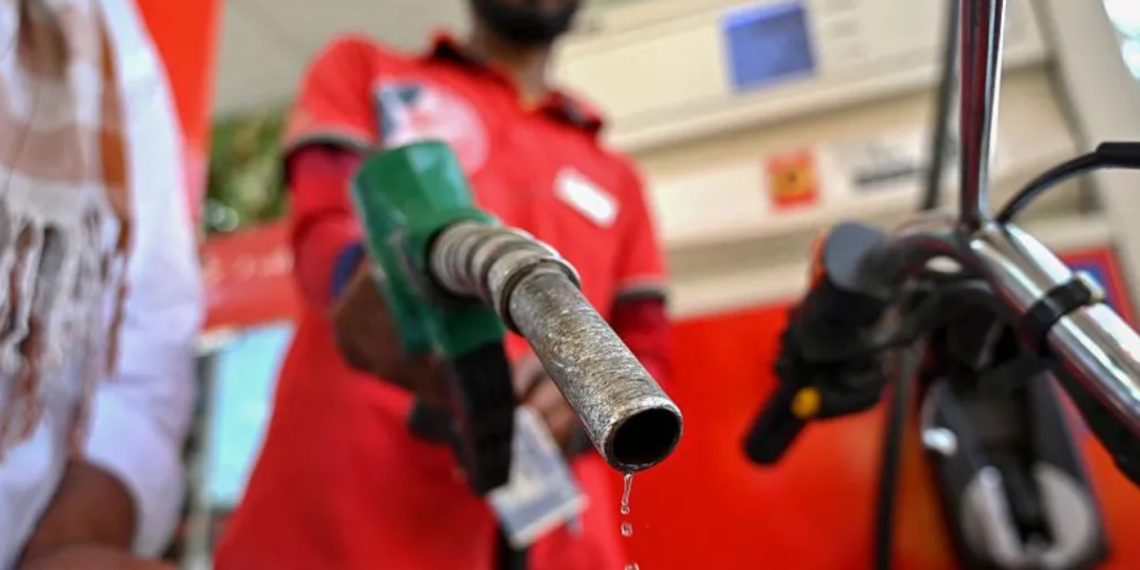
Fuel prices at Ghanaian pumps are set for significant increases from Wednesday, September 16, with diesel projected to cross the GH¢19 per litre mark and petrol to rise above GH¢16, according to the Chamber of Petroleum Consumers (COPEC).
In its latest pricing projection dated September 13, 2026, COPEC attributed the expected increases to a sharp surge in international crude oil and refined petroleum product prices, driven by escalating Middle East tensions that have pushed Brent crude above US$107 per barrel .
The projections come despite a marginal appreciation of the Ghana cedi against the US dollar, with the local currency moving from an average interbank rate of GH¢11.5166 per US$1 at the start of the current pricing window to GH¢11.4830 at its close .
Diesel Faces Steepest Increase
Diesel is expected to record the sharpest adjustment. COPEC reported that the Free on Board (FOB) price of diesel rose from US1,404.73 per metric tonne during the review period, representing a 12.33 per cent increase .
After factoring in the cedi’s marginal 0.29 per cent appreciation, COPEC projects an average retail pump price of GH¢19.07 per litre for diesel in the next pricing window—a 10.23 per cent increase from the current mean price of GH¢17.30 per litre .
Petrol is also set to rise, with COPEC projecting a retail price of GH¢16.26 per litre, representing a 4.24 per cent increase from the current mean of GH¢15.60 per litre. The international FOB price of petrol increased from US1,251.07 per metric tonne, a 10.08 per cent jump .
Based on its ±5 per cent margin, COPEC expects petrol to sell between GH¢15.44 and GH¢17.08 per litre during the next pricing window .
Liquefied Petroleum Gas (LPG) is also projected to increase, with the commodity expected to sell at approximately GH¢15.32 per kilogramme .
Global Oil Prices Surge Above US$100
The expected increases follow a dramatic rise in international crude oil prices, which climbed from US103.07 per barrel during the period under review . Brent crude, the international benchmark, surged above US$107 per barrel on Monday as fresh attacks and growing risks around key Middle East oil routes heightened fears of supply disruptions .
The surge has been driven by renewed military exchanges between the United States and Iran, attacks on Saudi energy infrastructure, and concerns over the security of oil flows through the Strait of Hormuz—a chokepoint through which approximately 20 per cent of global oil passes .
The timing of the surge is particularly problematic for Ghana. Brent was trading around US$90–92 during the period used to determine the first September pricing window, meaning the full impact of the latest increase was not captured in the first window’s price floors. The second window, beginning September 16, is expected to bear the brunt of the shock .
Transport Fares to Compound Pressure
The fuel price increases are expected to coincide with a proposed 30 per cent increase in commercial transport fares by the Ghana Private Road Transport Union (GPRTU), scheduled to take effect from September 21 .
If both materialise, the twin developments could create a powerful new inflationary impulse at a time when domestic price pressures had only recently begun to moderate. Consumer inflation rose to 5.0 per cent in August from 4.6 per cent in July, reversing earlier disinflation gains. Non-food inflation accelerated to 6.8 per cent in August, driven largely by transport and utility costs .
Higher diesel prices feed directly into transport, food distribution, agriculture, manufacturing, mining, construction and retail supply chains, creating conditions for second-round inflation effects as businesses pass higher production and distribution costs to consumers .
Limited Room for Oil Marketing Companies to Absorb Shock
The first September pricing window already demonstrated mounting pressure. The National Petroleum Authority raised the petrol price floor from GH¢13.92 to GH¢14.53 per litre and the diesel floor from GH¢15.19 to GH¢15.60 per litre. Government retained a GH¢2-per-litre reduction in the regulatory margin on diesel to cushion consumers .
Some oil marketing companies initially absorbed part of the cost pressure. GOIL maintained petrol and diesel prices at GH¢15.43 and GH¢17.26 per litre respectively, while Star Oil moved to similar levels. TotalEnergies was selling petrol at GH¢16.18 and diesel at GH¢17.59 per litre .
However, this capacity is limited. Once stocks purchased under earlier price conditions are exhausted and new supplies are acquired at higher international prices, the additional cost is likely to be passed through to consumers unless government intervenes further .
Government Intervention Under Pressure
The government’s existing diesel intervention—a GH¢2 per litre reduction in the regulatory margin—has provided temporary relief but may prove insufficient against a 10 per cent plus increase in international diesel prices .
The Institute for Energy Security (IES) has previously called on the NPA to strictly enforce petroleum price floor and uniformity policies, warning that weak compliance undermines the integrity of Ghana’s downstream petroleum market. The IES noted that at least 53 non-operational entities still retain active licences, weakening regulatory discipline .
With Brent crude now trading above US95 and US$120 per barrel if attacks in the Middle East continue .
For now, motorists and businesses dependent on petroleum products should brace for higher costs from Wednesday, with the full economic impact likely to ripple through transport, food prices and broader inflation in the weeks ahead.


