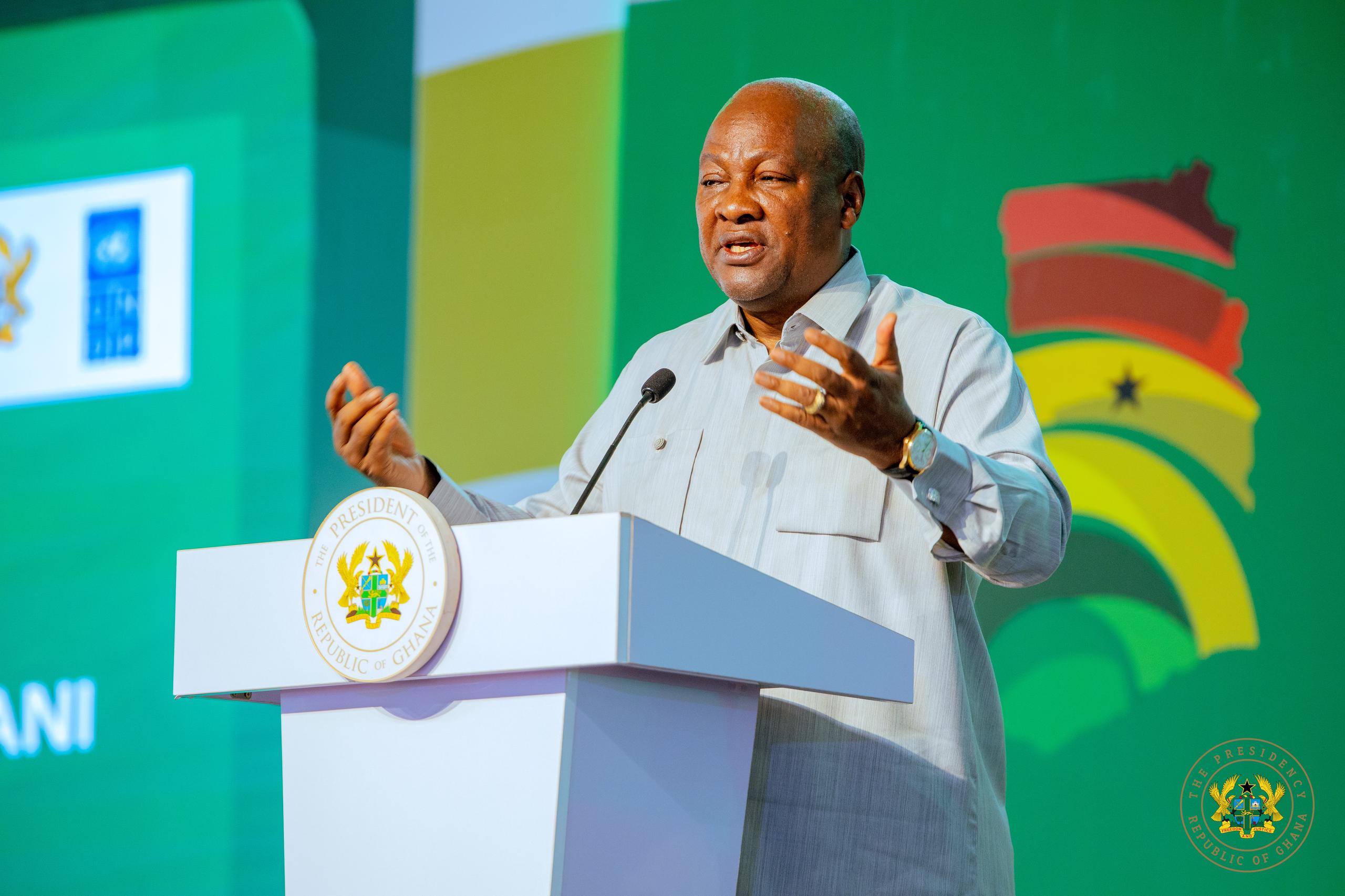
President John Mahama has called on African countries to make bold investments in skills development, industrial capacity and continental unity, warning that failure to act decisively could leave Africa further behind in a rapidly changing global economy.
Speaking to global political and business leaders at the World Economic Forum in Davos on Thursday, January 22, President Mahama said the world was entering “an era where countries must compete, innovate, and build or be left behind.”
He cautioned that Africa’s youthful population is growing increasingly impatient with slow progress and unmet expectations.
“Our young people are watching. They’re brilliant, they’re hungry, and they’re running out of patience,” he told the gathering.
President Mahama outlined five key priorities he believes African leaders must pursue to secure the continent’s future.
First, he stressed the need to invest in skills that respond directly to the demands of the real economy, rather than focusing on education alone.
“We must invest in skills — not just education, but skills that match real jobs in the real economy,” he said, highlighting digital, green energy and manufacturing skills as critical areas. Africa, he noted, needs “a generation of young Africans who can build, not just consume.”
Secondly, the President urged African countries to collaborate on industrialisation, arguing that no single country can succeed in isolation.
“No African country can industrialise alone,” he said, calling for regional prosperity platforms, shared manufacturing zones, integrated energy grids and digital infrastructure that can give businesses scale and workers better opportunities.
President Mahama also called for a united African approach to international negotiations, particularly on trade, minerals and climate finance.
“When we bargain separately, we’re weak. When we negotiate together on minerals, trade, and climate finance, we’re formidable,” he said, stressing that unity must go beyond rhetoric. “Unity should not be a slogan; it must be the strategy.”
He further underscored the importance of producing key goods locally to reduce dependence on external markets.
“From vaccines to semiconductors to solar panels, if we don’t make it, we’ll always be dependent on someone who does,” he said, rejecting claims that industrial policy is outdated. “Industrial policy isn’t old-fashioned. It is what will make us survive.”
Finally, President Mahama emphasised the need for accountability and reform within African states, warning that corruption and weak systems erode confidence and deter investment.
“We cannot ask the world to invest in us if we tolerate corruption, waste, and systems that don’t work. Reset means reform. And reform means results,” he said.