



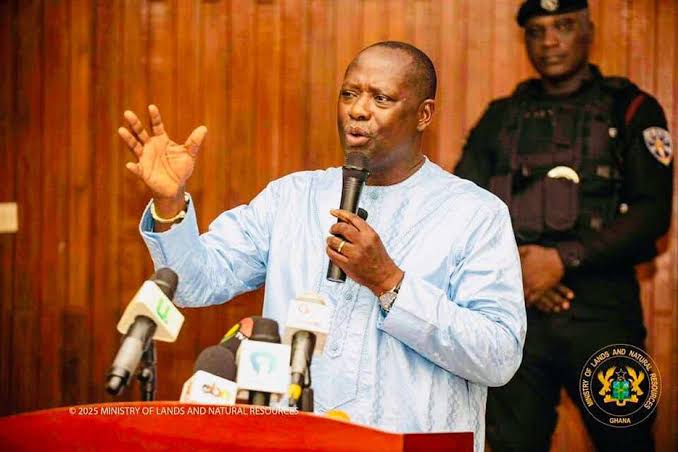
In a sweeping move to revitalize the country’s extractive sector, the Ghanaian Cabinet has officially given the green light to a comprehensive revision of the Minerals and Mining Policy of 2014. The approval, announced earlier today, marks the most significant legislative overhaul of the mining industry in over a decade, designed to phase out raw mineral exports and cement Ghana’s position as a hub for value-added processing.
Hon. Buah, the Minister for Lands and Natural Resources, confirmed the cabinet’s decision during a press briefing at the Government Accountability Secretariat in Accra. Emphasizing the government’s commitment to economic resilience, Minister Buah stated, “The 2014 policy served its purpose, but the global landscape has shifted drastically. We are no longer content with merely extracting our natural wealth and shipping it abroad. The revised policy mandates that a minimum of 30% of all domestically mined gold and critical minerals—including lithium and graphite—must undergo primary refining and value addition within Ghana’s borders.”
Stricter Crackdown on Galamsey and Environmental Stewardship
Beyond economic reforms, the revised policy is expected to be a formidable weapon in the ongoing fight against illegal small-scale mining, commonly known as ‘galamsey’. The update introduces unprecedented fines and criminal liability for mining operators who fail to adhere to strict environmental reclamation protocols. Under the new framework, all concession holders are now required to post a fully refundable “Green Reclamation Bond” before commencing operations, ensuring that post-mine lands are fully rehabilitated.
Connecting the Diaspora to National Resources
Aligning with the “Africans & Diaspora” economic framework, the revised policy also establishes a dedicated “Diaspora Mining Investment Portal.” This initiative will allow Ghanaians living abroad to legally invest in small-to-medium-scale mining cooperatives, providing a transparent alternative to illicit funding streams that have historically fueled illegal mining.
Industry and Civil Society Reaction
Industry stakeholders have largely welcomed the revision, viewing it as a necessary step to reverse a decade-long decline in the sector’s competitiveness. However, civil society groups are urging caution. “While the policy’s intentions are sound, the true test lies in implementation,” noted a spokesman for the Coalition for Environmental Justice. “We will be monitoring the Ministry to ensure that the promised benefits of local processing reach the grassroots communities, rather than just enriching a few major conglomerates.”
The full 200-page policy document is expected to be laid before Parliament next week for formal ratification, with implementation slated to begin by the end of the third fiscal quarter. As Ghana pivots toward a new economic trajectory, all eyes remain on how these bold reforms will reshape the nation’s mining heritage for generations to come.


