



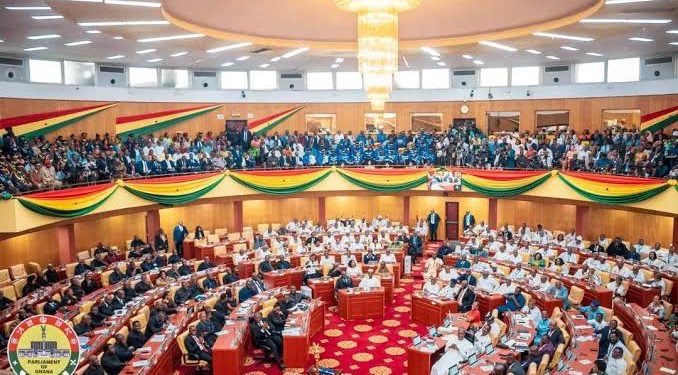
Parliament has officially approved a landmark concession agreement that will reintroduce road and bridge tolls across the country through a modern electronic system, marking a decisive policy reversal four years after the collections were scrapped.
The deal, structured as a Public-Private Partnership (PPP), authorises the Ministry of Roads and Highways to partner with a Special Purpose Vehicle (SPV) to be incorporated by Rock Africa Limited. Under the 20-year concession, the private entity will finance, develop, operate, and maintain a state-of-the-art electronic tolling network, shifting the heavy capital burden of infrastructure maintenance away from the state’s immediate budget.
The approval followed an extensive debate on the report of Parliament’s Roads and Transportation Committee, where lawmakers weighed the fiscal necessity of the tolls against the public discontent that accompanied their abrupt removal in 2021.
Defending the 2021 Scrapping
Former Defence Minister and Bimbilla MP, Dominic Nitiwul, who served in the previous Akufo-Addo administration, offered a spirited defence of the original abolition. He explained that the decision was primarily driven by a desire to shield Ghanaians from double taxation at a time when the government was introducing the Electronic Transfer Levy (E-Levy).
“We did not want to burden Ghanaians with both the e-levy and the road tolls. Basically, that was the reason,” Nitiwul stated. He also cited the persistent long queues at manual toll booths, which caused significant disruptions to commuters and the logistics sector.
A Tech-Driven Pivot
Despite his previous stance, Nitiwul threw his full support behind the new initiative, arguing that the electronic format resolves the systemic inefficiencies of the old manual system. Drawing comparisons to South Africa’s e-toll model, he described a seamless user experience where motorists drive through checkpoints, receive an automated “beep,” and settle consolidated monthly bills.
“If it’s electronic and it’s 20 years, I think it’s a good deal that Ghanaians should take. You will not even realise there are road tolls,” he told the House, urging colleagues to back the agreement.
Operational Mechanics and Scope
The new infrastructure will leverage Automatic Number Plate Recognition (ANPR) and RFID tagging to enable non-stop traffic flow—eliminating the physical barriers and congestion that plagued the previous booths. Revenues will be digitally deducted, with exemptions expected for emergency vehicles, military fleets, and possibly public transport, pending a final tariff structure.
Economic Ramifications
The reintroduction is viewed as a critical lifeline for the national Road Fund, which has suffered severe funding shortfalls since 2021, leaving many highways in disrepair. By adopting a PPP model, the government avoids immediate capital expenditure while securing 20 years of committed maintenance and upgrades.
Opposition and majority members largely converged on the necessity of the deal, though some raised concerns regarding data privacy and the affordability of monthly billing for low-income drivers. The Ministry is expected to finalise the tolling rates and rollout timeline in the coming months, with the SPV set to begin infrastructure deployment once the agreement is formally gazetted.


