



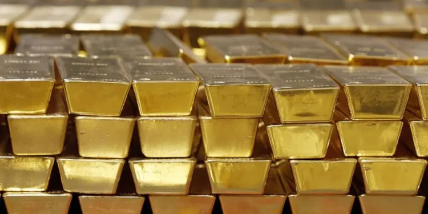
The government has officially acknowledged that Ghana’s overwhelming dependence on gold for export earnings poses a significant long-term economic vulnerability, but Finance Minister Dr. Cassiel Ato Forson has defended the current reliance as a necessary short-term advantage while outlining a three-year diversification strategy. Speaking on the Citi Breakfast Show on Friday, July 24—one day after presenting the 2026 Mid-Year Budget Review—Dr. Forson conceded the concentration risk but insisted that the government’s immediate priority is to maximise returns from the dominant commodity even as it lays the groundwork for a more balanced economy.
The Data: A Stark Picture of Concentration
Fresh data from the Bank of Ghana as of July 2026 paints a stark picture of the country’s export structure. Gold now accounts for a commanding 68.3% of total export earnings, dwarfing all other sectors. Cocoa, historically Ghana’s flagship export, contributes just 12.5%, while crude oil accounts for 9.4%. Non-traditional exports—including processed agricultural products, manufactured goods, and services—make up a mere 9.8% of the total.
This heavy concentration leaves Ghana dangerously exposed to fluctuations in global gold prices. A sharp drop in the gold price—which has historically been volatile, swinging between US2,300 per ounce in recent years—could swiftly erode foreign exchange earnings, widen the fiscal deficit, and destabilise the cedi. Additionally, the reliance on a single commodity makes the economy vulnerable to external shocks, including changes in global monetary policy, geopolitical tensions, and shifts in investor sentiment toward safe-haven assets.
Minister’s Defence: A Calculated Strategy, Not a Failure
Dr. Forson did not shy away from the risk, but he framed it as a pragmatic response to current realities rather than a policy failure. “This we are aware of. It is indeed a risk, but it’s also an advantage today,” he stated. He stressed that diversification is a long-term project that cannot be achieved overnight. “It is not something that we can fix, let’s say, in two months. It takes a lot more than two months to fix it. You need both planning, action, and resources to be able to fix it in the medium term. But we have a job to do. It takes a while to diversify,” he told host Bernard Avle.
The minister argued that, given the current global economic environment—marked by elevated uncertainty, high interest rates in major economies, and geopolitical instability—gold offers a reliable source of foreign exchange that is helping to stabilise the cedi and support the government’s fiscal position. He pointed out that without the Gold Board’s monopoly framework for purchasing artisanal and small-scale mining (ASM) gold, a significant portion of the country’s gold production would have been smuggled abroad, depriving the state of critical revenue. “You need to take advantage of what you produce first and plan to diversify in the medium term. Today, this 68.3% you are mentioning, without intervention of Gold Board, half of it would have been lost,” he explained.
The Gold Board’s Role in Formalising ASM Gold
The Gold Board (GoldBod), established under Act 1064 of 2021, was created to aggregate, refine, and commercially trade gold from the ASM sector, which had long been plagued by smuggling, illegal exports, and under-declaration. Before GoldBod’s full operationalisation, it was estimated that up to 40% of Ghana’s artisanal gold production was smuggled out of the country, primarily through neighbouring countries. By providing a formal, state-backed purchasing mechanism, GoldBod has dramatically increased the volume of gold captured in official statistics, boosting export earnings and government revenues.
The minister’s comments suggest that GoldBod is not merely a commercial entity but a strategic tool for revenue mobilisation. The GH¢909 million operational surplus reported by GoldBod earlier this week—generated from its own activities before the government’s seed capital was even released—underscores the success of this formalisation drive. However, critics argue that while GoldBod has improved revenue collection, it has also entrenched the gold dependency that the government now acknowledges as a risk.
The ‘New Economy’ Diversification Strategy
To address this vulnerability, Dr. Forson announced that the government is preparing a comprehensive economic transformation programme designed to reduce Ghana’s reliance on gold over the next three years. The strategy, to be unveiled under a policy framework dubbed the “New Economy,” will prioritise investment in sectors where Ghana possesses a comparative advantage.
“We want to look at where we have strategic advantage and be able to take advantage, obviously, and then export to see how we can spend a little bit more, let’s say 1% of GDP, to diversify the economy and do more,” the minister said.
Key areas of focus include:
· Palm oil production: Ghana has significant potential to become a major producer of palm oil, given its favourable climate and soil conditions. The government plans to invest in plantation development, processing infrastructure, and value addition to capture a larger share of the global palm oil market, which is currently dominated by Malaysia and Indonesia.
· Cocoa processing and value addition: While cocoa accounts for 12.5% of exports, the vast majority is exported in raw bean form. The “New Economy” strategy aims to boost local processing capacity, encouraging the production of cocoa butter, powder, and chocolate products, which command significantly higher prices on international markets.
· Other commodities: The government is also exploring opportunities in shea butter, cashew, and rubber, as well as light manufacturing and agro-processing.
The minister indicated that the government would allocate approximately 1% of GDP annually—roughly GH¢3 billion based on current GDP estimates—to fund diversification initiatives, including infrastructure development, tax incentives, and technical support for local industries.
Export Performance: A Double-Edged Sword
The urgency of diversification is underscored by the latest trade data. Ghana’s total exports for the first half of 2026 more than doubled from US18.29 billion by June, largely driven by surging gold receipts. Gold exports alone increased from US12.5 billion, accounting for the overwhelming share of additional foreign exchange inflows. Cocoa exports rose more modestly from US2.29 billion, while oil exports increased from US1.71 billion.
This export surge widened Ghana’s trade surplus from US8.81 billion, highlighting the crucial role gold continues to play in supporting external sector performance and helping stabilise the cedi. However, the impressive trade performance has not translated into stronger external buffers. Gross International Reserves declined by US14.16 billion to US9.48 billion, driven largely by rising oil imports, machinery, industrial inputs, and consumer goods.
The Reserve Dilemma: Why Exports Aren’t Building Buffers
The decline in reserves despite record export earnings points to a structural problem: Ghana’s import bill is growing at an even faster pace. The doubling of imports reflects the country’s heavy reliance on imported fuel, capital goods, and consumer products, which are essential for industrial activity and daily consumption. As the cedi stabilises and disposable incomes rise, import demand tends to increase, offsetting gains from exports. Additionally, the government has been using a portion of its export earnings to service external debt, further draining reserves.
The 5-month import cover—while above the IMF-recommended minimum of 3 months—is still relatively low by regional standards, leaving the country vulnerable to sudden capital outflows or external shocks. The declining reserves also limit the Bank of Ghana’s ability to intervene in the foreign exchange market to defend the cedi in times of volatility.
Economic Analysts Weigh In
Economists have reacted with a mix of caution and approval to the government’s acknowledgement of the concentration risk. Dr. Priscilla Asante, an economist at the University of Ghana, commented: “The government’s frank admission is welcome. For too long, we have celebrated gold exports without asking what happens when the price drops. The ‘New Economy’ plan sounds promising, but we need to see concrete timelines, measurable targets, and clear accountability mechanisms.”
Others have pointed to the political and logistical challenges of diversification. “Diversifying an economy that has been gold-dependent for over a century is not easy,” said Kwesi Adu, a development economist. “It requires sustained investment in infrastructure, education, and industrial policy—all of which need political will that spans multiple administrations. The question is whether this government, which faces elections in December, can build the consensus needed for a long-term strategy.”
Historical Context: A Century of Gold Dependency
Ghana’s reliance on gold is not new. The country has been a major gold producer since the colonial era, with the precious metal serving as the backbone of the economy for generations. However, the concentration has intensified in recent years as oil production has plateaued and cocoa yields have been affected by climate change and disease. The establishment of GoldBod and the formalisation of ASM gold have further boosted the sector’s contribution, but they have also magnified the associated risks.
Previous governments have attempted diversification—with varying degrees of success. The Industrial Transformation Programme under the previous administration sought to promote manufacturing, but it was hampered by high energy costs and limited access to finance. The current government’s “New Economy” appears to be a more targeted effort, focusing on specific commodities where Ghana has a clear natural advantage.
The Role of the IMF and Development Partners
The diversification strategy is expected to receive support from the International Monetary Fund (IMF) and other development partners, who have long urged Ghana to broaden its export base. In its recent Article IV consultation reports, the IMF has emphasised the importance of structural transformation and export diversification to reduce vulnerability to commodity price shocks. The government’s commitment to spending 1% of GDP on diversification aligns with these recommendations, though the IMF will likely insist on strong monitoring and evaluation frameworks to ensure that funds are used effectively.
Challenges and Risks Ahead
Implementing the diversification strategy will not be without challenges. Key obstacles include:
· Infrastructure deficits: Many potential diversification sectors, such as palm oil and agro-processing, require improved roads, ports, and energy supply to be competitive.
· Access to finance: Small and medium-sized enterprises (SMEs) in the targeted sectors often struggle to access affordable credit, limiting their ability to invest and scale.
· Global market access: Ghana faces stiff competition in palm oil and other commodities from established producers, and gaining market share will require aggressive trade diplomacy and quality standards.
· Political economy: Diversification will require shifting subsidies and incentives away from gold, which could face resistance from powerful mining interests and political constituencies.
Conclusion: A Balancing Act Between Immediate Needs and Long-Term Goals
For now, Dr. Forson’s remarks reflect a delicate balancing act: the government must continue to rely on gold to meet immediate fiscal and balance-of-payments needs, even as it lays the groundwork for a more diversified future. The success of this strategy will depend on whether the government can sustain the political will, secure the necessary investment, and execute the plan with discipline and transparency.
As Ghana heads toward the December 2026 elections, the “New Economy” could become a central campaign issue, with the government touting its diversification ambitions and the opposition scrutinising its feasibility. For citizens and businesses alike, the hope is that this three-year plan will move beyond rhetoric and deliver tangible shifts in the structure of Ghana’s economy—reducing the golden handcuffs that have bound the nation’s prosperity to the whims of global markets.


