



Technical advisor says standard employment-content calculations point to 38,000 to 70,000 job-years, with 20,000 employed at any given time during construction
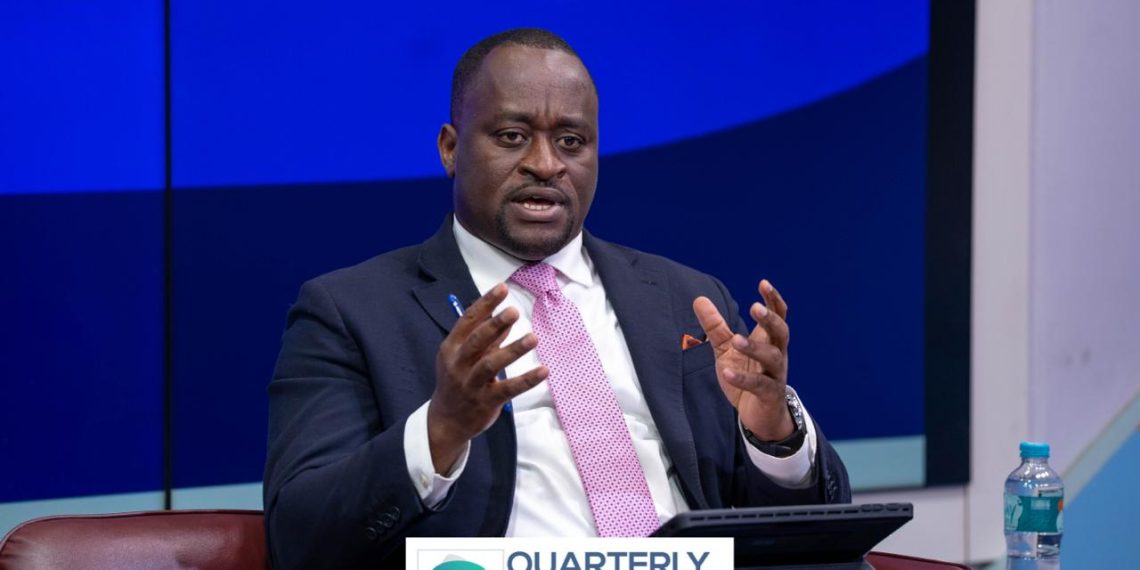
The government’s projection that the Accra-Kumasi Expressway will create at least 30,000 jobs is a conservative estimate, according to Dr Theo Acheampong, Technical Advisor at the Ministry of Finance, who says the real figure could be significantly higher once indirect employment across the supply chain is accounted for.
“The short answer is yes, and if anything, the figure is conservative,” Dr Acheampong said in a Facebook post on Thursday, September 10, 2026, responding to questions about whether the projection was inflated. “So 30,000 is not an exaggeration: it is the floor.”
His analysis follows a post by Finance Minister Dr Cassiel Ato Forson, who said the flagship infrastructure project would create approximately 30,000 direct and indirect jobs for Ghanaians.
Measuring jobs in ‘job-years’
Dr Acheampong explained that infrastructure employment is typically measured in “job-years”—with one full-time position maintained for 12 months counting as one job-year. Using a standard employment-content calculation, he estimated that direct employment on the project could generate between 38,000 and 48,000 job-years during construction.
That estimate is based on a labour component of US500 million for a project of this scale, and a blended annual employment cost of about US$10,000 per worker, including accommodation, transport and safety equipment. He used the lower estimate of 38,000 direct job-years for his calculation.
“About a tenth of an expressway project’s budget typically goes into on-site labour, including labourers, plant operators, artisans, engineers and supervisors,” he said.
Indirect employment adds thousands more
Beyond direct construction work, Dr Acheampong said domestic procurement of materials and services would generate substantial additional employment. He estimated that domestic purchases of between US1.5 billion could support a further 12,000 to 14,000 job-years in quarrying, cement production, haulage and other services.
“Every truckload of aggregate from a quarry, every bag of cement, every haulage contract and every caterer is a job created by project spending,” he said.
Combined, the direct and indirect employment impact would reach about 50,000 job-years, within a plausible range of 38,000 to 70,000 depending on factors including the labour share of the project, wage levels and the proportion of materials and equipment imported.
20,000 employed at any given time
Over an estimated 30-month construction period, Dr Acheampong said the project could have about 20,000 people employed at any given time. However, because of labour turnover as workers cycle through different phases of construction, more than 50,000 individuals could potentially earn wages from the project before its completion.
He noted that the longer-term employment impact could extend well beyond construction, particularly through logistics hubs, industrial parks and improved market access along the corridor. But he cautioned that the scale of those benefits would depend partly on how much project expenditure is retained within Ghana.
“By my estimate, every ten percentage points of project spending shifted from imports to Ghanaian suppliers adds roughly 4,000 job-years,” he said.
Calls for local content and independent auditing
Dr Acheampong recommended that construction contracts include local labour and sourcing requirements, while apprenticeship opportunities should be linked to technical and vocational education and training institutions. He also called for payroll-verified reporting of direct employment figures to enable independent auditing of jobs created.
A generational infrastructure project
The Accra-Kumasi Expressway is the flagship project under the government’s Big Push Infrastructure Programme. The 198.7-kilometre, six-lane bi-directional expressway will connect Accra to Kumasi via the Greater Accra and Eastern Regions, shortening the current travel distance by over 50 kilometres and reducing travel time to about two hours.
The project will feature eight major interchanges, three major bridges over the Birim and Pra Rivers, and digital tolling infrastructure. The government has already deposited US$1.7 billion into a dedicated account at the Bank of Ghana, with the funds ring-fenced until the main construction contract is awarded.
Roads and Highways Minister Governs Kwame Agbodza has described the project as a “generational intervention,” comparing its significance to the Tema Motorway and Tema Port built under previous administrations.
“We are going to be 70 years. The President’s vision is that we should do something so that the generations ahead of us will say that when we were also here, we did something remarkable,” Mr Agbodza said.
Dr Acheampong, who was appointed Technical Advisor at the Ministry of Finance in November 2025, brings over 15 years of experience in energy, extractives and fiscal policy. He holds a PhD in Economics from the University of Aberdeen and has advised development finance institutions and multinational corporations on economic modelling and policy reform.


