



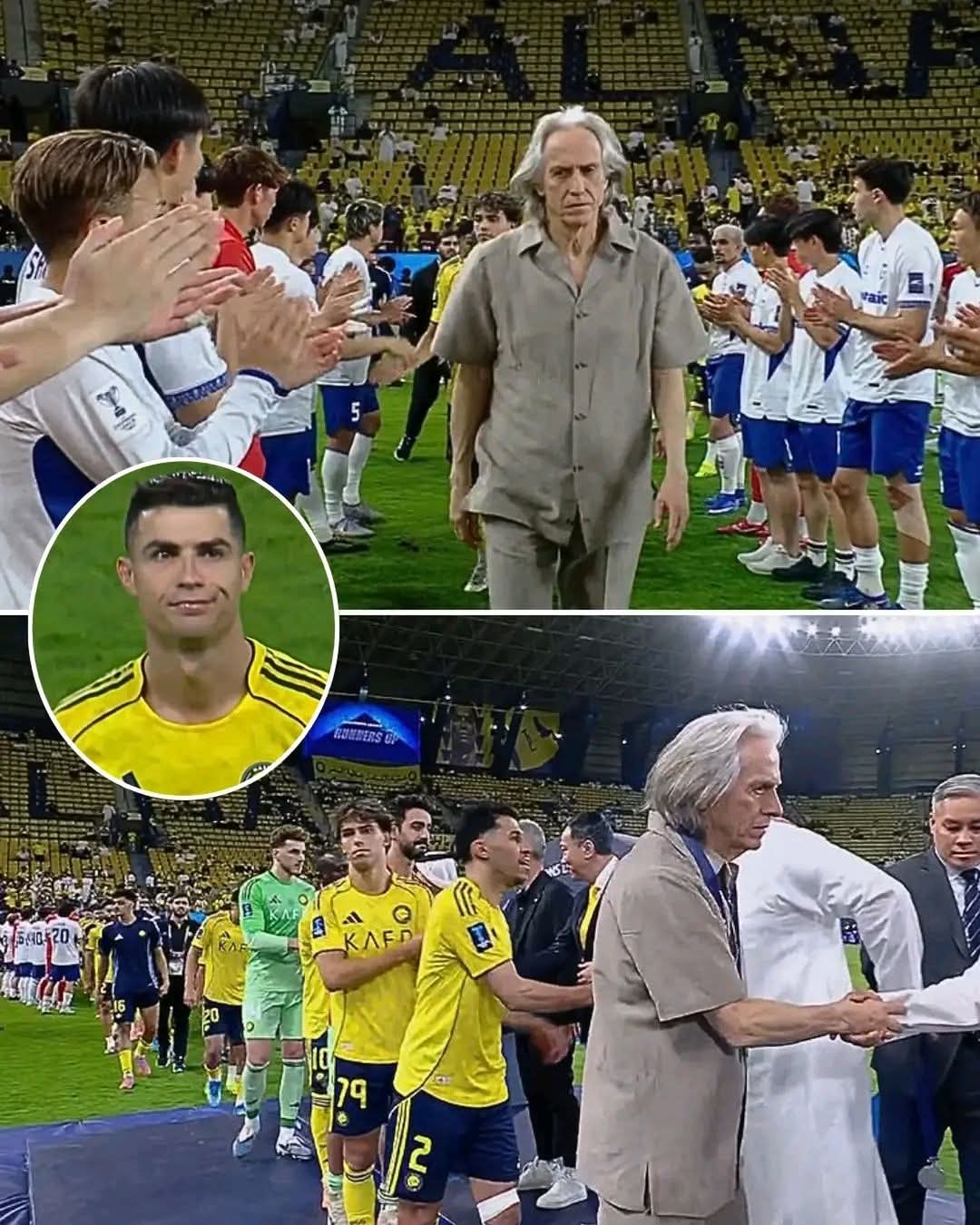
For a club named “The Victory,” Al-Nassr FC is enduring a paradox of staggering proportions. As the 2026 season progresses, the Saudi Pro League giants have officially completed 28 years without ruling Asian football—a continental drought that defies their financial muscle and global star power.
The last time the Yellow and Blues lifted an Asian trophy was in 1998, a nostalgic era when they clinched the Asian Super Cup. Yet, while 1998 feels like a lifetime ago, the statistics confirm that Al-Nassr’s continental crown has been gathering dust for nearly three decades.
The Glory Days of 1998
To understand the scale of the current famine, one must rewind to the golden age of Majed Abdullah. In 1998, Al-Nassr was the undisputed king of Asia.
The campaign began with triumph in the 1997–98 Asian Cup Winners’ Cup. In front of a roaring crowd of 70,000 at the King Fahd International Stadium, a star-studded squad featuring Bulgarian legend Hristo Stoichkov defeated South Korea’s Suwon Samsung Bluewings 1–0 in the final .
That victory set the stage for the 1998 Asian Super Cup. Facing the formidable Pohang Steelers—the champions of the Asian Club Championship—Al-Nassr played a tense two-legged affair. After a 1–1 draw in South Korea, a heroic 0–0 stalemate in Riyadh secured the trophy on the away goals rule, sealing their status as the continent’s elite .
It was a fitting swan song for Majed Abdullah, who retired immediately following the Cup Winners’ Cup final, having scored 260 goals for the club .
A Generation of Failure
Since that high point in December 1998, Al-Nassr has been locked in a vicious cycle of near-misses and disappointment on the continental stage. The AFC Champions League, Asia’s premier club competition, has become a particular source of agony.
Despite reaching the semi-finals multiple times (2001, 2020, 2021), Al-Nassr has never been able to convert its domestic dominance into Asian glory in the modern era. Their most recent campaigns have ended in the quarter-finals, leaving a squad packed with global icons frustrated .
The Curse of the Galacticos
The drought has become more glaring—and embarrassing—since the arrival of Cristiano Ronaldo in December 2022.
The signing of the Portuguese superstar was supposed to herald a new era of global conquest for the Riyadh-based club. Instead, the “Ronaldo era” has intensified the scrutiny on their inability to win the big one. Despite outspending almost every other club in Asia on talent, including the likes of Sadio Mané and Aymeric Laporte, Al-Nassr has failed to translate individual brilliance into collective continental success .
Analysts point to a growing pattern of “choking” at decisive moments. Since 1998, the club has reached the final of the Asian Club Championship (the precursor to the ACL) once more in 1995, only to lose 1–0 . Since then, semi-final exits have become the glass ceiling they cannot break.
The Trophy Haul Since 1998:
· Asian Super Cup (1998): Winners
· AFC Champions League: Best Finish – Semi-Finals (2001, 2020, 2021)
· Asian Cup Winners’ Cup: Defunct after 1998
Can the Nightmare End?
For the Al-Nassr faithful, the 28-year wait is a statistical anomaly for a club of their stature. With the Saudi Pro League now a major destination for top talent, the pressure on the current squad to end the “Asian Curse” has never been higher.
The club recently restructured its front office, replacing CEOs and sporting directors in a bid to change the culture that has accepted domestic trophies but failed on the continental front .
As the 2025/26 AFC Champions League Elite campaign progresses, the question remains: Will Al-Nassr finally add a star to their jersey representing Asia, or will the drought stretch to 29?
For a club built to win, the wait for the “Super Cup of 1998” to have a sequel is becoming an unbearable weight on the shoulders of Riyadh.


