



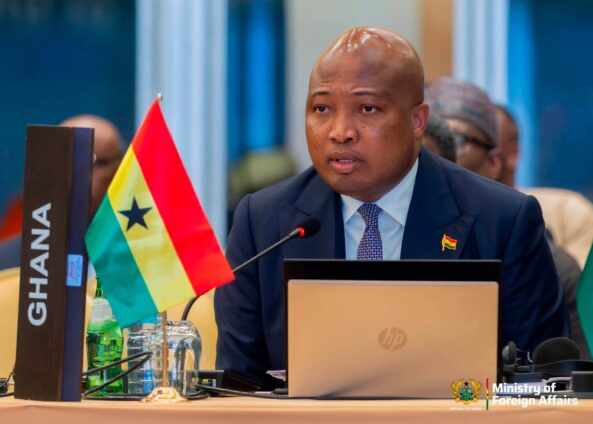
The government has successfully completed the evacuation of 1,964 Ghanaian nationals from South Africa following a wave of xenophobic attacks that created dangerous conditions for foreign nationals, Foreign Affairs Minister Samuel Okudzeto Ablakwa has disclosed .
The evacuation exercise, which commenced on May 27, 2026, and concluded on September 4, 2026, was carried out using both chartered and commercial flights. The final batch of 41 returnees arrived in Accra on September 4, bringing the government-led operation to an end .
Speaking at a press briefing on Monday, September 7, Mr Ablakwa said the government took the decision to prioritise the safety and welfare of Ghanaians in South Africa as security conditions deteriorated and attacks on foreign-owned businesses escalated .
The first flight, which departed on May 27, prioritised vulnerable groups, including children, women, the aged, and persons who were sick. The evacuation was coordinated by the Ministry of Foreign Affairs in collaboration with Ghana’s High Commission in Pretoria, with support from the Presidency, the National Security Secretariat, and relevant Ministries, Departments, and Agencies .
Ghana first to evacuate citizens
According to the Minister, Ghana was the first country to evacuate its nationals from South Africa in response to the escalating tensions. The evacuation was voluntary, with Ghanaians registering to return home after expressing fear for their safety .
President John Dramani Mahama later explained that worsening security conditions and attacks on foreign-owned businesses created circumstances that compelled the government to organise the evacuation . Many Ghanaians living in South Africa worked as skilled professionals and entrepreneurs, particularly in barbering, hairdressing, nail care, beauty services, and other small businesses that contributed to local economic activity .
The President noted that shops belonging to foreigners were locked during the attacks, while many migrants feared moving freely because they could be identified and assaulted. The situation worsened with reports of raids on health facilities .
Financial cost of evacuation
Mr Ablakwa explained that the evacuation had not been anticipated and, therefore, was not captured in the government’s original budget. However, he said the government had to act swiftly to protect Ghanaian nationals despite the unexpected financial burden .
The total cost of the evacuation exercise was GH¢49.72 million, covering flights, transportation, accommodation, feeding, medical care, reintegration support, and the repatriation of the remains of two Ghanaians who died during the crisis .
Of the total amount, the government financed GH¢33.72 million, while businessman Ibrahim Mahama’s Engineers and Planners contributed GH¢16 million towards the exercise . Each of the 1,964 returnees received GH¢5,000 in reintegration support and GH¢500 for transportation, according to the Minister .
Reintegration support for returnees
The evacuation formed part of the government’s broader diplomatic and consular response to the deteriorating situation in South Africa. The Foreign Affairs Ministry said the reintegration measures were intended to support the returnees as they settled back into their communities and resumed their livelihoods .
The returning migrants received medical and psychosocial support, free health insurance registration, and employment assistance . The International Organization for Migration (IOM), the National Disaster Management Organisation (NADMO), and the Red Cross provided psychosocial support, logistics, hot meals, and water .
Diplomatic context
President Mahama later emphasised that Ghana’s diplomatic relations with South Africa remained intact despite the unfortunate incidents . Speaking at Chatham House in London, he said the attacks were not the first of their kind but noted that this was the first time Ghanaians had been significantly targeted .
“He said many Ghanaians living in South Africa worked as skilled professionals and entrepreneurs, particularly in barbering, hairdressing, nail care, beauty services and other small businesses that contributed to local economic activity” .
The President suggested that some of the tensions might stem from structural challenges dating back to the apartheid era, including persistent unemployment among sections of the black population. He called on African leaders and policymakers to help address the root causes of the violence and challenge perceptions that migrants were responsible for economic hardships .
Human Rights concerns
Human Rights Watch had earlier warned of a new wave of xenophobic attacks in South Africa as anti-immigration groups intensified protests and vigilante-style actions targeting foreign nationals . Groups such as March and March, and Operation Dudula, two South African anti-immigration movements advocating stricter enforcement against undocumented migration, led protests in several cities .
The Human Rights Association also called on the South African government to urgently prosecute vigilante groups accused of carrying out violent attacks against foreign nationals, warning that the country was witnessing a recurring pattern of xenophobic violence that threatened lives and violated constitutional protections .
The Minister said the government remained committed to protecting Ghanaians abroad and would continue to respond decisively whenever the safety and welfare of Ghanaian nationals were threatened. Mr Ablakwa also used the opportunity to call for stronger African unity, rejecting xenophobia and urging African countries to deepen economic integration .


