



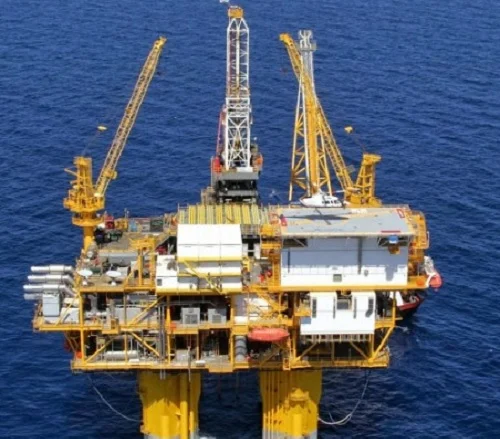
The Tema Oil Refinery (TOR) is currently unable to process crude oil sourced from Ghana’s Jubilee and other offshore fields due to a significant technological gap, the Ministry of Energy and Green Transition has revealed.
According to the Ministry, the refinery lacks two critical processing units required to convert the light, sweet crude from Ghana’s waters into finished products that meet local specifications.
Dr. Yussif Sulemana, a Technical Adviser at the ministry, explained that without a diesel hydrotreater to reduce sulphur content and an isomerisation or reformer unit to boost octane levels, the fuel produced from Ghanaian crude falls short of the national standard of 91 Research Octane Number (RON) for petrol.
“We need to add some other equipment,” Dr. Sulemana stated during an interview on Citi FM. “Let’s say a diesel hydro unit that can reduce the sulphur content, and also an isomerisation unit, what you call the reformer unit, that can increase the octane number.”
Because the output from processing local crude cannot legally be sold at the pump, the country finds itself in a situation where it exports its premium-grade oil and imports different blends that are compatible with TOR’s current configuration.
A Question of Economics, Not Patriotism
Dr. Sulemana emphasized that the practice is not a policy failure but a matter of economic prudence. He described Ghana’s crude oil as a “premium quality” product that commands high prices on the international market.
“If you know that when you export this crude you’re going to get much more and buy maybe a cheaper product that we can put into the refinery and refine, that would be much better,” he explained.
He noted that the government is actively working to resolve this anomaly. Plans are underway to upgrade TOR’s infrastructure to enable it to handle domestic crude in the future.
“Our effort is to make sure that TOR would be in a better position to refine Ghana crude,” Dr. Sulemana assured, adding that “a new refinery within TOR is on the horizon.”
Fuel Supply and Price Stability Amid Global Tensions
The clarification comes against a backdrop of rising global crude oil prices, which have surged past $100 per barrel due to escalating tensions in the Middle East.
Despite the volatility, Dr. Sulemana moved to allay fears of a supply shortage, stating that Ghana has sufficient stockpiles to last between five and six weeks. With additional cargo ships already docked and discharging, reserves could be extended to ten weeks.
“We are not immediately threatened by the supply or the availability of the product,” he said. “What we are immediately threatened with is the price. Are we able to maintain the price? That is a big question that we are all looking at.”
Exploring Regional Options
In a bid to secure supply chains, Ghana is exploring arrangements with the Dangote Refinery in Nigeria. However, Dr. Sulemana cautioned that this would not necessarily result in cheaper prices, as the Nigerian refinery will price its products based on prevailing international market rates.
To cushion consumers from potential hikes at the pump, the government is weighing several options. These include allowing market forces to prevail, introducing subsidies, or channeling windfall revenue from Ghana’s crude oil exports to stabilize the downstream sector.
“We are working out a strategy to be able to cascade this windfall back to the downstream,” Dr. Sulemana said. “We are monitoring the market. Depending on how the market shifts, then we’re kicking in other strategies.”

