



President John Dramani Mahama has outlined his administration’s ambitious plan to transform Ghana’s economy into a resilient powerhouse capable of withstanding future global turbulence, even as he cautioned that the nation’s recovery remains a work in progress.
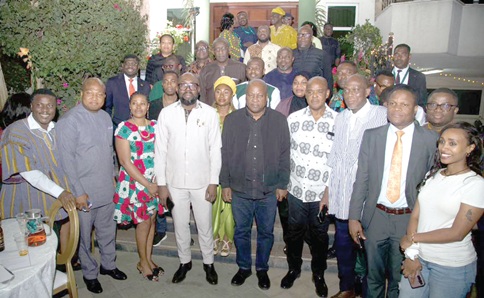
Addressing members of the Ghanaian community in Addis Ababa on Thursday, the President acknowledged the significant economic headwinds his government encountered upon returning to office last year. While highlighting positive indicators such as declining inflation, currency appreciation, and a improved debt-to-GDP ratio of 45 percent, he urged citizens to remain measured in their optimism.
“We have a good story to tell,” President Mahama stated. “Inflation is down, and the currency has appreciated. Many things are looking good, but we are not out of the woods yet.”
The core of his message centered on building a durable economic framework to break Ghana’s historical cycle of progress followed by reversal due to external factors.
“We need to still work hard to make sure we create a kind of resilient economy that will not be affected by the next global shock,” he said. “We’ve seen that before. We progress, we do things well, and then there’s a global shock, and then we retrogress. So, right now, even though things are looking good, we want to create a resilient economy that makes Ghana immune to shocks that will come in the future.”
The ‘Jewel in the Dirt’ and Regional Stability
President Mahama emphasized that Ghana’s economic aspirations are inextricably linked to the health of the West African sub-region and the broader continent.
“We can’t do it alone,” he asserted, calling for the collective success of neighboring states like Nigeria, Côte d’Ivoire, and Senegal. “We’re turning the economy around, but as I said in Davos, you can’t be a jewel in the dirt. You scratch the dirt, and you find one big jewel. Ghana cannot be that. We progress together with everybody.”
In a veiled reference to regional security challenges, the President stressed the urgent need for enhanced cooperation, particularly with the Alliance of Sahel States (AES). He framed security as the next critical pillar required to create a stable environment conducive to prosperity.
Curbing Resource Leakage and Securing African Wealth
The President also addressed the long-standing issue of resource exploitation, revealing startling figures regarding revenue lost from the gold sector prior to government intervention.
According to President Mahama, before the establishment of the Gold Board, Ghana was effectively losing a significant portion of its gold revenue. He alleged that out of 63 tonnes of gold exported annually, the country received payment for only 40 tonnes, with the remaining 23 tonnes disappearing into the international market without benefiting the state.
“That’s one commodity that we have started regulating, and it brings $10 billion in nine months,” he said, pointing to the initial success of the new framework.
He issued a passionate call for a pan-African approach to resource management, urging the continent to take ownership of its development.
“We should not be ashamed as Africans that God gave us a comparative advantage in terms of natural resources,” President Mahama remarked. He insisted that by regulating the export of mineral wealth, Africa can ensure that its resources translate into tangible benefits for its people.

