



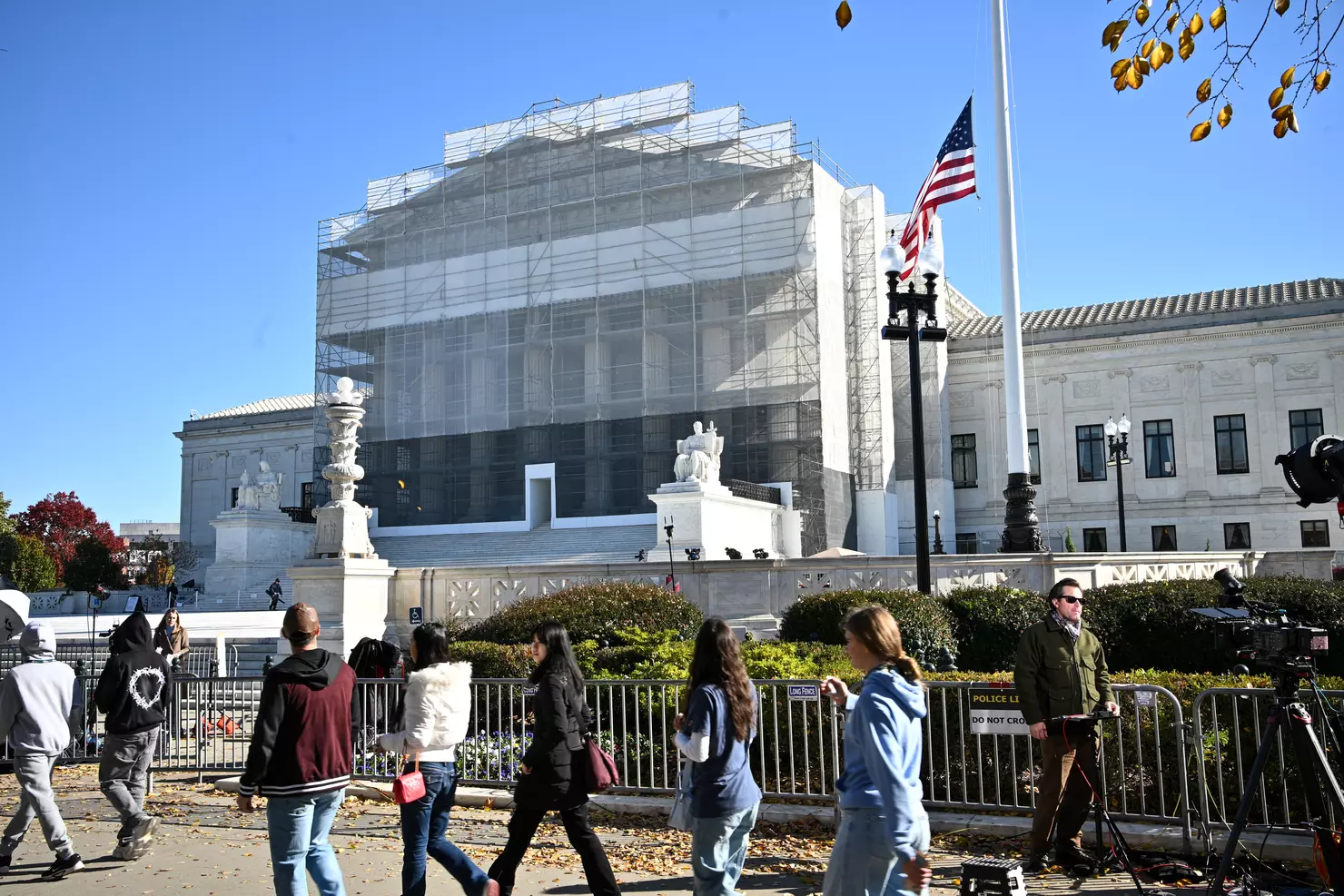
The US Supreme Court has agreed to take up a major case that could determine whether some children born on US soil have a constitutional right to American citizenship.
The case stems from an executive order signed by President Donald Trump on his first day back in office in January, seeking to end birthright citizenship for children born to parents who are in the United States illegally or on temporary visas. Several lower courts blocked the order, ruling that it was unconstitutional.
While the Supreme Court has not yet set a date for arguments, a final ruling is expected in the coming months. The decision could have far-reaching consequences for Trump’s immigration agenda and for long-standing interpretations of what it means to be a US citizen.
For nearly 160 years, the 14th Amendment to the US Constitution has guaranteed citizenship to anyone born in the country, with limited exceptions such as children of foreign diplomats or enemy military forces. The amendment states that “all persons born or naturalized in the United States, and subject to the jurisdiction thereof, are citizens of the United States.”
The Trump administration argues that the phrase “subject to the jurisdiction thereof” excludes children of parents who are not in the country lawfully or permanently. Officials say the executive order is part of broader efforts to overhaul immigration policy and address what they describe as national security and public safety concerns.
Cecillia Wang, national legal director of the American Civil Liberties Union, which is representing the challengers, rejected that interpretation. Speaking to CBS News, she said no president has the authority to rewrite the Constitution’s promise of citizenship.
“For over 150 years, it has been the law and our national tradition that everyone born on US soil is a citizen from birth,” Wang said, adding that she expects the Supreme Court to conclusively resolve the issue.
The United States is among about 30 countries, most of them in the Americas, that grant automatic citizenship to people born within their borders.
After Trump’s order was challenged, federal judges ruled it unconstitutional, and two federal appeals courts upheld injunctions preventing it from taking effect. The administration then appealed to the Supreme Court, which in June ruled that the lower courts had exceeded their authority in issuing the injunctions, but stopped short of addressing birthright citizenship itself.
Supporters of the executive order, including US Solicitor General D John Sauer, argue the 14th Amendment was intended to secure citizenship for formerly enslaved people after the Civil War, not for children of undocumented or temporary migrants. He has described the belief that birthright citizenship is automatic as a “mistaken view” with long-term consequences.
According to the Pew Research Center, about 250,000 babies were born to unauthorised immigrant parents in the US in 2016, down 36% from a peak in 2007. By 2022, there were an estimated 1.2 million US citizens born to unauthorised immigrant parents.
Research published in May by the Migration Policy Institute and Pennsylvania State University warns that eliminating birthright citizenship could significantly increase the unauthorised population, adding an estimated 2.7 million people by 2045 and 5.4 million by 2075.

