



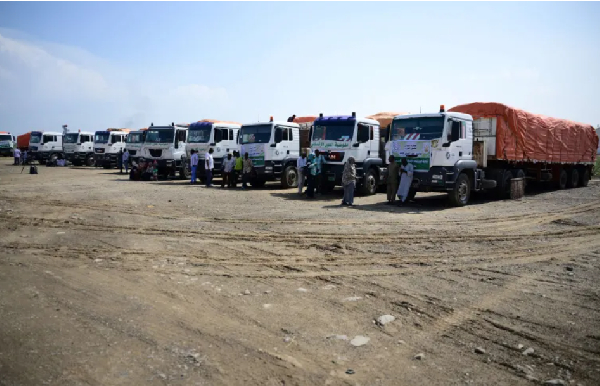
A drone attack in Sudan’s volatile Kordofan region has killed three international aid workers and left four others injured, humanitarian sources have confirmed. The strike, attributed to the paramilitary Rapid Support Forces (RSF), has been condemned as a grave violation of international law and a direct assault on humanitarian operations.
The victims were part of a mission delivering critical aid—including medical supplies, food, and emergency shelter—to communities devastated by Sudan’s ongoing conflict. The attack occurred while personnel were stationed in the area, highlighting the increasingly perilous environment for those providing lifesaving assistance in active war zones.
‘A Direct Hit on Humanity’
International humanitarian organizations have reacted with shock and outrage. “This is not just an attack on individuals; it is an attack on the very principles of humanity,” a representative from a global aid agency stated. “Aid workers are protected under international humanitarian law. They are not targets.”
The incident underscores a troubling trend in the Sudanese conflict, where warring factions have shown little regard for civilian safety or the protection of non-combatants. Medical missions, relief convoys, and humanitarian facilities have increasingly found themselves in the crossfire, severely hampering efforts to reach millions in need.
A Crisis Within a Crisis
Sudan has been engulfed in violence since clashes erupted between the RSF and the Sudanese Armed Forces (SAF) in April 2023. The conflict has displaced over seven million people, created one of the world’s largest hunger crises, and decimated an already fragile healthcare system. The Kordofan region, in particular, has witnessed some of the fiercest fighting and most acute humanitarian needs.
The killing of these aid workers is expected to further disrupt relief operations. Several organizations are now reassessing their security protocols, with some potentially scaling back or suspending activities in high-risk areas. This would have dire consequences for local populations who rely entirely on international assistance for survival.
Calls for Accountability
The attack has drawn condemnation from international observers and human rights groups, who are calling for an immediate and transparent investigation. “There must be accountability for those responsible for this atrocity,” a UN official remarked. “Impunity for such acts only emboldens further violations and endangers countless more lives.”
Families of the victims are mourning their loss while demanding answers. Meanwhile, survivors of the strike are receiving medical treatment, though the psychological toll of the attack is expected to be profound.
A Broader Pattern of Violence
This incident is part of a broader pattern of violence that has characterized Sudan’s civil war. Both the RSF and SAF have been accused of war crimes, including indiscriminate shelling of residential areas, targeted killings, and obstruction of aid. The drone strike in Kordofan adds to a growing list of atrocities that international bodies have documented throughout the conflict.
Human rights advocates argue that the international community has not done enough to pressure the warring parties to adhere to humanitarian norms. “Words of condemnation are no longer enough,” said a regional analyst. “We need concrete action—diplomatic pressure, sanctions, and protections for civilians and aid workers on the ground.”
The Road Ahead
As Sudan’s conflict grinds on, the safety of humanitarian personnel remains precarious. Aid groups are calling for enhanced security guarantees from all parties to the conflict, as well as unimpeded access to affected populations.
For now, the families of the slain aid workers, their colleagues, and the communities they served are left to grieve. The attack is a stark reminder of the human cost of war—not only to those caught in the crossfire but also to those who risk everything to help.
The international community faces a critical test: whether it can move beyond rhetoric to enforce the protections that aid workers are legally entitled to, and in doing so, preserve the fragile lifeline that sustains millions of Sudanese civilians.

