



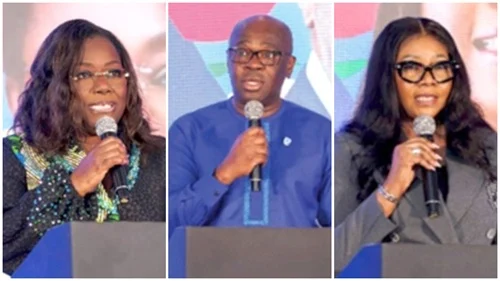
Stanbic Bank Ghana has unveiled a new banking proposition, ‘Obaa Sima’, aimed at transforming access to finance and business development support for women, with a specific focus on those operating in the informal sector.
The product was launched at a ceremony in Accra last Thursday, drawing a diverse audience of regulators, development partners, clients, and senior bank executives. The event was themed “Unlocking the Strength of a Woman” and arrives at a critical juncture where women are pivotal to Ghana’s economic landscape yet continue to face significant structural hurdles in accessing capital.
Data indicates that while women-owned businesses contribute an estimated 44 percent to Ghana’s Gross Domestic Product (GDP), many struggle to secure formal financing. This is often due to a lack of collateral, the small scale of their operations, and a dearth of financial products tailored to their specific needs.
A Call for Inclusive Growth
Delivering the keynote address, the Second Deputy Governor of the Bank of Ghana, Matilda Asante-Asiedu, emphasised the broader economic impact of empowering women through inclusive financial solutions. She praised the initiative as a well-considered response to the authentic needs of Ghanaian women, particularly those driving activity in trade, agriculture, and emerging digital enterprises.
“Women are central to economic activity, from Makola’s vibrant markets to agribusiness value chains and emerging digital enterprises. Women remain the backbone of macro, micro, small and medium enterprises. They dominate trade,” Mrs. Asante-Asiedu stated, highlighting the indispensable role women play across economic value chains.
A Statement of Intent
Kwamina Asomaning, Chief Executive of Stanbic Bank, framed the initiative within the bank’s enduring commitment to financial inclusion and economic growth. He noted that ‘Obaa Sima’ was developed from a deep understanding of the unique challenges encountered by women, drawing on the bank’s extensive continental footprint and heritage.
Mr. Asomaning stressed that while strategy and partnerships were vital, the initiative’s foundation is a genuine belief in women’s economic potential.
“Today’s launch is our statement of intent; a commitment to deepen inclusion and unlock the economic potential of Ghanaian women,” he said. “From the entrepreneur in Kumasi, to the professional in Accra, to the trader in Tamale, and the young innovator building tomorrow’s enterprise, Stanbic Bank sees you, Stanbic Bank understands you, and Stanbic Bank is committed to walking this journey of growth with you.”
Coordinated Action Needed
The Deputy Chief of Staff in charge of Administration, Nana Oye Bampoe Addo, commended the bank for its targeted approach to addressing the financing gap. She underscored that improving women’s access to finance requires more than just credit; it demands a holistic blend of advisory services, capacity building, and sustained engagement.
Ms. Bampoe Addo described the ‘Obaa Sima’ solution as a signal of what is possible when financial services are aligned with the genuine needs of women-led businesses. She called for coordinated action across all stakeholders—financial institutions, government, development partners, and the private sector—to collectively dismantle the structural barriers limiting women’s economic participation.
Her remarks reflect persistent challenges in Ghana’s financial ecosystem. With approximately 92 percent of women engaged in the informal sector, many are forced to rely on informal financing channels, which often restrict their ability to scale and compete. Studies by the World Bank and the Ghana Statistical Service reveal that nearly 58 percent of women entrepreneurs cite a lack of funding as their most significant constraint.
A Comprehensive Solution
The ‘Obaa Sima’ proposition is designed to address these gaps through a combination of financial and non-financial offerings. Key components include access to Stanbic Bank’s business incubator for capacity building and financial literacy, opportunities to expand through international trade corridors such as Africa-China partnerships, and connections to offshore investment platforms.

