



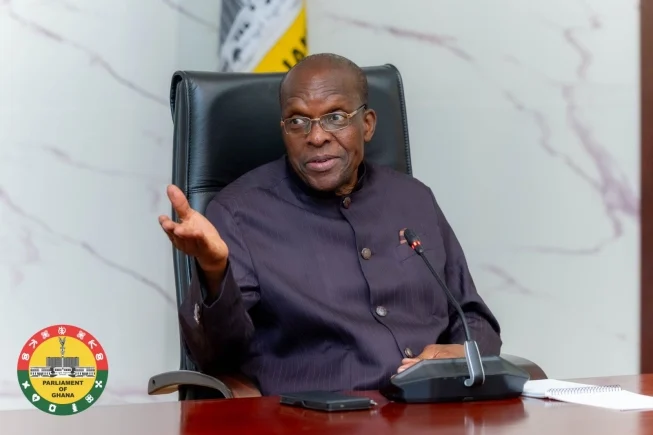
Speaker Bagbin renews call for permanent Parliament chamber, pleads with Executive to release
The Speaker of Parliament, Alban Sumana Kingsford Bagbin, has renewed his push for the construction of a permanent chamber for Ghana’s Legislature, appealing directly to the Executive to release adjoining land to enable the project to proceed.
Speaking at the launch of Parliament’s Corporate Strategic Plan (2026–2030) on Thursday, Bagbin described the current infrastructure challenges as a major constraint on parliamentary business, and stressed the urgency of establishing a dedicated seat for the arm of government.
“We have been crying, and I hope you support us in that. At least we should be liberated from being tenants of the State House to having our own premises as an arm of government,” he said.
His remarks revive a debate first ignited in October 2025, when Bagbin warned that the structural integrity of the existing chamber risked being compromised if the number of Members of Parliament continued to rise. The House currently stands at its full complement of 276 MPs following the swearing-in of two new members last year.
“Anytime the number increases, we have to create space for the member. So before this number increases, you must, as a country, as a Republic, start looking for a proper place,” he had said at the time. “If not, the integrity of this structure is being undermined — a word to the wise is enough.”
Despite a €2.26 million renovation of the chamber in 2025, Bagbin maintained that cosmetic upgrades were insufficient to address the legislature’s long-term accommodation needs.
He further revealed that Parliament faced restricted access to facilities within its own precincts, including the Banquet Hall, which the House must pay to use and which is now at risk of falling into disuse.
“There are a lot of infrastructure limitations, and it has not been easy,” he said. “Even when we are about to make a decision, you cannot make a decision when there is no consensus with the voting. So this strategic plan has been developed in direct response to these realities.”
The five-year strategic blueprint, which incorporates input from citizens and civil society organisations, outlines a vision for a “model people-centred, inclusive and proactive Parliament” rooted in constitutionalism and driven by technology and evidence-based decision-making.
Bagbin noted that Parliament had implemented four strategic plans since the inception of the Fourth Republic, with the latest building on previous achievements while responding to emerging global trends and institutional challenges.
He highlighted notable successes under earlier plans, including a restructured organisational framework, improved MP welfare and staff conditions, and enhanced productivity.
“Even in the quality of human resource, this Parliament has the men and the women who, if given the right ecosystem and support, will deliver effectively for this country,” he said.
The Speaker also disclosed that Parliament had significantly strengthened its legislative drafting capacity, reducing its dependence on the Office of the Attorney General for legal services.
Both the Majority and Minority caucuses threw their weight behind the strategic plan. Majority Leader Mahama Ayariga described the document as home-grown and reflective of broad consultation, while Deputy Minority Leader Patricia Appiagyei assured the Speaker of the Minority’s full cooperation in its implementation.
“This document is for making sure that the members that come here perform the critical role of passing the best legislation, advocating for their constituencies, and holding other institutions accountable,” Ayariga said.
The event was attended by the Clerk to Parliament, Ebenezer Ahumah Djietror, MPs, diplomats, and representatives from civil society and the private sector.

