



The upcoming nationwide SIM card re-registration exercise is a direct response to significant failures and fraudulent activities that plagued previous attempts, the Director-General of the National Communications Authority (NCA), Ing. Edmund Yirenkyi Fianko, has disclosed.
In a revealing interview on Monday, March 9, Ing. Fianko outlined the deep-seated flaws in Ghana’s past SIM registration processes, which he said allowed for widespread identity fraud and resulted in an unreliable subscriber database.
According to the NCA boss, the government’s planned exercise will be the nation’s third official attempt to register all SIM cards, a process aimed at finally establishing a “single source of truth” for subscriber identities.
A History of Verification Failures
Ing. Fianko detailed how the foundational problems began with the first registration exercise in 2011.
“The challenge with it is that there was no verification at all of the IDs,” he explained. “What we did was a manual verification of some limited cases along the way.” This lack of a robust system meant that the identities provided by millions of subscribers were largely taken at face value.
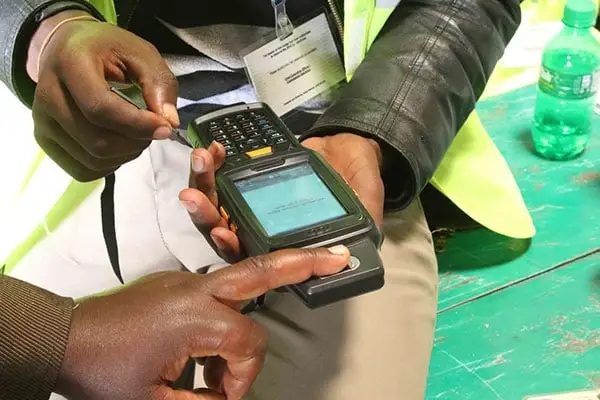
A second exercise was launched to correct these issues by requiring the use of the Ghana Card, the national identification card issued by the National Identification Authority (NIA). However, this process was never completed as intended. Ing. Fianko revealed that the crucial second phase—biometric verification to match the cardholder to the person registering—was abandoned due to a lack of coordination between policymakers.
“There was supposed to be verification of the ID card; we did one part of it, but the second part didn’t happen,” he told Channel One TV. “The policymaker, NIA, couldn’t get alignment to do the second phase, which was the validation of the biometric.”
Fake Photos and Fraudulent Identities
The failure to complete the biometric verification left the system vulnerable. Ing. Fianko disclosed that the NCA subsequently discovered a host of irregularities in the data, painting a picture of a system easily manipulated by bad actors.
“There are cases including fake photos, the same name but a different person. We saw fake IDs used to register,” he stated, confirming that the subscriber database had been compromised by fraudulent activity.
The Goal: A Single Source of Truth
The Director-General emphasized that the forthcoming re-registration is not merely an administrative update, but a critical security measure. The goal is to finally close the loopholes that have existed for over a decade.
“What we want to do is to have a single source of truth. We want to ensure the ID details are correct and that the person who brought the ID is indeed the person,” Ing. Fianko said.
He assured the public that the new exercise, which will seek to properly authenticate subscriber details against the NIA’s database, would be conducted at no cost to subscribers. The announcement signals the government’s intent to clean up the country’s telecom data, a move with significant implications for national security and financial crime prevention.

