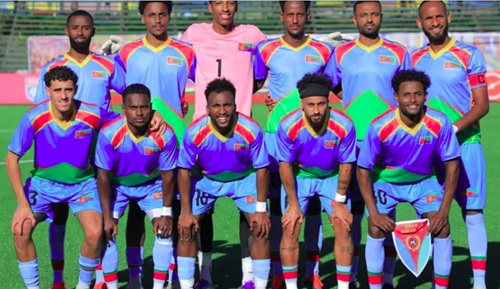
Just days after securing a historic return to the Africa Cup of Nations qualifying group stages for the first time in nearly two decades, the Eritrean national football team has been dealt a heavy blow: seven players have failed to return home from the away fixture.
Sources close to the team confirmed to the BBC that the players absconded following Eritrea’s 2-1 victory over Eswatini last week, which sealed a 4-1 aggregate win. While some teammates flew back via South Africa, the seven are believed to have stayed behind.
Among those missing are goalkeeper Kubrom Solomon and veteran winger Medhanie Redie.
Of the 24-man squad, only 10 players were based in Eritrea. According to sources in the capital, Asmara, just three of those – including captain Ablelom Teklezghi – have so far returned home. It remains unclear where the missing players have gone, though unconfirmed reports suggest some have been seen in South Africa.
Unusual silence from state media
Eritrea’s state-owned media outlets have been unusually quiet about the team’s triumphant return – an occasion that would normally be met with significant fanfare. Sources say preparations for a celebratory reception were made but later cancelled after news of the players’ disappearance emerged.
The spokesperson for Eritrea’s Sport and Culture Commission, who had been providing upbeat social media updates on the team’s success, instead posted pictures of returning players and staff being received by the Eritrean embassy and community members in Cairo. Only those who later flew on to Asmara appeared in the images.
A recurring pattern
For many Eritrean football fans, the latest incident carries a painfully familiar ring. Over the past two decades, the national team at various levels has been repeatedly scarred by players – and sometimes entire squads – disappearing before or after matches abroad.
· In 2019, seven players from the under-20 side went missing after a regional championship in Uganda.
· In 2015, ten senior players refused to return home following a World Cup qualifier in Botswana.
· In 2013, 15 players and the team doctor were granted asylum in Uganda after absconding.
· In 2009, the entire senior team – except the coach and one official – failed to return from Kenya.
Rights groups have long described Eritrea’s government as highly repressive, a charge the authorities in Asmara reject. Despite the country’s small population, hundreds of thousands of Eritreans have sought asylum abroad.
The latest defections will be seen as a major setback for a team that had just sparked hopes of a footballing renaissance.