



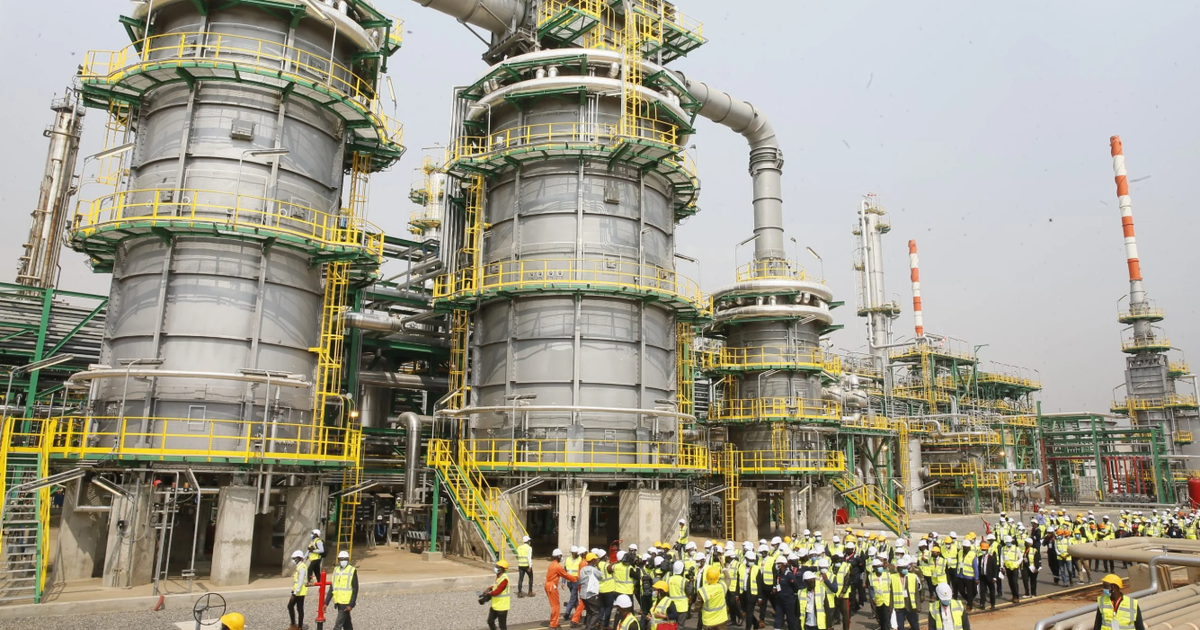
South African energy and chemicals giant Sasol has successfully returned its 108,000-barrel-per-day (bpd) Natref refinery to full operation, a move that is set to significantly boost domestic fuel production and stabilize supply after a devastating fire sidelined the facility for over a year.
The inland refinery, a joint venture located in Sasolburg, was severely damaged by a fire in early 2025, knocking out roughly 30% of the nation’s refining capacity. Its prolonged shutdown forced South Africa to increase its reliance on imported fuels, particularly impacting the supply chain for key infrastructure like Johannesburg’s OR Tambo International Airport.
With the extensive repairs now complete, Sasol announced it has revised its 2026 fuel sales guidance upward, signaling a major recovery for both the company and the country’s energy security.
“The restoration of Natref is a critical milestone,” said Sasol CEO Simon Baloyi. “It not only reinstates a vital piece of our national infrastructure but also directly strengthens our core business, ensuring a more reliable supply of petrol, diesel, and jet fuel to the South African market.”
The return to full operation provides a much-needed buffer for Sasol as it navigates a challenging financial landscape. In its recent interim results, the company reported a sharp decline in net income—down nearly 95% year-on-year—attributed to weaker global oil prices and impairment charges.
However, Baloyi emphasized that the improved operational performance, driven by the Natref restart and disciplined cost management, has allowed the company to generate positive free cash flow and reduce capital expenditure. These actions are part of a broader strategy to build resilience against volatile global energy markets.
The company is simultaneously advancing renewable energy initiatives and maintaining an active hedging programme to mitigate future price shocks.
The Natref refinery’s comeback is expected to immediately ease pressure on South Africa’s fuel supply chain, reducing the need for costly imports and providing greater certainty for industries reliant on consistent fuel availability.

