



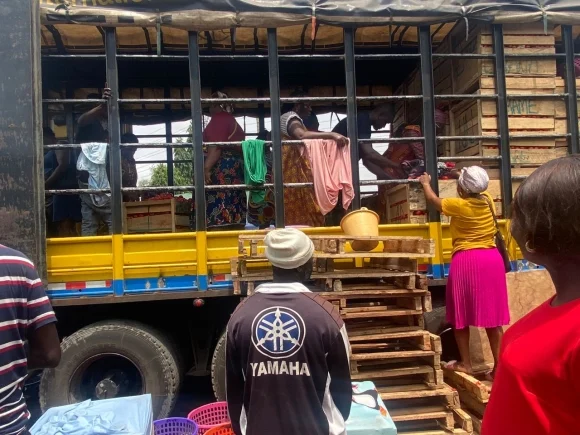
A sense of cautious relief has washed over the Madina Market as a group of Ghanaian tomato traders returned safely from Burkina Faso on Thursday, February 26, marking the first successful sourcing trip since a deadly terrorist attack disrupted cross-border trade nearly two weeks ago.
The delegation, which departed for the neighboring country on Monday, February 22, arrived back in Ghana on Thursday afternoon. Their journey was the first test of the newly reopened border corridor, which had been temporarily closed following an attack in Burkina Faso’s Titao community that left several Ghanaian traders caught in the crossfire.
The safe return follows urgent government intervention aimed at stabilizing the local tomato market. The initial border disruption caused by the attack led to severe supply shortages and a sharp spike in wholesale prices across the country, with major trading hubs like the CMB area in Accra bearing the brunt of the deficit.
At the CMB Underbridge branch of the Ghana National Tomato Traders Association, the atmosphere was a mixture of jubilation and lingering anxiety. While traders thanked God for their colleagues’ safe passage, they also used the moment to express frustration over what they perceive as a delayed official response.
“We are grateful to be home, but the journey was tense. We were all thinking about what happened to our fellow traders,” one returnee said, requesting anonymity. “The market was empty here, and we had no choice but to go, but the fear is still very real.”
The group commended the government for eventually facilitating the reopening of the route, which allowed them to bypass stricter informal border closures. However, some traders criticized the “prolonged uncertainty” that preceded the decision, arguing that the delays compounded their financial losses during a period of peak demand.
Despite the successful mission, anxiety remains high within the trading community. Ghana relies heavily on tomato imports from Burkina Faso to supplement local production, and while supplies are expected to trickle in following this trip, traders admit that full confidence is yet to return.
“We are back, but we need assurances that this corridor will remain safe,” said Madam Ama Serwaa, a veteran tomato seller. “We cannot keep risking our lives. If the government wants to prevent future price hikes, they need to ensure our protection—not just open the border and leave us to our fate.”
As the tomatoes hit the market in the coming days, prices are expected to stabilize, but the events of the past two weeks have underscored the fragility of the supply chain and the dangers traders face in conflict-affected border regions.

