



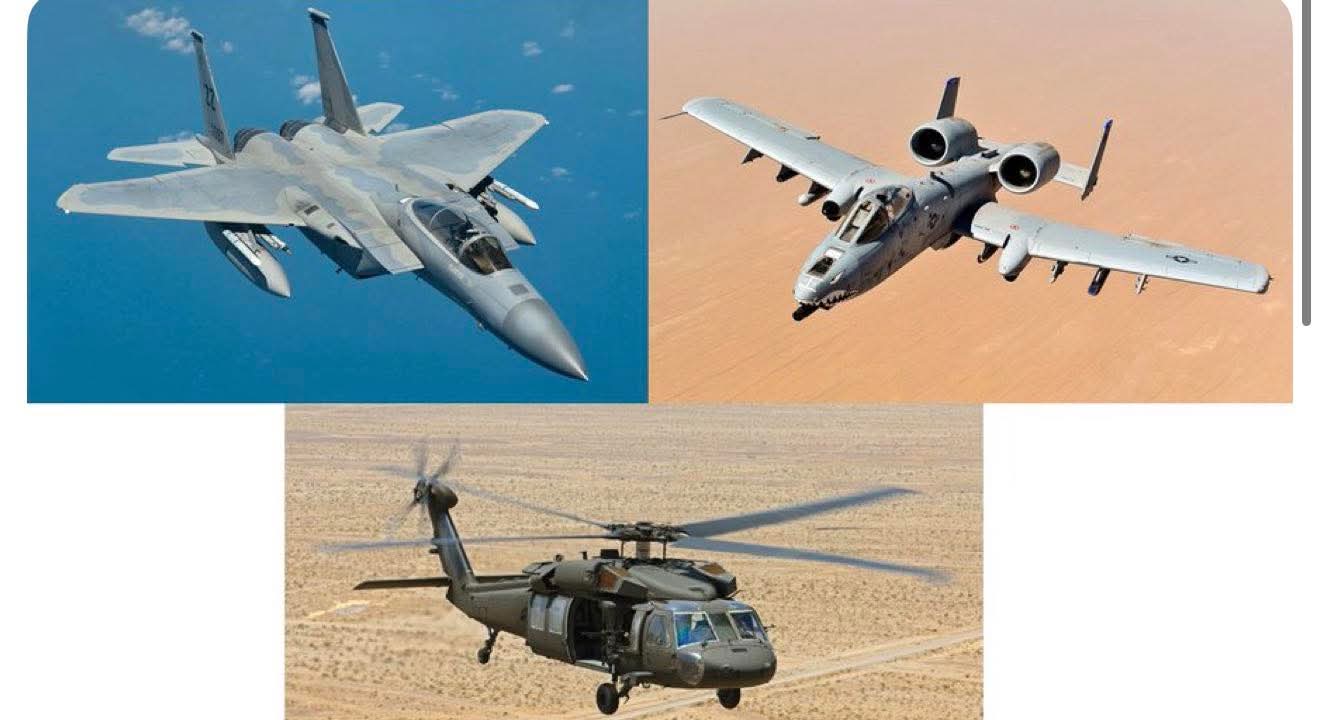
A U.S. Air Force F-15E Strike Eagle crashed in southern Iran today, prompting a dangerous combat search-and-rescue (CSAR) operation that has already left multiple aircraft damaged or destroyed — but the mission to bring home every American service member continues.
The aircrew ejected safely over Iranian territory. While the pilot has been rescued, the weapons officer remains missing and is the focus of ongoing recovery efforts, according to defense officials.
During the CSAR attempt, two Black Hawk helicopters were struck and damaged. An A-10 Thunderbolt II took fire, and though the pilot managed to exit Iranian airspace before ejecting, that pilot was also rescued safely.
To date, the operation has resulted in the loss of one A-10, with two Black Hawks rendered mission-incapable without repairs. The nature of CSAR — requiring low, slow flight over hostile terrain — leaves rescue aircraft vulnerable to man-portable air-defense systems (MANPADS) and anti-aircraft artillery.
Some military strategists might question the cost: additional aircraft destroyed, more personnel placed in harm’s way. But within the U.S. armed forces, the answer is simple.
No other military operates on this scale with the same commitment. Russian forces have frequently left wounded personnel behind when missions demanded speed. China maintains a mission-first mindset, with no sophisticated rescue doctrine comparable to America’s. Even NATO allies and Israel, while sharing similar principles, often lack the budgetary and asset depth to escalate repeatedly into high-risk rescue zones.
The U.S., however, has a long history of betting lives to save lives. In the 1993 Battle of Mogadishu — the “Black Hawk Down” incident — 18 Americans died during a rescue operation. In 2003, Army Pfc. Jessica Lynch was extracted from an Iraqi hospital in a daring night raid. The military spent years and vast resources securing the return of Sgt. Bowe Bergdahl.
Why? Because “No Man Left Behind” is more than a motto. It builds unbreakable trust.
“You fight harder when you know — know — that your team will come for you no matter the cost,” a defense official said, summarizing the core belief driving the current mission.
This time is no different. Despite the losses, the U.S. military continues its search.
They will bring him home.

