



A leading West African legislator has issued a stark warning that the region’s over-reliance on certificate-oriented education is failing its youth and hindering economic growth, calling for an urgent and radical overhaul of school curricula.
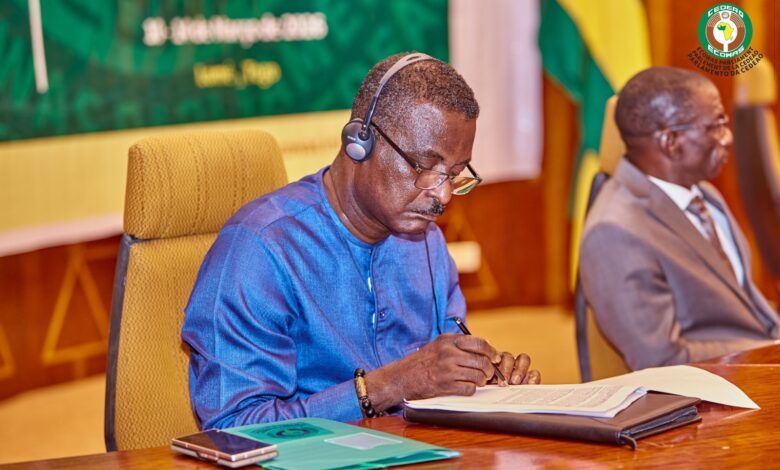
Mr. George Kweku Ricketts-Hagan, who serves as the Chairman of the Joint ECOWAS Committees on Education, Science and Culture, Health, and Telecommunications & Information Technology, made the call at the opening of a delocalised committee meeting in Lome, Togo.
Mr. Ricketts-Hagan, who is also the Member of Parliament for Cape Coast South and the Deputy Majority Leader in Ghana’s Parliament, argued that to harness the potential of West Africa’s youthful population, education systems must pivot decisively toward practical skills, digital literacy, and entrepreneurial thinking.
He painted a concerning picture of the current landscape, noting a widening gap between academic training and the realities of the job market.
“The sub-regional labour markets are shifting faster than our curricula,” Mr. Ricketts-Hagan stated. “The widening gap between training and opportunity creates a troubling paradox: vacancies without skilled applicants and graduates without jobs.”
He described this as a “structural disconnect” between classroom instruction and the demands of regional economies—a misalignment worsened by rapid technological change, high youth unemployment, and climate vulnerability.
A Call for TVET and Industry Partnerships
To tackle these challenges, the Committee Chairman proposed a multi-pronged strategy aimed at making education a driver of economic transformation. Central to his proposal is the strengthening and institutionalization of Technical and Vocational Education and Training (TVET).
Mr. Ricketts-Hagan urged for continuous curriculum reviews developed in direct partnership with the private sector to ensure relevance.
“Education must not merely follow economic transformation; it must drive it,” he reiterated. “For us to achieve this requires structured, continuous dialogue between Ministers of Education and Labour, alongside private sector leaders and academic institutions.”
He stressed that aligning education with the needs of key sectors like agriculture, industry, and the digital economy is essential to building a workforce that is both adaptable and competitive.
Rethinking the Purpose of Education
Posing a critical question to his fellow lawmakers and stakeholders, Mr. Ricketts-Hagan challenged them to reconsider the fundamental purpose of education in the region.
“Are our curricula designed to equip learners with the adaptability, emotional intelligence, and ethical grounding required to succeed, or are we merely preparing them to pass examinations?” he asked.
He asserted that the answer to this question will ultimately determine the success or failure of any educational reforms.
Mr. Ricketts-Hagan emphasized that the path forward requires evidence-based policymaking, significant investment in teacher training, and the integration of emerging technologies into the learning process.
“As Chairman of the Committee on Education, Science and Culture, I can assure you of our unwavering commitment to placing education at the heart of our socio-economic transformation,” he concluded.
The delocalised meeting in Lome is expected to produce key recommendations aimed at harmonizing educational standards across the ECOWAS region to better meet the demands of the 21st-century economy.

