



The Minority Caucus in Parliament has cautioned against the “tagging and targeting” of local entrepreneurs, warning that the politicisation of the private sector remains the single greatest threat to indigenous business survival in Ghana.
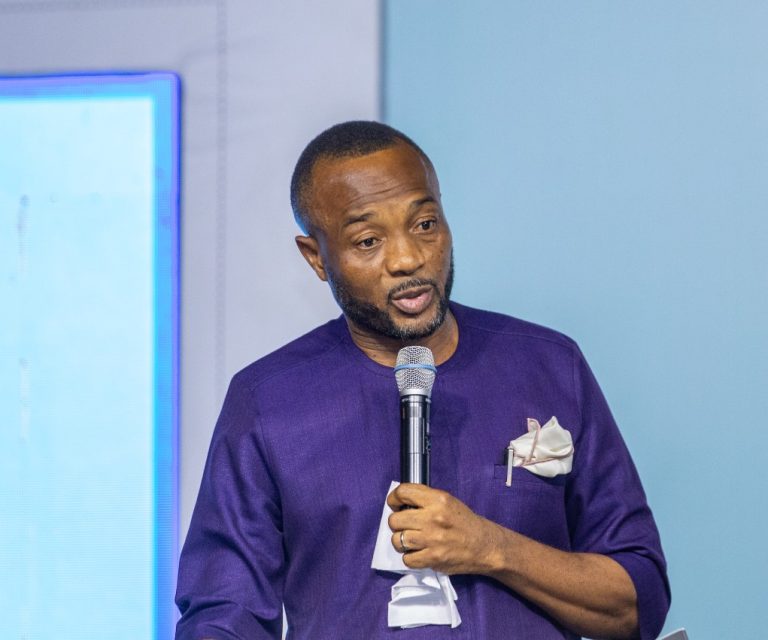
Speaking at the second edition of the Kwahu Business Forum on Sunday, April 5, 2026, the Second Deputy Minority Whip, Honourable Jerry Ahmed Shaib, called for an immediate “depoliticisation of enterprise” to enable Ghanaian companies to compete globally without partisan interference.
The forum, held under the theme “Leaders Committing to Sustenance of Ghanaian Businesses,” brought together industrialists, development partners, and political leaders, including the Chief of Staff, Mr Julius Debrah, and various sector ministers.
Peril of partisan labels
Honourable Shaib, speaking on behalf of Minority Leader Osahen Alexander Kwamena Afenyo-Markin, stressed that a business’s success must be decoupled from whichever political regime is in power. He noted that when local enterprises are tagged with political labels, it creates a fractured ecosystem that ultimately benefits foreign competitors at the expense of Ghanaian owners.
“We have a responsibility to depoliticise entrepreneurship, to create an ecosystem where business owners can operate without fear of being tagged or targeted,” Shaib stated. “The success of a business should never depend on which political regime is in power, nor should it be stifled by partisan labels.”
Concerns over credit market and taxation
The Minority’s address highlighted a significant disconnect between government rhetoric on entrepreneurship and the reality of the credit market. Despite a headline lending rate of 10.70 per cent, actual rates for Small and Medium Enterprises (SMEs) remain prohibitively high when fees and risk margins are added. The lack of affordable, patient capital is cited as a primary reason why up to 80 per cent of small businesses in Ghana fail within their first five years.
“A headline lending rate of 10.70 per cent means nothing to an industrialist who cannot meet the collateral threshold to access it, or who is offered a two-year facility for an investment that requires ten,” Shaib argued.
On taxation, the Minority criticised overlapping levies such as Import VAT, excise duties, NHIL, and the GETFund Levy, which they claim are often paid simultaneously on the same transactions. The caucus also raised concerns over the recent deployment of the “Publican Trade Solution” – an artificial intelligence-driven assessment system at the ports – which they said has led to inflated duties without a functioning appeals mechanism.
The Minority further accused the government of a “consultation deficit,” where policy is announced first and industry is invited to a meeting afterwards as a mere formality.
Legislative roadmap
To move beyond dialogue, the Minority Caucus committed to a series of parliamentary actions, including a push for a statutory pre-legislative consultation framework that would legally mandate stakeholder engagement before major economic bills or new taxes are introduced. The caucus also pledged to table motions for an independent review of utility tariff structures and to demand full parliamentary scrutiny of the AI-driven customs systems.
“We in the Minority, though not in government, are actively seeking to push an agenda that strengthens Ghana’s economic foundations,” Shaib concluded. “Businesses need policy stability to plan ahead. They need a legislative framework that is clear and predictable.”
The Kwahu Business Forum, which commenced on April 3, has solidified its position as a key platform for public-private dialogue on industrial policy in Ghana.

