



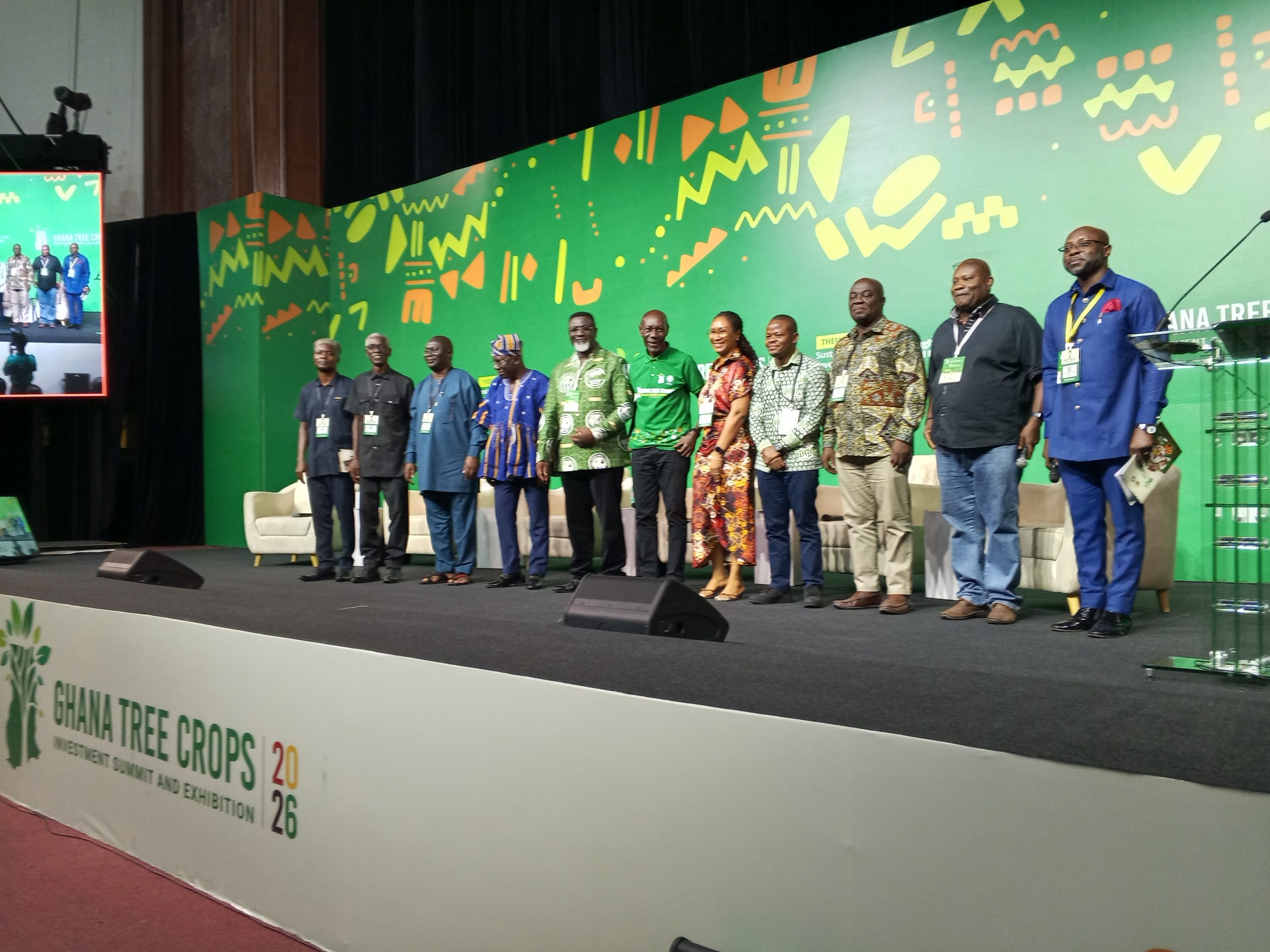
Ghana’s mango industry is ripe with potential and could one day outshine even cocoa in its contribution to the national economy, if stakeholders can successfully tackle persistent challenges related to quality, certification, and production standards. This was the resounding message from industry leaders at the just-ended Ghana Tree Crops Investment Summit and Exhibition, held at the Accra International Conference Centre last Friday.
On the sidelines of the summit, Mr. Kwaku Yeboah Asuamah, who wears multiple hats as the President of the National Mango Growers Association, Chairman of the Mango Value Chain sub-committee, and a board member of the Tree Crops Development Authority (TCDA), painted an optimistic picture of the sector’s future.
“Mango is one of our valuable tropical crops,” Mr. Asuamah stated. “Just as cocoa is contributing so much to our economy, if we pay the necessary attention to mango, it has the potential to overtake cocoa.”
He was speaking after participating in a high-level panel discussion on opportunities within the mango value chain, which brought together a cross-section of experts, including Prudence Attipoe, Deputy Director of PPRSD; Mr. James Obeng, Managing Director of HPW Fresh and Dry Limited; Ms. Sandra Snowden, Director and Co-founder of Hendy Farms Limited; and Emmanuel Owusu of Farm Right. The session was moderated by Ibrahim Kwame Asante of the CSIR.
From Challenges to a Profitable Venture
The central theme of the discussion was transformation. While the mango business is undeniably lucrative—with Mr. Asuamah noting that a truckload of just 30 tonnes can sell for as much as 150,000 Ghana Cedis to exporters like HPW and Blue Skies—the journey to profitability is fraught with hurdles.
“The good news is that government, through the TCDA, is showing interest,” Mr. Asuamah explained. “The Authority is consistently working with farm-based associations to improve the situation, to get the quality mangoes that we can export—mangoes with an increased shelf life. With these interventions, those bad stories of the past will be no more.”
A major part of those “bad stories” involves issues of quality and chemical residues. A significant portion of the discussion focused on the battle against fruit fly infestations and the misuse of pesticides, which threaten both local consumption and export potential.
Mr. Emmanuel Owusu of Farm Right highlighted the gravity of the issue, noting that while every crop has acceptable residue levels, the key is ensuring they do not exceed Maximum Residue Limits (MRLs). “This year, we had very few mangoes—less than five per farm—because of fruit fly infestation. It’s about not adhering to standards,” he lamented.
The solution, panellists agreed, lies not in abandoning the use of pest control but in rigorous education. “It’s about educating members on how to use chemicals responsibly,” Mr. Asuamah clarified. “We have guidelines. If you spray with the right chemical, after three days there is no residue. We are encouraging our members to go into Global GAP certification, where all those strict standards are followed.”
The Non-Negotiable Pillars: Standards, Traceability, and Research
The panel was unanimous that for Ghanaian mangoes to compete on the global stage, certain standards are not just a premium advantage but a basic requirement for market access.
Mr. James Obeng of HPW Fresh and Dry underscored this reality, revealing that his company must adhere to a staggering 18 different certificates covering production and quality. “Performance to standards is not a premium access to markets, but a must,” he stated. To manage this, HPW deploys digital tools to collect data and predict yields from the farmers they work with, ensuring a structured and sustainable supply chain.
Echoing the need for a structured approach, Mr. Owusu stressed the critical importance of traceability. “Every produce must be traceable. It is a requirement for certification. Every farmer needs to join an association so that what you are producing can be traceable,” he said, linking individual effort to collective credibility.
Ms. Sandra Snowden of Hendy Farms elaborated on how quality standardization opens doors. “It’s all about farming for money,” she said. “Through backward integration, we ensure our raw material meets certification. We can trace it from the farm to the final product. This builds trust with buyers and generates higher value.”
Adding another crucial dimension, Prudence Attipoe called for a symbiotic relationship between research, industry, and policy. He noted a funding gap, pointing out that while in other economies industry funds research, in Ghana it is largely government-led. “Industry must dictate the pace of research. They must tell the researchers, ‘This is where we are feeling the pinch.’ We need to improve post-harvest handling, drying technologies, and packaging. Research must help us improve shelf life and quality,” he asserted.
A Call for Inclusion and Investment
The panel also highlighted opportunities within the value chain for specific groups. A strong call was made for the inclusion of women, not just as processors, but in the actual production and growing of mangoes. The discussion also touched on the potential of agro-tourism as a niche market.
However, for these opportunities to be seized, access to affordable financing remains a major bottleneck, especially for Small and Medium Enterprises (SMEs) and women processors. An appeal was made to the TCDA, the government, and institutions like the Women’s Development Bank to engage with the sector to provide the necessary funding for equipment and working capital.
A Fruitful Future
Despite the challenges, the mood at the summit was one of determined optimism. With 37 varieties of mangoes and two planting windows in a year, Ghana has the natural advantage to significantly ramp up production. Mr. Asuamah envisions a future where Ghana can capture at least 5% of the global market, currently dominated by India.
For the consumer and the public, the message was simple and clear: the humble mango is on the cusp of a revolution. By binding together, embracing certification, and adhering to strict standards, Ghana’s mango growers are not just aiming to fill local baskets, but to conquer international plates.
“The export potentials are limitless,” Mr. Asuamah concluded, calling on policymakers, NGOs, and all stakeholders to focus their efforts on helping the mango sector flourish. The seeds of a new agricultural powerhouse, it seems, are being sown today.

