



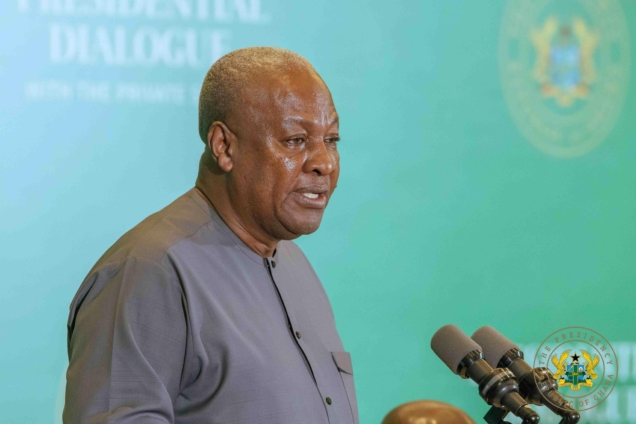
President John Dramani Mahama has ordered an immediate suspension of all state-funded international travel for boards of State-Owned Enterprises (SOEs) and public institutions, citing the need to curb rising public expenditure and enforce fiscal discipline.
The directive, issued from the Jubilee House on March 5, 2026, and signed by Secretary to the President Callistus Mahama, targets a growing trend of overseas trips for training, conferences, retreats, and study tours.
According to the statement, the President’s attention was drawn to the increasing frequency and cost of such journeys. While the administration acknowledges the benefits of international exposure and continuous learning, it stated that the current practice has placed “avoidable pressure on the public purse.”
“In several instances, such travels have resulted in significant expenditure on airfares, accommodation, per diems, and associated logistics,” the statement read. It emphasized that these expenses run counter to the government’s broader efforts to implement firm measures for efficient public financial management.
With immediate effect, boards are prohibited from undertaking international travel funded directly or indirectly by the state.
Strict Exceptions and Oversight
The directive, however, provides a strict channel for exceptional circumstances. If a board deems an international engagement absolutely necessary and impossible to conduct locally or virtually, a formal request must be submitted through the sector minister to the Chief of Staff for the President’s express approval.
Any such request must include a detailed justification outlining:
· The purpose and expected outcomes.
· The strategic relevance to the institution’s mandate.
· The number of proposed participants.
· The estimated total cost.
· A clear explanation of why the objectives cannot be achieved locally or online.
Promoting Local Alternatives
The government is strongly encouraging ministries and agencies to prioritize local capacity-building initiatives. Institutions are advised to partner with reputable local universities, professional bodies, and training institutes as cost-effective alternatives.
Where specialized expertise is required, the directive urges reliance on virtual platforms, technical exchanges, or short-term expert engagements within Ghana, rather than dispatching full board delegations abroad.
The directive reinforces that boards must focus primarily on their statutory oversight and governance responsibilities, ensuring that any training initiatives are carefully assessed for value and necessity.
This policy forms part of a broader strategy to strengthen expenditure controls and redirect scarce national resources toward priority programs, infrastructure development, and social interventions.
All ministers have been instructed to bring the directive to the immediate attention of the institutions under their supervision and ensure strict compliance.

