



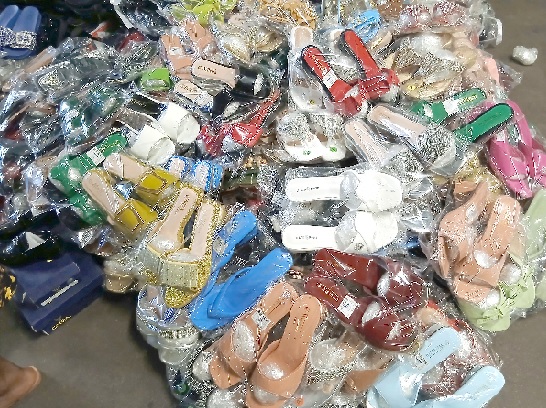
Artisans at the Kejetia Central Market in Kumasi have announced a collective decision to stop repairing imported footwear, citing the devastating impact of cheap foreign imports on their century-old craft.
The shoemakers, who have traditionally both produced and repaired footwear, state the move is a necessary response to an influx of imported slippers and shoes that they say is systematically destroying their livelihoods. A visit by The Mirror revealed a significant decline in the once-celebrated “Kumasi-made” slippers, with many workshops shuttered and artisans abandoning the trade.
A Struggle Against Mass Production
Artisans argue that they are unable to compete with foreign manufacturers who utilize machines to mass-produce footwear, allowing them to sell at prices far below the cost of locally crafted, leather goods.
“The effect is that many of us have decided not to repair such slippers. We will reject them right here when customers bring them,” said Osei Appenteng, a local shoemaker.
Longtime cobbler Mr. Agyei Mensah, with 40 years in the trade, expressed frustration over what he sees as a multi-sectoral threat. “They are destroying our lands, cocoa and rivers, and now they have taken over our shoemaking business. What is the government doing about it?” he asked. He emphasized the quality disparity, noting that while local artisans produce durable leather footwear, the imported alternatives, often made of rubber, are less durable.
Economics of the Trade
The economic pressures on the industry are stark. Artisans say a quality pair of handmade Kumasi slippers can sell for between GH¢100 and GH¢250, reflecting the cost of materials and the manual labor involved. In contrast, imported alternatives flood the market, selling for as little as GH¢30 to GH¢70.
Kojo Mensah, known as Mallam One, another veteran of 40 years, explained the discrepancy: “Our shoes are graded and made with quality materials, but these people use machines and produce in large numbers, making theirs cheaper.”
The struggle has forced some, like Kofi Amoh, to pivot entirely. He has switched from production to selling imported slippers, which he finds easier to sell. He noted that the capital required to start a shoemaking business, roughly GH¢20,000, is now prohibitive for many young people, who are instead opting for other trades or seeking opportunities abroad.
A Call for Support and Patronage
The artisans are urging the government to intervene by reducing the cost of raw materials and providing financial support to help local industries become more competitive. They also made a direct appeal to the public.
“Ghanaians should patronise made-in-Ghana goods. These imported slippers may look nice, but they are not durable,” Mr. Mensah said. “If you buy cheap things and they spoil, fix them yourself. We should learn to use Ghana-made products.”
A Legacy at Risk
Beyond the immediate economic hardship, the shoemakers fear for the future of their craft. With few young people willing to enter the trade due to low daily earnings compared to other sectors, a skill passed down through generations is at risk of fading away.
The artisans note that the trade once enabled them to build homes and educate their children. Mr. Agyei Mensah, for instance, shared that proceeds from his work had successfully put three children through nursing school, with a fourth now studying Geography at university.
Without financial support, training programs, and a renewed national focus on local products, the artisans warn that a trade that has sustained families for decades may soon become a relic of the past.

