


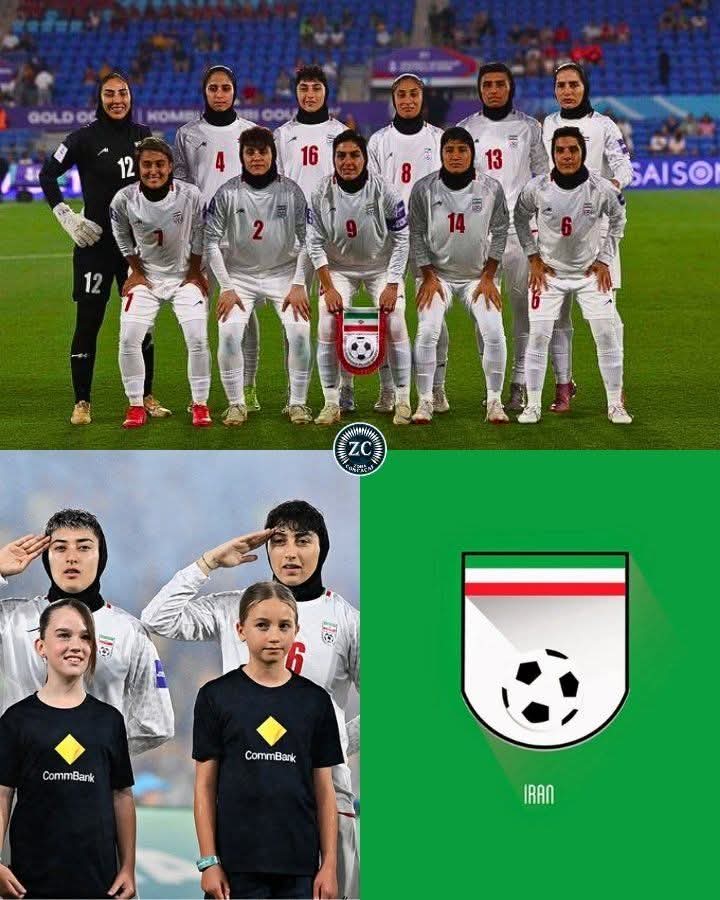
Five members of Iran’s women’s national football team have been granted humanitarian visas to remain in Australia, following their refusal to sing the national anthem during the AFC Women’s Asian Cup and amid heightened concerns for their safety if they returned home.
The players—Fatemeh Pasandideh, Zahra Ghanbari, Zahra Sarbari, Atefeh Ramazanzadeh, and Mona Hamoudi—left the team’s hotel on the Gold Coast after Iran’s elimination from the tournament. They sought protection from Australian authorities, citing fears of reprisals from the Iranian regime.
The controversy began during the team’s opening match against South Korea on March 2, when several players stood in silence rather than singing or saluting during the Iranian national anthem. This act of defiance was interpreted as a protest against the government, especially amid ongoing regional conflict involving Iran.
Iranian state television subsequently branded the players “traitors in times of war,” escalating threats and drawing international attention. The incident occurred against the backdrop of Iran’s involvement in broader geopolitical tensions.
After Iran’s final group-stage match—a 2-0 loss to the Philippines on Sunday—dramatic scenes unfolded outside the stadium. Supporters, including members of the Iranian diaspora in Australia, surrounded the team bus, chanting “Save our girls!” and blocking its departure for approximately 15 minutes. Protesters expressed fears that the players could face severe punishment, including persecution or worse, upon returning to Iran.
Australia’s Home Affairs Minister Tony Burke confirmed the decision late Monday, stating he had approved the applications and met with the players. “Last night I was able to tell five women from the Iranian Women’s Soccer team that they are welcome to stay in Australia, to be safe and have a home here,” Burke said in a statement. He emphasized that the players were now in a secure location under police protection and clarified that they viewed themselves as athletes seeking safety, not political activists.
The Australian government has extended the offer of protection to other squad members who may wish to remain. Prime Minister Anthony Albanese also addressed the matter, noting discussions with international leaders, including U.S. President Donald Trump, who had publicly urged Australia to grant asylum and offered U.S. support as an alternative.
The situation has drawn support from figures such as Reza Pahlavi, son of Iran’s last shah, who highlighted the players’ “brave act of civil disobedience” and warned of “dire consequences” if they returned. Human rights groups, the international players’ union FIFPRO, and organizations like the Australian Iranian Council had called for safeguards, launching petitions and appeals to the Asian Football Confederation (AFC) and FIFA.
While Iran’s head coach Marziyeh Jafari previously stated the team was eager to return home, the defections underscore the complex pressures facing the players—balancing personal safety with concerns for families still in Iran.
The granting of asylum marks a significant humanitarian outcome to a story that began as a quiet act of protest on the pitch and evolved into an international incident highlighting issues of freedom, women’s rights, and geopolitical risk. The remaining members of the squad’s status remains unclear as discussions continue.
Iranian women’s football players granted asylum in Australia after anthem protest and fears of persecution


- Advertisment -