



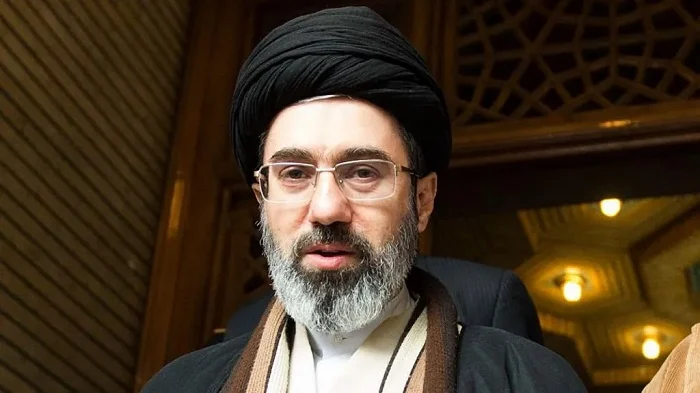
In the wake of the assassination of Ayatollah Ali Khamenei, Iran has deployed its most elite and lethal counterterrorism force to safeguard the country’s newly appointed Supreme Leader, Ayatollah Mojtaba Khamenei.
The unit, known as NOPO—an acronym for Nirouyeh Vijeh Pasdaran Velayat (Special Force to Protect the Supreme Leader)—has been assigned to protect the new leader following the death of his father in a U.S.-Israel strike on February 28.
A Succession Amidst War
Mojtaba Khamenei was elected as the Islamic Republic’s third Supreme Leader by the Assembly of Experts on March 8, 2026. His ascent to power comes at a moment of extreme volatility, as Iran remains locked in an ongoing conflict with the U.S. and Israel that began with “Operation Epic Fury.”
According to reports from The Times of Israel, unconfirmed statements on Iranian state television suggest that the new leader was wounded amidst the ongoing war. Mojtaba Khamenei has yet to make a public address since the conflict began.
Who Are the NOPO?
Distinct from the broader Islamic Revolutionary Guard Corps (IRGC), the NOPO is described as a highly specialized and ruthless unit formed in 1991. While its official mandate is the protection of the regime’s leadership, experts say its role has evolved significantly over the years.
“With Khamenei gone, NOPO will likely now be protecting Mojtaba Khamenei,” said Ali Safavi, an official with the Foreign Affairs Committee of the National Council of Resistance of Iran (NCRI), a Paris-based opposition group.
Safavi explained that the unit, initially built around the 28th Ruhollah Division, operates independently from the regular military. “They are far more lethal, ruthless, and well-trained than the IRGC. The late Supreme Leader did not trust any other security force for his protection.”
Composition and Deployment
The NOPO is comprised of six specialized brigades. Four are permanently stationed in the capital, Tehran, while the remaining two are based in the cities of Mashhad and Isfahan.
While some members of the unit were reportedly killed in the strike that assassinated Ayatollah Ali Khamenei, the force remains fully operational. Beyond securing the new leader, the unit has been mobilized to maintain internal security amid fears of unrest.
“The fact is that they are now involved in the suppressive and security measures the regime has undertaken in recent days to prevent any outbreak of protests,” Safavi noted. He added that the unit has a history of being deployed against internal threats, including “opening fire on protesters” during past uprisings.
Crackdown on Prisons
Intelligence from the NCRI indicates that hundreds of NOPO members have been widely deployed around key prisons holding political detainees, including Evin Prison in Tehran and Ghezel Hesar Prison.
Following the bombing of a military center near Mahabad Prison on March 3, prisoners whose wards were locked reportedly protested and set fire to blankets, demanding release. The NCRI stated that “suppressive forces responded by firing tear gas into the ward.”
The NOPO has previously been designated by the U.S. Treasury Department. In 2021, the department imposed sanctions on the unit for its involvement in “serious human rights abuses against persons in Iran or Iranian citizens or residents.”

