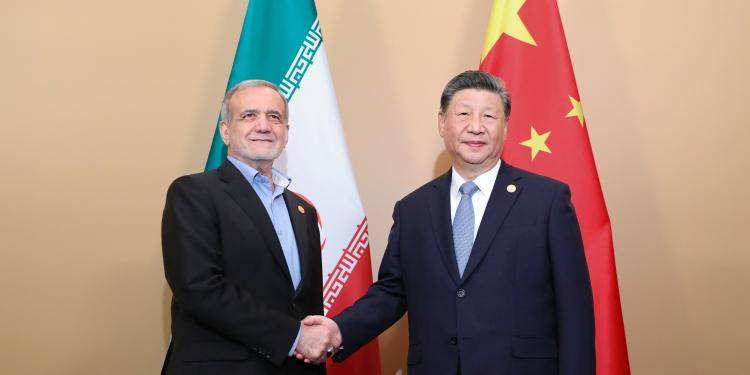
As American and Israeli airstrikes on Iran entered their third day, killing Supreme Leader Ali Khamenei and raising the prospect of regime change, Tehran’s two most powerful partners offered only sharp words of condemnation — with no sign of military, economic, or even meaningful diplomatic backup.
Both Beijing and Moscow denounced the attacks, but analysts and diplomats say the response lays bare the limits of Iran’s much-touted “strategic partnerships” with the world’s other major non-Western powers.
China’s Foreign Minister Wang Yi told his Russian counterpart on Sunday that the strikes were “unacceptable” and that the assassination of a sovereign leader was a dangerous precedent. Yet Beijing stopped well short of pledging any concrete assistance.
Gabriel Wildau, managing director at advisory firm Teneo, said China’s statement was “strongly condemnatory, but beyond this rhetoric I don’t see China’s government taking concrete action to support Tehran.”
Preserving stable relations with Washington remains Beijing’s top priority, Wildau added. A Trump-Xi summit is still scheduled for later this month, and Chinese officials are expected to use the Iran crisis as leverage on issues closer to home — trade and Taiwan — rather than risk a direct clash with the United States.
A prominent Chinese state-media-linked account put it bluntly on Monday: “Iran has no real ally.” Even its closest partners will put their own national interests first, the post noted.
China’s cautious stance is not new. During previous rounds of U.S.-Israeli strikes on Iranian targets last year, Beijing criticised the actions but provided no material support. It has also moved slowly on promised investments in Iran’s economy since the collapse of the 2015 nuclear deal.
Russia’s reaction has been similarly restrained. The Russian Foreign Ministry called the strikes a violation of international law and a threat to regional stability, but neither President Vladimir Putin nor the Kremlin has issued a personal statement. CNBC’s request for comment went unanswered.
Moscow is heavily dependent on Iranian drones and missiles for its war in Ukraine and fears losing its last major foothold in the Middle East after the fall of Syrian leader Bashar al-Assad in late 2024. Yet years of grinding conflict have left Russia’s military overstretched and its economy under Western sanctions, limiting its ability — or willingness — to intervene.
“Russia often takes a ‘wait-and-see’ approach to crises that don’t directly threaten its core interests,” said Matt Gerken, chief geopolitical strategist at BCA Research. During anti-regime protests in Iran late last year, Moscow offered no help. It may do the same again.
Some silver lining exists for the Kremlin. Oil prices surged more than 8% on Sunday amid fears of supply disruption. Russia, along with other OPEC+ members, announced it would raise output from April, but higher prices still benefit Moscow’s war chest.
“He’s definitely happy with the situation,” energy analyst Ellen Wald of Transversal Consulting said of Putin. “Anything that raises the price of oil is good for him.”
Whether the current campaign can actually topple Iran’s government remains highly uncertain. Michael McFaul, former U.S. ambassador to Russia and now a Stanford professor, noted that air power alone has rarely overthrown regimes in history.
“We are bombing military targets… we’re not taking out the instruments used to repress the Iranian people,” McFaul told CNBC. “So far, it’s very unclear how this military campaign will lead to the regime change that President Trump has promised.”
Trump has said U.S. combat operations will continue “until all objectives are achieved,” potentially for several more weeks.
For now, Iran stands largely alone — its two biggest supposed allies watching from the sidelines while prioritising their own relationships with Washington and their own strategic calculations. The much-vaunted “axis of resistance” and its great-power backers appear, at this critical moment, to be more rhetorical than real.