



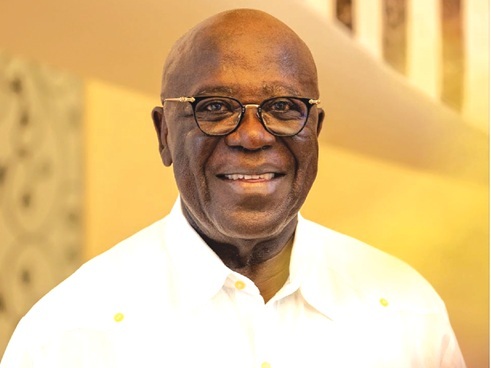
Renowned business executive Sir Sam Jonah has issued a clarion call to Ghana’s insurance industry, urging it to adopt practical measures to bolster its resilience against the escalating threat of climate-related emergencies.
Speaking at the 2026 Annual Conference of the Insurance Brokers Association of Ghana, Sir Sam Jonah emphasized that the era of climate risk being a distant concern is over, with extreme weather events now posing immediate and tangible threats to the economy and society.
“For Africa, and for Ghana specifically, this is not an abstract concern. We are among the most climate-vulnerable regions on the planet,” he stated. “Agricultural risks, coastal flooding, erratic rainfall — these are not future threats; they are present realities. The question is not whether these risks will knock on the door of the insurance industry in Ghana. They already have. The question is whether our industry is ready to answer that knock with adequate products, pricing sophistication, and the reinsurance capacity to back its commitments.”
Dr. Jonah, a former head of AngloGold Ashanti and former owner of Met Insurance, which merged with South Africa’s Hollard Insurance, warned that traditional models for catastrophe risk are becoming obsolete. He pointed to a shifting global landscape where floods in Dubai, wildfires in Europe, and freezes in Texas are now commonplace.
“Extreme weather is occurring in places that historically never experienced it, and insurers globally are being forced to fundamentally rethink their underwriting assumptions, their pricing models, and their capacity deployment strategies,” he said. Citing data from the Swiss Re Institute, he noted that global insured losses from natural disasters continue to rise sharply, with first-half 2025 losses reaching $80 billion—nearly double the 10-year average.
Challenges on Multiple Fronts
Speaking on the theme, “Trust, Professionalism and Purpose: Navigating the New Frontiers of Insurance,” Dr. Jonah outlined several critical challenges confronting the local industry. These included technological disruption from artificial intelligence (AI), a growing global talent crisis, and the lingering financial impact of the Domestic Debt Exchange Programme (DDEP).
He noted that AI is rapidly reshaping underwriting, claims management, and fraud detection globally, with major reinsurers using the technology to dramatically increase efficiency. However, he cautioned that while technology offers solutions, the industry must also navigate the complexities of a fragmented global economic order.
On the home front, Dr. Jonah described the DDEP as a significant blow to the capital base of many firms, exposing a structural vulnerability in their investment strategies. “Diversification of investment strategy, and the building of more robust capital buffers must be standing agenda items for every board in this industry,” he stressed.
He also raised concerns about market saturation, pointing to the high number of licensed insurers and intermediaries competing in a market of Ghana’s size. He warned that unhealthy competition, such as premium dumping and the abandonment of underwriting discipline, was a “slow act of self-destruction” that ultimately leaves policyholders exposed.
Acknowledging Resilience and a Path Forward
Despite the challenges, Sir Sam Jonah acknowledged the industry’s resilience, noting its strong recovery from the difficulties of the COVID-19 pandemic. He highlighted that industry-wide profit after tax rose by 40 per cent in 2024, from GH₵886 million to GH₵1.24 billion, reflecting improved underwriting discipline and operational maturity.
Looking to the future, he urged industry players to invest in professional capacity, embrace digital transformation as a powerful tool, deepen the domestic insurance market, and build a culture of integrity. He also called on them to engage the regulator as a partner rather than merely an authority.
Drawing from his own experience building Met Insurance, Dr. Jonah concluded by emphasizing the moral responsibility of the industry. “That experience deepened my understanding of what this industry demands of its leaders: not merely financial acumen, but moral seriousness; not merely technical competence, but a genuine commitment to the people and institutions whose security depends on the promises we make and keep,” he said.

