The Ghana Revenue Authority (GRA) has revealed that approximately $31 billion was transferred out of the country over a five-year period without any matching goods entering the country, pointing to a massive scheme of trade fraud and collusion at the nation’s ports.
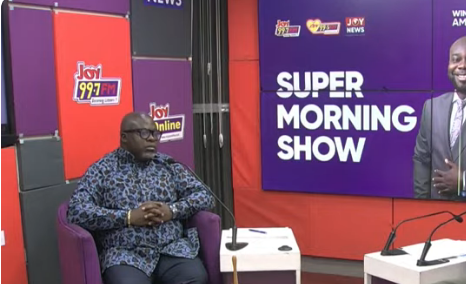
The Commissioner-General of the GRA, Anthony Sarpong, disclosed the findings during an interview on Joy FM’s Super Morning Show on April 10, describing the data as “very revealing” and indicative of systemic weaknesses in import declaration and monitoring.
According to Mr. Sarpong, a review of trade data conducted shortly after the current administration took office exposed significant loopholes. Beyond the sheer volume of unaccounted funds, the investigation uncovered widespread misclassification of goods, incorrect valuation, and manipulation of country-of-origin declarations.
More alarmingly, the GRA boss detailed a coordinated scheme involving collusion among shipping line staff, customs officers, and importers.
“We then also found out that there was some collusion among shipping line staff, customs officers, and some importers,” Mr. Sarpong stated, explaining how the leakages were systematically executed.
He warned that the issue carries serious implications for Ghana’s foreign exchange management, depleting state revenue and distorting economic data.
Automation and AI Deployed to Fight Fraud
In response to the findings, the GRA has moved away from manual processes and human discretion, which Mr. Sarpong noted had created extensive opportunities for abuse.
To tighten controls, the Authority has introduced the Publican system, a digital platform launched on March 12, 2026. The AI-powered tool functions as a real-time monitoring mechanism, cross-checking import declarations against global price benchmarks and historical trade data. Unlike the previous system, Publican flags suspicious transactions instantly before goods are cleared.
“The use of AI or automation will give us the opportunity to see ahead of time,” Mr. Sarpong said, expressing optimism that the reforms would significantly reduce revenue losses and restore confidence in the system.
The crackdown follows a GH¢1.6 billion shortfall in customs revenue recorded in 2025 and prior sanctions against officials implicated in diverting transit cargo meant for neighboring countries into the local Ghanaian market.
The GRA chief reiterated that the shift to automation represents a decisive break from the past, ensuring that the same human-led system that enabled the leakages has been replaced by verifiable, technology-driven oversight.