



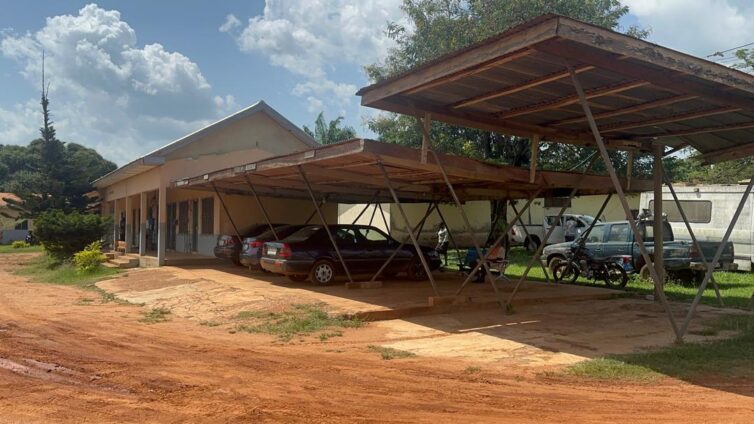
Management of the Goaso Municipal Hospital in the Ahafo Region has issued an urgent appeal to the government and private stakeholders, warning that the facility’s capacity to deliver quality healthcare is nearing total collapse due to prolonged neglect.
In an interview with JoyNews, the Medical Superintendent of the hospital, Dr. James Ankomah, disclosed that the facility’s National Health Insurance Scheme (NHIS) claims have not been paid for the period spanning August to March. He stated that the lack of reimbursement has crippled the hospital’s ability to procure essential medical supplies and maintain existing equipment, leading to a state of operational paralysis.
Dr. Ankomah further highlighted the dire state of the hospital’s infrastructure, noting that the internal road network remains untarred. He explained that this poses a dual threat: generating dust during the dry season which affects respiratory health, and turning into thick mud during the rainy season, which hinders the movement of patients and ambulances.
Compounding these challenges is the lack of a reliable alternative power supply. “Our existing generator is over-aged, and the maintenance costs are astronomical,” Dr. Ankomah lamented. “We are operating in a high-stakes environment without a dependable backup, which is dangerous for any surgical or emergency procedure.”
The Medical Superintendent also raised alarms over a critical shortage of staff, including radiographers, medical doctors, and allied health professionals. The hospital’s only X-ray machine has broken down, forcing patients to seek diagnostic services elsewhere. Additionally, a crucial infectious disease center project has been abandoned, leaving the region vulnerable to potential outbreaks, while the facility lacks official vehicles for administrative and emergency operations.
Dr. Ankomah emphasized that these challenges are far more than administrative hurdles; they are directly costing lives. He noted that the absence of a modern data management system and the shortage of critical staff are significantly hindering efforts to reduce maternal mortality.
“The timely provision of infrastructure, equipment, and critical staff will contribute significantly to the fight against maternal deaths and other key service indicators we are working to improve,” he stated.
The hospital management is calling on the Ministry of Health, the Ghana Health Service, and benevolent organizations to intervene immediately. Officials warn that without an urgent infusion of resources and the payment of outstanding NHIS arrears, the primary healthcare provider for the Goaso municipality remains on the brink of a total shutdown.

