



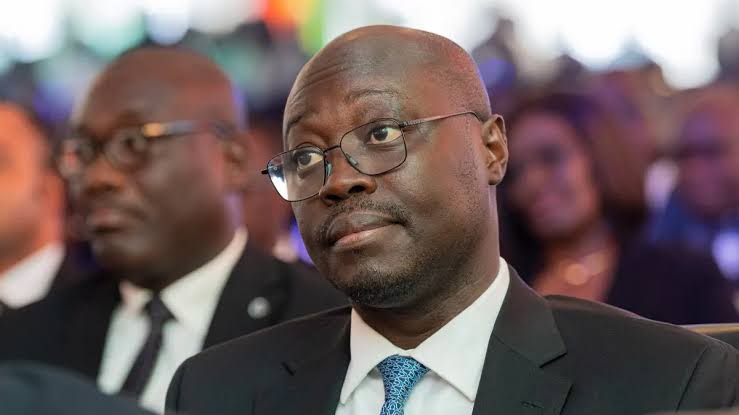
Finance Minister Dr. Cassiel Ato Forson has revealed that Ghana spent 44 percent of its total tax revenue on public sector wages in 2025, significantly breaching the ECOWAS-recommended threshold of 35 percent and exposing the country’s severe fiscal constraints.
Presenting at a high-level meeting between President John Mahama and organised labour, the Minister detailed the mounting pressure of the public sector wage bill on government finances.
According to Dr. Forson, total tax revenue for 2025 stood at GH¢183 billion. However, statutory obligations—including transfers to the District Assemblies Common Fund (DACF), Ghana Education Trust Fund (GETFund), National Health Insurance Levy (NHIL), and debt servicing—consumed GH¢122.1 billion, leaving just GH¢61.9 billion available for other expenditures.
Compounding the fiscal challenge, the government’s wage bill alone amounted to GH¢78.9 billion, creating a financing gap of approximately GH¢17 billion that forced the state to borrow merely to meet salary obligations.
The Finance Minister emphasised that the combined burden of wages, debt servicing, and statutory transfers now exceeds total tax revenue, effectively crowding out other critical expenditures.
Under current fiscal conditions, Dr. Forson warned that the government lacks the financial space to adequately invest in essential infrastructure such as schools, hospitals, and roads.
While acknowledging that fair remuneration remains a constitutional obligation, the Minister stressed that the current trajectory of public sector compensation poses a significant structural risk to fiscal sustainability and service delivery.
He called for careful management of wage growth alongside broader fiscal reforms to restore balance and create room for development spending.
The revelation underscores the urgent need for structural reforms in public sector compensation as Ghana grapples with sustaining its wage bill while maintaining essential public services and infrastructure investment.

